
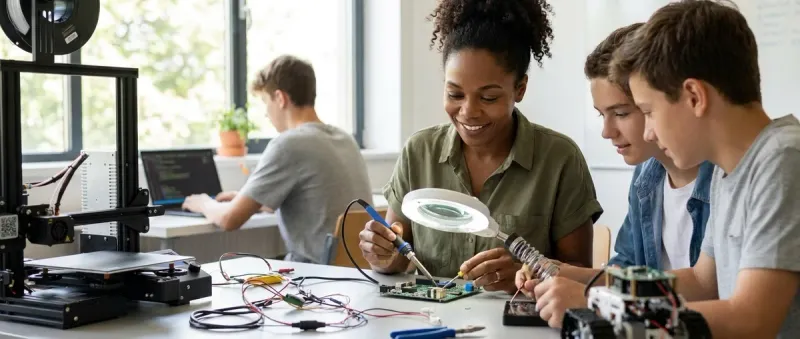

Teenage STEM education should feel less like playtime and more like apprenticeship. The stem activities for teenagers that matter aren't edutainment—they're rehearsals for actual engineering work, software development, and scientific research. You're investing in capability milestones that translate directly into industry tools, competitive portfolios, and the kind of hands-on fluency colleges and employers recognize instantly. If your teenager can design parametric CAD models, write Python scripts that control hardware, or collect calibrated environmental data, they're not "playing with STEM"—they're building a technical résumé.
What Is [Stem Activities for Teenagers]?
Stem activities for teenagers are structured, project-based learning experiences that develop measurable technical competencies in science, technology, engineering, and mathematics. Unlike elementary kits focused on exploration and wonder, teenage STEM work emphasizes industry-standard tools, reproducible methodology, and transferable skills.
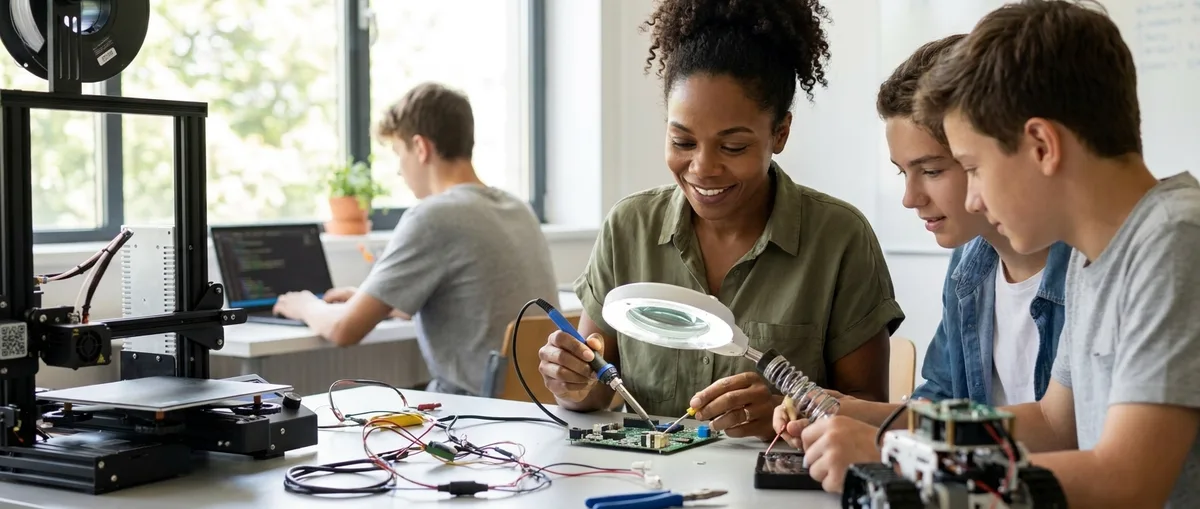
These activities bridge the gap between guided tutorials and independent problem-solving. Your teenager isn't just following instructions—they're debugging code, iterating designs based on test data, and making engineering trade-offs with real constraints (budget, material properties, power consumption, time). Think: programming a microcontroller to log temperature data every five minutes and graph trends in Python, not clicking through a colorful app that says "Congratulations, you coded!"
The defining characteristic is real-world applicability. Activities should mirror workflows professionals use: version control for code, parametric modeling in CAD software, sensor calibration protocols, design documentation. When your daughter writes Arduino C++ to control a servo motor, she's using the same IDE and syntax an embedded systems engineer uses. When your son models a mechanical linkage in Fusion 360, he's working in a platform industrial designers rely on daily.
Progressive STEM activities also demand accumulating complexity. Early projects establish foundational skills (blinking an LED, printing a calibration cube), middle projects integrate multiple systems (a sensor-triggered alarm with data logging), and advanced projects require original problem-solving (designing a custom PCB, optimizing wind turbine blade geometry through iterative testing).
How It Works: The Architecture of Skill-Building STEM Activities
Effective teenage STEM activities follow a four-phase cycle: specification, implementation, validation, and iteration. This isn't busywork—it's the engineering design process compressed into accessible projects.
Specification Phase: Defining the Problem
Every meaningful project starts with a clear objective and constraints. "Build a robot" is too vague. "Program a line-following robot that navigates a track in under 30 seconds using IR sensors and PID control" gives your teenager concrete success criteria. You'll notice real STEM activities include measurable outcomes: data accuracy thresholds, structural load requirements, code execution speed, energy efficiency targets.
For coding projects, specification means understanding inputs, outputs, and edge cases before writing a single line. If your teenager is building a weather station, the spec might be: collect temperature, humidity, and barometric pressure every ten minutes; store data locally on SD card; transmit hourly averages via WiFi to a cloud dashboard; run continuously on solar power with battery backup. Each requirement forces technical decisions downstream (sensor selection, power budget calculation, data format design).
Implementation Phase: Building and Coding
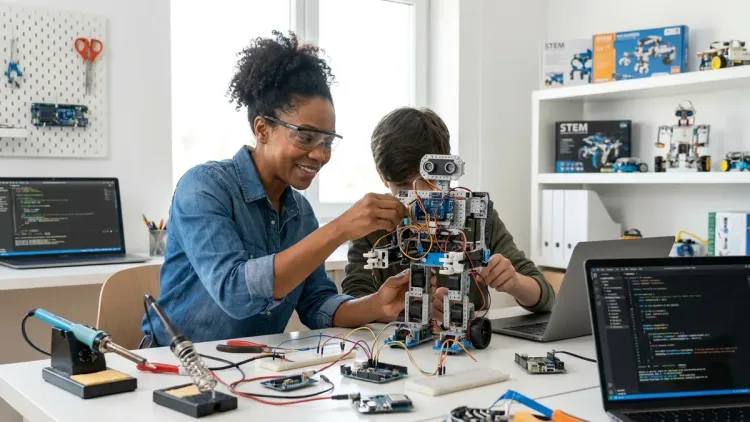
This is where platform choice matters intensely. Arduino-based projects teach C++ fundamentals and bare-metal hardware control—you're directly manipulating registers, managing memory, and thinking in microseconds. Raspberry Pi projects introduce Linux environments, GPIO libraries, and higher-level languages like Python, which opens doors to data science, machine learning, and web integration. For robotics, platforms like VEX V5 or LEGO SPIKE Prime offer block-based or text-based programming with industry-relevant sensors and actuators.
Lab Specs matter here: Does the kit require proprietary software that locks you into a walled garden, or does it work with open-source tools? The Arduino Mega 2560 runs on Arduino IDE (Windows/Mac/Linux, offline-capable, free forever) and integrates with PlatformIO for professional-grade development. That's a platform investment. Closed ecosystems with subscription-based cloud IDEs teach kids to depend on someone else's server staying online.
For 3D printing projects, your teenager learns slicing (converting models to G-code), support structure strategy, material selection (PLA for prototypes, PETG for mechanical parts, TPU for flex components), and print parameter tuning. The Creality Ender 3 V3 SE teaches these skills on a machine architecture (Cartesian FDM) that's ubiquitous in makerspaces and small manufacturing. You're not just making trinkets—you're mastering a fabrication process engineers use daily.
Validation Phase: Testing Against Specs
Does the robot follow the line? Does the wind turbine generate the predicted voltage at a given RPM? Is the temperature sensor reading within ±0.5°C of a calibrated reference thermometer? Validation separates STEM theater from STEM work. Your teenager learns to collect data systematically, identify failure modes, and distinguish between code bugs, hardware faults, and design flaws.
This phase also teaches documentation discipline. Keeping a lab notebook with timestamped observations, annotated code commits, and photo documentation of iterative builds is how professional engineers work. It's also how science fair judges, scholarship reviewers, and college admissions officers distinguish serious STEM students from hobbyists.
Iteration Phase: Improvement and Optimization
Real engineering is revision. The first design always has problems: the motor stalls under load, the sensor drifts after an hour, the 3D-printed bracket flexes too much. Iteration teaches your teenager to analyze failure, hypothesize solutions, implement changes, and retest. This loop—fail, diagnose, fix, validate—builds the resilience and systematic thinking that separates someone who "likes science" from someone who can actually engineer solutions.
Advanced projects add optimization: Can you reduce power consumption by 30%? Can you halve the code's memory footprint? Can you redesign the structure to use less material while maintaining strength? These constraints force creative problem-solving and deepen technical understanding far beyond tutorial-following.
Why It Matters: The ROI of Real STEM Skills
Teenage STEM activities are career capital. Not metaphorically—literally. A sixteen-year-old who can demonstrate a GitHub portfolio of Python projects, a portfolio of parametric CAD designs, or documented science fair research has already separated themselves from 95% of college applicants.
Direct Pipeline to Industry Tools
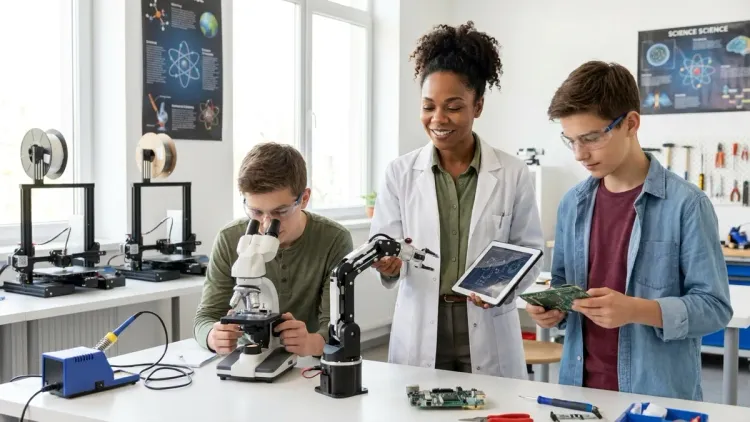
When your teenager masters Arduino, they're learning the Atmel AVR microcontroller architecture that powers millions of embedded systems. When they write Python data analysis scripts, they're using the same language that dominates machine learning, bioinformatics, finance, and climate modeling. When they model in Fusion 360, they're building skills that transfer directly to SolidWorks, Rhino, and other professional CAD platforms. These aren't "educational approximations"—they're the actual tools.
I've watched this play out in my own work: the solar charge controller I built at seventeen used the same Arduino-based MPPT algorithms I later adapted for a community microgrid project. The skills compounded because the foundation was real.
Competitive Advantage for Scholarships and Admissions
Colleges and scholarship committees see thousands of applications listing "STEM club" and "robotics team." What stands out is specificity: "Designed and programmed an autonomous greenhouse monitoring system using ESP32 microcontrollers, DHT22 sensors, and Python data visualization; reduced water waste by 40% in school garden." That sentence demonstrates systems thinking, interdisciplinary integration, and measurable impact. It's not padding—it's proof.
Science fair projects amplify this advantage. A well-documented energy efficiency experiment or environmental monitoring project shows research methodology, data literacy, and scientific communication skills that matter for STEM scholarships and program admissions.
Foundation for Climate-Forward Careers
The next decade demands engineers, scientists, and technologists who can build sustainable systems at scale. Teenage STEM activities focused on renewable energy, environmental monitoring, and resource efficiency aren't just feel-good projects—they're on-ramps to the fastest-growing sectors in engineering.
Learning to measure solar panel efficiency, calibrate air quality sensors, or optimize wind turbine designs teaches both technical skills and systems-level thinking about energy, ecology, and resilience. That combination will define the most impactful careers of the 2030s.
Types & Variations: Six Core Categories of Teenage STEM Activities
1. Microcontroller Programming and Electronics
Arduino, Raspberry Pi, ESP32, and micro:bit platforms teach circuit design, sensor integration, and embedded programming. Projects range from simple LED control to complex IoT systems with cloud connectivity. Skill milestones: reading datasheets, writing interrupt-driven code, debugging with serial monitors, designing PCBs.
Lab Specs: Requires 5V power supply (USB or wall adapter), breadboards, jumper wires, multimeter for troubleshooting. Expandability is key—look for platforms with large component ecosystems and active community support. Arduino and Raspberry Pi both excel here; proprietary platforms often don't. Check out our Arduino vs Raspberry Pi comparison for detailed capability breakdowns.
Career connection: Embedded systems engineering, IoT development, hardware prototyping, robotics programming.
2. 3D Design and Additive Manufacturing
CAD modeling in Tinkercad (beginner), Fusion 360 (intermediate-advanced), or FreeCAD (open-source) combined with FDM 3D printing. Projects evolve from printing downloaded models to designing functional mechanical parts with precise tolerances and engineering fits.
Skill milestones: parametric modeling (designs that adapt to dimension changes), assembly constraints, stress simulation, slicing parameter optimization, support structure strategy, post-processing techniques.
Lab Specs: 3D printers require dedicated space with ventilation (even PLA emits ultrafine particles), stable power, and dry filament storage. Budget $300-500 for entry-level machines; enclosed printers add safety for ABS/PETG. Consumables are ongoing—figure $20-30 per kilogram of filament.
Career connection: Mechanical engineering, industrial design, product development, aerospace, biomedical device design.
3. Robotics and Autonomous Systems
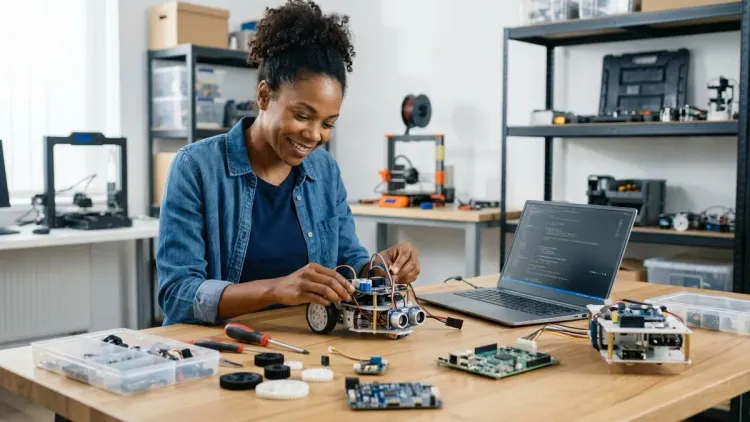
Platforms like VEX, FIRST Robotics, LEGO SPIKE Prime, or custom Arduino-based builds. Projects integrate mechanical design, sensor fusion, motor control, and autonomous navigation algorithms. Competitive robotics (STEM competitions) add time pressure and strategic thinking.
Skill milestones: PID control loops, odometry and localization, path planning algorithms, real-time decision logic, team collaboration and documentation.
Lab Specs: Requires ample floor space for testing, charging stations for LiPo batteries, tool access (screwdrivers, hex keys, wire strippers), and software compatibility (Windows/Mac for most platforms). Our robotics kit guide breaks down expandability and competition eligibility.
Career connection: Robotics engineering, autonomous vehicle development, industrial automation, AI/ML engineering.
4. Data Science and Machine Learning
Python-based projects using libraries like NumPy, pandas, matplotlib, scikit-learn, and TensorFlow. Activities include data cleaning, statistical analysis, visualization, and training simple ML models. Real datasets (climate data, environmental sensors, public APIs) make this tangible.
Skill milestones: writing Jupyter notebooks, data wrangling and cleaning, exploratory data analysis, training supervised learning models, evaluating model performance, understanding bias and overfitting.
Lab Specs: Requires computer capable of running Python 3.10+ with virtual environments, Jupyter Lab, and ML libraries. RAM matters—8GB minimum, 16GB preferred for larger datasets. All software is free and open-source. Our teaching Python guide walks through setup and progression.
Career connection: Data science, AI/ML engineering, bioinformatics, climate modeling, quantitative research.
5. Environmental Science and Citizen Research
Citizen science projects using sensor kits to collect water quality, air quality, soil chemistry, or weather data. Activities emphasize calibration protocols, data validation, statistical analysis, and contributing to real research databases (iNaturalist, SciStarter, GLOBE Observer).
Skill milestones: sensor calibration, quality assurance/quality control protocols, geospatial data collection, longitudinal data analysis, scientific writing and presentation.
Lab Specs: Environmental kits require outdoor deployment planning—weatherproofing, power (solar with battery backup common), data logging (SD cards or wireless transmission), and periodic maintenance. Sensors need calibration against known standards; calibration protocols prevent junk data.
Career connection: Environmental engineering, climate science, ecology, public health, geospatial analysis.
6. Renewable Energy Engineering
Hands-on projects with solar panels, wind turbines, and energy storage systems. Activities include efficiency testing, power electronics (charge controllers, inverters), system design with load matching, and optimization experiments.
Skill milestones: measuring voltage, current, and power under varying conditions; understanding maximum power point tracking; designing hybrid systems; calculating levelized cost of energy.
Lab Specs: Requires multimeter, variable resistor loads, lux meter (for solar), anemometer (for wind), oscilloscope for advanced projects. Outdoor testing space essential. Consumables minimal beyond replacement parts for iterative turbine blade designs. Our renewable energy guide details complete kit specs.
Career connection: Renewable energy engineering, grid systems design, sustainability consulting, power systems optimization.
Progressive Learning Paths: Building Skills Sequentially
Throwing your teenager into an advanced robotics platform without foundational skills wastes money and kills motivation. Effective STEM progression builds capability milestones systematically, with each project reinforcing prior skills while introducing new complexity.
Electronics and Programming Path
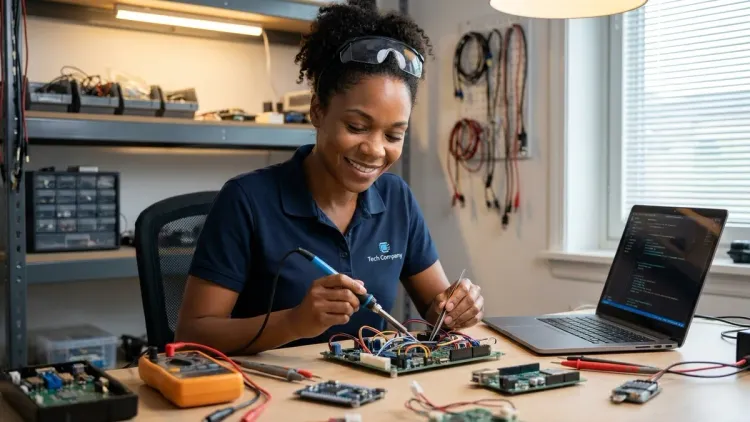
Foundation (Months 1-3): Start with Arduino Starter Kit projects—blinking LEDs, reading buttons, analog sensors, serial communication. Goal: understand circuit basics, write simple code, debug using serial monitor.
Intermediate (Months 4-6): Multi-sensor integration, motor control, interrupt-driven programming, basic state machines. Project example: temperature-controlled fan that logs data to SD card. Goal: manage multiple inputs/outputs, write modular code, use libraries effectively.
Advanced (Months 7-12): Custom PCB design (start with EasyEDA or KiCad), wireless communication (WiFi/Bluetooth), integration with cloud platforms, real-time OS concepts. Project example: IoT environmental station with web dashboard. Goal: design complete systems, not just prototype breadboard circuits.
This path directly prepares for home STEM lab work and advanced projects.
CAD and Manufacturing Path
Foundation (Months 1-2): Tinkercad basics—extrusions, holes, grouping, alignment. Print downloaded models to learn slicing and print settings. Goal: spatial reasoning, basic 3D manipulation, understanding print orientation effects.
Intermediate (Months 3-6): Fusion 360 parametric modeling—sketches, constraints, dimensions, extrusions, revolves, assemblies with joints. Design functional parts: replacement brackets, custom enclosures, mechanical linkages. Goal: engineering fits (clearances, tolerances), design for manufacturing.
Advanced (Months 7+): Stress simulation, topology optimization, multi-body assemblies with motion studies, surfacing for organic shapes. Project example: design and test a gear reduction system or articulated mechanism. Goal: professional CAD fluency, iterative design-test-revise workflow.
Pair this with our 3D design teaching guide for structured lessons.
Data Science Path
Foundation (Months 1-2): Python basics—variables, loops, functions, lists, dictionaries. Work through Codecademy or freeCodeCamp. Goal: read and write simple scripts without tutorials.
Intermediate (Months 3-6): NumPy arrays, pandas DataFrames, matplotlib plotting. Use real datasets (weather, sports stats) to practice. Project example: analyze five years of local temperature data, identify trends, create visualizations. Goal: clean messy data, compute statistics, create publication-quality graphs.
Advanced (Months 7+): scikit-learn for ML, Jupyter notebooks for reproducible research, version control with Git/GitHub. Project example: train model to predict energy consumption based on weather data. Goal: understand ML workflow, evaluate models critically, document code professionally.
Our Python teaching guide provides detailed milestones and project ideas.
Lab Specs: Infrastructure Requirements for Teenage STEM Work
Setting up effective workspace makes the difference between consistent skill-building and sporadic frustration. Teenage STEM activities demand more than a kitchen table—you need dedicated space, reliable power, proper tools, and organizational systems.
Physical Space Requirements
Minimum: 4'×6' desk area with task lighting, power strip with surge protection, storage for components and tools. Preferred: Dedicated 8'×10' space with workbench, overhead lighting, pegboard tool organization, shelving for projects-in-progress, and fire extinguisher (Class ABC for electronics work).
For 3D printing, add 2'×2' footprint for printer, ventilation (window fan minimum, HEPA filtration preferred), and fire-resistant surface. For robotics, include 6'×6' floor space for testing. Our home STEM lab setup guide details layouts and equipment lists.
Power and Connectivity
Essential: 15-amp dedicated circuit with 6+ outlets, stable WiFi for downloading libraries and documentation, offline capability for core tools (Arduino IDE, Fusion 360 offline mode, Python with local environments).
Cloud-dependent pitfall: Avoid platforms that require constant internet for basic functionality—cloud IDEs that won't compile code offline, subscription-based services that lock projects behind paywalls, proprietary ecosystems that disappear when companies pivot. Choose tools with local-first design.
Tool and Equipment Baseline
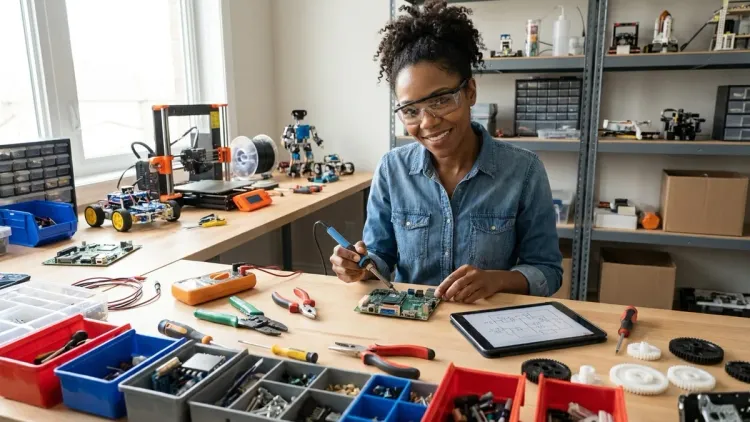
Electronics work: Digital multimeter, soldering iron with adjustable temperature (60W minimum), helping hands, wire strippers, flush cutters, breadboards, assorted jumper wires, resistor/capacitor kits. Budget $80-120 for quality basics.
3D design/printing: FDM printer ($300-500), calipers (digital, ±0.01mm), scraper set, needlenose pliers, hobby knife, sandpaper assortment. Filament storage (dry boxes or vacuum bags with desiccant). Budget $400-600 startup, $30-50/month consumables.
Data science: Computer with 16GB RAM, dual monitors (productivity multiplier), mechanical keyboard (ergonomics for long coding sessions), backup drive. All software free/open-source—budget $0 beyond hardware.
Consumables and Ongoing Costs
Electronics: Components wear out—LEDs burn out, sensors fail, wires break. Budget $20-40/month for replacement parts and expansion components. Arduino component kits provide good variety.
3D printing: Filament ($20-30/kg), nozzle replacements ($5-15), build surface refreshes ($10-20), occasional extruder parts. Expect $40-60/month for active projects.
No subscription required: Quality STEM platforms (Arduino, Fusion 360 for students, Python, KiCad) are free or one-time purchases. Avoid kits that lock you into monthly fees for basic functionality.
Integrating Activities into Progressive Curricula
Isolated projects teach isolated skills. Integrated curricula build systems thinking—the ability to see how mechanical, electrical, software, and data components interact.
Cross-Domain Project Example: Solar-Powered Weather Station
This single project integrates multiple STEM domains:
Energy system: Solar panel selection, charge controller design, battery capacity calculation, power budget optimization. Teaches renewable energy principles and electrical engineering.
Electronics: Microcontroller programming (Arduino or ESP32), sensor integration (DHT22 temperature/humidity, BMP280 barometric pressure, rain gauge), I2C communication protocols, power management (sleep modes to extend battery life).
Data science: Logging timestamped data to SD card or cloud database, Python scripts for data cleaning and visualization, statistical analysis of weather patterns, correlation studies (temperature vs humidity, barometric pressure vs weather changes).
Mechanical design: Custom enclosure design in CAD, 3D printing weather-resistant housing, sensor mounting considerations (radiation shield for temperature, rain gauge funnel design), weatherproofing cable entry points.
Project management: Breaking complex system into milestones, documentation of design decisions, troubleshooting when subsystems interact unexpectedly, presenting results clearly.
This isn't a weekend project—it's a semester-long investigation that produces genuine technical capability and tangible portfolio material. Our environmental monitoring guide and renewable energy experiments provide detailed component specs and build guidance.
Curriculum Design Principles
Spiral progression: Revisit core concepts with increasing complexity. First Arduino project: blink LED. Fifth project: PWM motor speed control. Tenth project: PID-controlled temperature system with web interface. The concept (digital output → analog output → closed-loop control) builds systematically.
Project portfolios over tests: Assessment should be "show me what you built and explain how it works," not multiple-choice questions about theory. Documentation, code quality, problem-solving approach, and working demonstrations are real evaluation criteria.
Failure normalization: Build debugging and troubleshooting into curriculum expectations. The first PCB layout always has mistakes. The first 3D print always needs parameter tuning. Teaching kids that iteration is the process, not a sign of failure, builds engineering resilience.
Check our progressive learning path guide for age-specific milestone frameworks.
Real-World Applications: From Projects to Portfolios
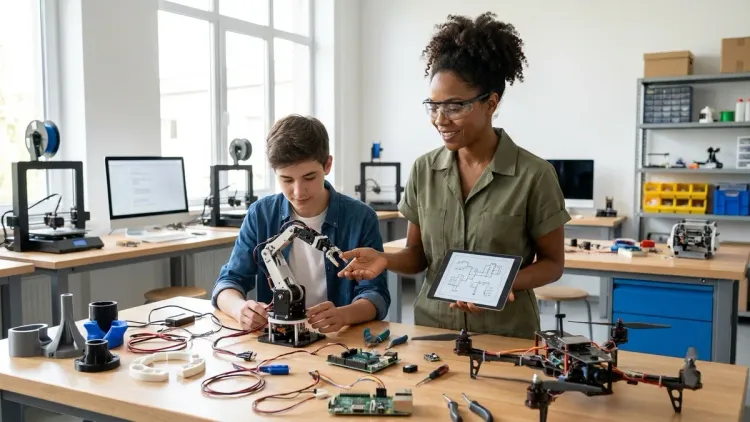
The most valuable outcome of teenage STEM activities isn't the skills themselves—it's the documented portfolio that proves those skills to outside evaluators.
GitHub for Code
Every Python script, Arduino program, or data analysis notebook should live in version-controlled repositories with clear README files explaining the project, dependencies, and usage. Employers and admissions committees actually look at GitHub profiles—it's not hypothetical. A teenager with 20 well-documented repositories showing progression from "hello world" to complex projects has demonstrated more technical capability than any transcript can capture.
Actionable practice: Commit early and often, write meaningful commit messages ("Fixed temperature sensor calibration offset" not "stuff"), include photos or videos in README files, add open-source licenses to encourage collaboration.
CAD Portfolios and Maker Profiles
Platforms like GrabCAD, Thingiverse, or Printables let your teenager showcase 3D models with renders, print photos, and design rationales. A portfolio with 15 original functional designs (not downloaded toys) demonstrates spatial reasoning, engineering judgment, and iterative improvement.
Portfolio strength indicators: Include failed early versions alongside refined final designs—show the learning process. Document design constraints and how you met them ("redesigned bracket to fit 8mm bolt instead of 10mm, reduced material by 30%"). Photograph printed parts in actual use.
Science Fair Documentation as Research Portfolio
Science fair projects done rigorously become genuine research experience. Document methodology, raw data, statistical analysis, and visual presentation. Convert your display board into a PDF technical report. If the work is strong enough, submit to student research journals or present at regional STEM symposiums.
Scholarship gold: A first-place regional science fair project with documented methodology, reproducible results, and clear real-world application is worth more on college applications than a 4.0 GPA in prerequisite courses. It shows initiative, depth, and scientific maturity.
Competition Credentials
Robotics competitions (FIRST, VEX), hackathons, and coding challenges provide third-party validation of skills. Awards don't just pad résumés—they're concrete evidence of performance under constraints (time pressure, rule compliance, teamwork).
Our STEM competition guide breaks down major opportunities and preparation strategies.
Avoiding Common Pitfalls: What Doesn't Work
Pitfall 1: Tutorial Dependency
If your teenager can't start a project without watching a YouTube tutorial, they're not building independent problem-solving skills—they're following recipes. Real engineering means reading documentation, searching forums, adapting existing solutions to new contexts.
Solution: After foundational tutorials, assign open-ended projects with only specification, no step-by-step guide. "Build a device that alerts you when your plant needs watering" has dozens of valid solutions. Struggling through design decisions builds capability.
Pitfall 2: Collecting Kits Without Completing Projects
STEM kit hoarding is real. Parents buy Arduino starter kit, Raspberry Pi kit, robotics platform, 3D printer, renewable energy kit... and teenagers dabble without mastering any single platform.
Solution: Choose one primary platform per domain (one microcontroller ecosystem, one CAD program, one programming language) and drive deep before adding breadth. Mastery of Arduino beats superficial familiarity with Arduino + Pi + micro:bit + proprietary robotics brain.
Pitfall 3: Ignoring Documentation and Version Control
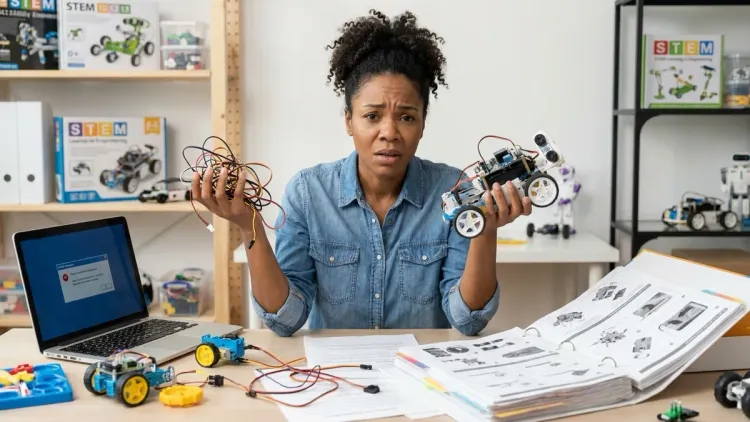
Teenagers who don't document work lose 90% of its value. That amazing sensor project from six months ago? If the code has no comments and the wiring wasn't photographed, it's archaeologically difficult to recreate or explain.
Solution: Make documentation a deliverable requirement. Code comments, wiring diagrams (Fritzing is great for this), design decision logs, test data tables. Treat every project like someone else will need to understand and replicate it—because scholarships and job interviews demand exactly that.
Pitfall 4: Greenwashing Sustainability Claims
Many "eco-friendly STEM kits" are theater—single-use projects with unrecyclable components, solar panels too small to power anything real, or "biodegradable" materials that require industrial composting (which means landfill in practice).
Solution: Evaluate sustainability claims critically. Real green STEM focuses on reusable platforms, repairable designs, open-source hardware (which extends product life through community support), and projects that actually measure environmental impact with calibrated instruments. Our renewable energy kits guide separates functional systems from greenwashing.
Building Career Pathways: What Industry Cares About
Teenage STEM activities should build skills employers and graduate programs actively seek. Here's what matters:
Industry-Standard Tools
High value: Arduino IDE, Python, Fusion 360/SolidWorks, Git/GitHub, MATLAB/Octave, Linux command line, CAD/CAM workflows, oscilloscope fluency.
Low value: Proprietary block-based languages that don't transfer, closed-ecosystem platforms, drag-and-drop "no code" tools that hide actual logic.
The difference? Arduino C++ translates directly to professional embedded systems work. Proprietary robot-specific block coding doesn't transfer anywhere. Choose platforms that teach general principles, not brand-specific interfaces.
Documented Problem-Solving
Employers care less about what you built than how you approached problems when it didn't work. GitHub commit history showing debugging progression, documented design iterations with rationale, or science fair journals with failed experiments included demonstrate engineering mindset.
Interdisciplinary Integration
The most interesting careers happen at intersections: biomedical engineering, climate data science, renewable energy systems, environmental robotics. Teenagers who can demonstrate projects integrating mechanical + electrical + software + data have distinctive competitive advantage.
Example: designing an automated hydroponic system requires mechanical structure (CAD/3D printing), electronics (sensors, pump control, microcontroller programming), data science (growth rate analysis, nutrient optimization), and systems thinking (water/power budget, failure mode analysis). That's engineering résumé gold.
Communication and Presentation
Technical skills mean nothing if you can't explain them. STEM activities should include presentation components: explaining code to non-programmers, presenting science fair research to judges, documenting projects in clear technical writing, creating demo videos.
This is where science fairs, maker faires, and teen tech talks build crucial soft skills. Our careers guide details communication skills by field.
Frequently Asked Questions
What are the best STEM activities for teenagers who have never done technical projects before?
Start with Arduino-based electronics projects using a comprehensive starter kit—they provide structured learning with immediate visual feedback (LEDs light up, motors spin) while teaching foundational programming and circuit concepts. Look for kits with offline-capable software (Arduino IDE works without internet), detailed tutorials for first five projects, and expandability with standard components. After mastering basic sensor input and motor output, transition to integration projects like a temperature-controlled fan or automated plant watering system. Pair electronics work with beginner CAD using Tinkercad (completely free, browser-based, gentle learning curve), progressing to functional part design within 6-8 weeks. The key is choosing platforms with massive community support—Arduino and Tinkercad have millions of tutorials, forum posts, and example projects, so teenagers never get stuck without resources.
How much should I budget for meaningful teenage STEM activities that build real skills?
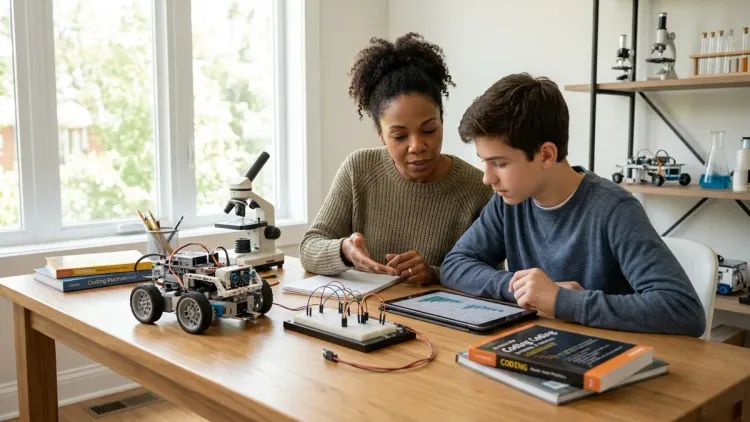
Budget $800-1200 for comprehensive first-year setup across multiple domains: $200-300 for quality Arduino starter kit with breadboards, sensors, motors, and components; $300-500 for entry-level 3D printer (Creality Ender series or Prusa Mini); $100-150 for essential tools (multimeter, soldering station, calipers, hand tools); $200-300 for computer upgrades if needed (16GB RAM minimum for CAD and data science work). Ongoing consumables run $50-100/month (3D printer filament, replacement electronic components, project-specific materials). Most core software is free—Arduino IDE, Python, Fusion 360 (free educational license), KiCad, GIMP—so avoid platforms requiring subscriptions. This investment spreads across multiple years and dozens of projects, making per-project cost under $50 after startup, which is dramatically better value than one-time project kits that teach isolated skills and then gather dust.
Can teenagers really learn professional-level engineering skills at home, or do they need formal classes?
Teenagers absolutely can reach professional competency through self-directed home learning—I taught myself to code and design solar systems entirely outside formal education, and the engineers I collaborate with today come from wildly diverse learning backgrounds. The critical factors are access to industry-standard tools (Arduino IDE, Python, professional CAD software), project-based learning with clear capability milestones (not passive video watching), and systematic documentation that forces articulation of problem-solving approaches. Formal classes provide structure and deadlines but often use educational-grade tools that don't transfer to industry; home labs using actual Arduino, Raspberry Pi, and Fusion 360 teach the exact platforms working engineers use daily. The portfolio and demonstrated capability matter infinitely more than the setting where learning happened—a GitHub repository with 30 documented projects proves more than any transcript. That said, hybrid approaches work well: use our progressive learning path frameworks to structure home work, supplement with online communities (Arduino forums, Reddit's r/arduino and r/3Dprinting), and pursue external validation through science fairs and competitions.
How do I know if a STEM kit or platform will actually prepare my teenager for college STEM programs or careers?
Evaluate platforms using three criteria: tool transferability, expandability, and professional adoption. Tool transferability means the software, programming languages, and workflows directly match industry standards—Arduino C++ is used in embedded systems engineering, Python dominates data science and ML, Fusion 360 transitions seamlessly to SolidWorks. If a platform uses proprietary block coding that doesn't convert to text-based languages or closed ecosystems with subscription-dependent cloud tools, it's teaching platform-specific skills, not transferable competencies. Expandability means your teenager can add sensors, integrate with other systems, and scale projects in complexity—Arduino and Raspberry Pi excel here with thousands of compatible components and libraries; closed educational robots with fixed sensor sets hit capability ceilings quickly. Professional adoption means the platform appears in actual job postings and research papers—search "Arduino embedded systems engineer" or "Python data scientist" and you'll find thousands of positions; search proprietary educational platform names and you'll find elementary school teacher job postings. Check our platform comparison guides for detailed capability analysis by skill domain.
What's the difference between STEM activities for teenagers versus activities for younger children?
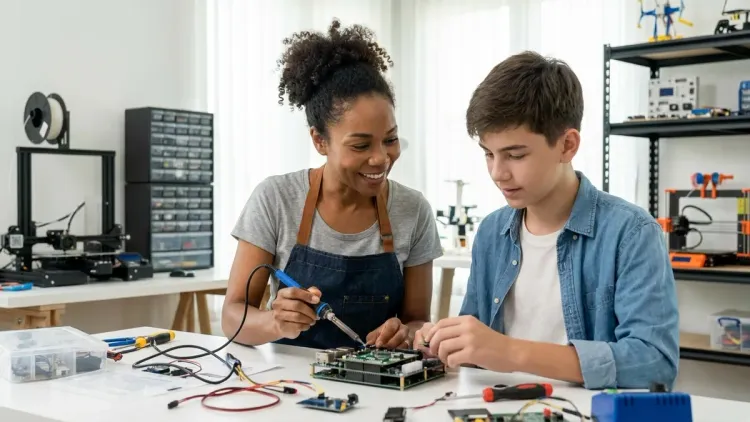
Teenage STEM activities emphasize industry-standard tools, open-ended problem-solving, and measurable technical outcomes rather than guided exploration and play-based learning. While elementary STEM focuses on wonder, engagement, and foundational concepts through structured kits with clear instructions, teenage work demands debugging code without step-by-step tutorials, iterating designs based on test data, and making engineering trade-offs with real constraints. The progression looks like: elementary students use visual block coding in fixed environments (Scratch, LEGO WeDo), middle schoolers transition to block-to-text bridges (LEGO SPIKE Prime with Python option, Blockly with JavaScript visibility), and teenagers write production code in text-based IDEs with version control and documentation discipline. Similarly, younger children assemble pre-designed mechanisms learning mechanical principles; teenagers design original CAD models, test them through simulation or physical prototypes, identify failure modes, and iterate improvements. Teenage activities should produce portfolio-quality work demonstrable to external evaluators—documented GitHub repositories, technical science fair presentations, CAD portfolios with engineering rationale, competitive robotics experience—because the goal shifts from "developing STEM interest" to "building STEM competency that opens career doors."
Summary
Teenage STEM activities worth investing in teach industry-standard tools through project-based work that produces documented capability milestones. Whether your teenager is programming microcontrollers in Arduino C++, designing parametric mechanical parts in Fusion 360, training machine learning models in Python, or collecting calibrated environmental data for citizen science, effective activities mirror professional workflows and build transferable skills. Choose platforms with offline capability, open-source foundations, and massive expandability—Arduino ecosystems, Raspberry Pi projects, FDM 3D printing, and Python data science all fit this profile. Budget $800-1200 startup across multiple domains with $50-100/month consumables, prioritize deep mastery over surface-level dabbling, and make documentation and version control non-negotiable practices. The outcome isn't just technical knowledge—it's a portfolio of demonstrated capability that colleges and employers recognize instantly. Teenage STEM work should feel like apprenticeship, not entertainment, because you're building the foundation for climate-forward, technically sophisticated careers that matter urgently.