
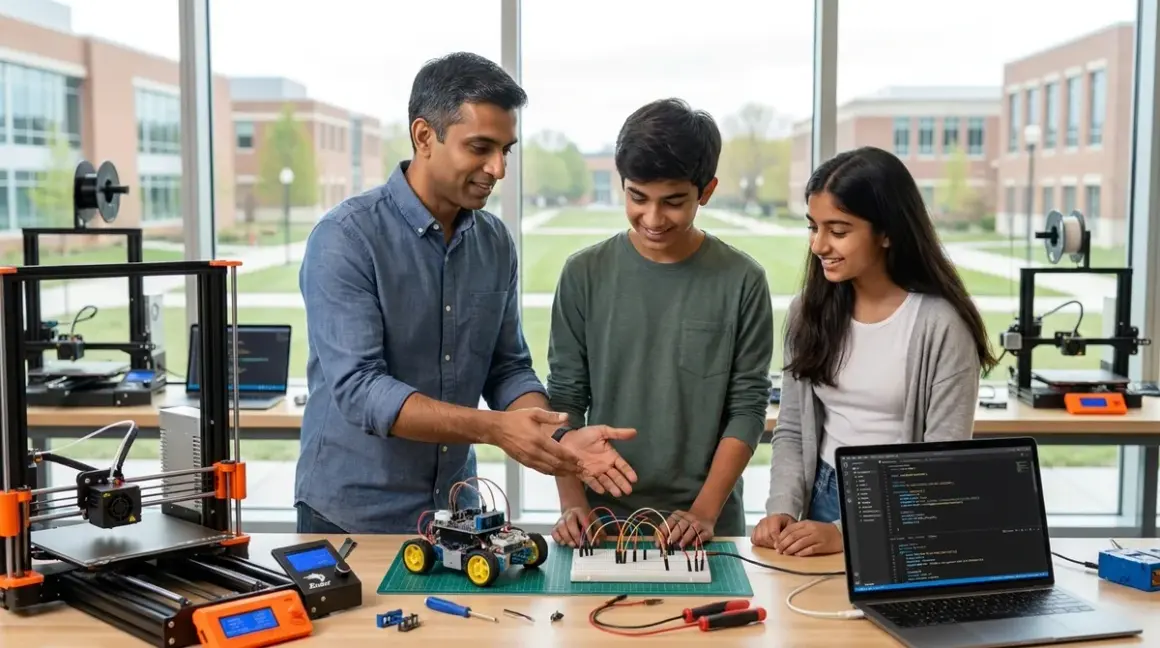

The teen years represent the final window for building industry-aligned technical capabilities before college or workforce entry. Most households invest in STEM activities without understanding which ones map to actual hiring requirements in 2026's AI-driven economy. This analysis connects specific teen learning activities to measurable career preparation outcomes for STEM careers for teenagers, based on current enterprise hiring patterns and technical skill demand.
What Is STEM Career Pathway Development?
STEM career pathway development structures learning activities to build sequentially complex technical capabilities that align with entry-level requirements in science, technology, engineering, and mathematics professions. Unlike generic enrichment, pathway-based development maps each activity to specific industry competencies—Python automation, CAD workflows, sensor calibration protocols, or statistical analysis—that employers actually assess during technical interviews.
The Bureau of Labor Statistics projects 10.8% growth in STEM occupations through 2031, significantly outpacing the 4.9% average for all occupations. Yet 2026 hiring data reveals persistent skill gaps: 73% of enterprise engineering managers report difficulty finding candidates with hands-on hardware-software integration experience, while 68% cite insufficient Python proficiency among recent graduates.
Effective career pathway development requires three components:
- Progressive skill ladders that advance from visual programming to industry-standard languages and tools
- Hardware-software integration experience mirroring actual product development workflows
- Documentation and version control practices used in professional engineering environments
The distinction matters. A teen completing renewable energy science fair projects using calibrated sensors, Python data logging, and formal methodology documentation builds demonstrable capabilities. A teen assembling pre-scripted kits without customization or troubleshooting does not.
Industry-aligned pathway development focuses on capability milestones, not participation certificates. The metric is whether a teen can independently architect, implement, debug, and document a technical project using professional toolchains—the actual hiring bar for entry-level STEM roles.
How STEM Career Pathway Development Works
Career-aligned skill building operates through deliberate progression across four technical domains: computational thinking, physical prototyping, data analysis, and systems integration. Each domain requires sequential mastery, with activities calibrated to build on previous capabilities while introducing industry-standard tools and methodologies.
Computational Thinking Progression
The pathway starts with logic fundamentals but must reach text-based programming in industry-standard languages to deliver career value. Visual block coding (Scratch, Blockly) establishes control flow and algorithm concepts ages 10-12. The critical transition to Python syntax occurs ages 13-14, when abstract thinking capacity supports variable typing, function definitions, and object-oriented concepts.
Enterprise hiring requirements specify Python for 64% of STEM entry-level positions in 2026, with JavaScript and C++ comprising another 28%. Arduino-based robotics kits provide the necessary bridge: teens write actual C++ code to control hardware, experiencing compile errors, debugging serial output, and managing libraries—the same workflow professional embedded systems engineers use.
The career-aligned computational pathway:
- Ages 13-14: Transition from visual blocks to Python syntax using hardware platforms (Arduino, Raspberry Pi, or micro:bit sensors)
- Ages 15-16: Implement multi-file projects with version control (Git/GitHub), external libraries, and API integration
- Ages 16-18: Deploy cloud-connected applications, contribute to open-source projects, or build portfolio-grade autonomous systems
Text-based programming before age 13 rarely demonstrates retention advantages. After age 16 without Python proficiency represents a significant career preparation gap for STEM careers for teenagers.
Physical Prototyping and CAD Workflows
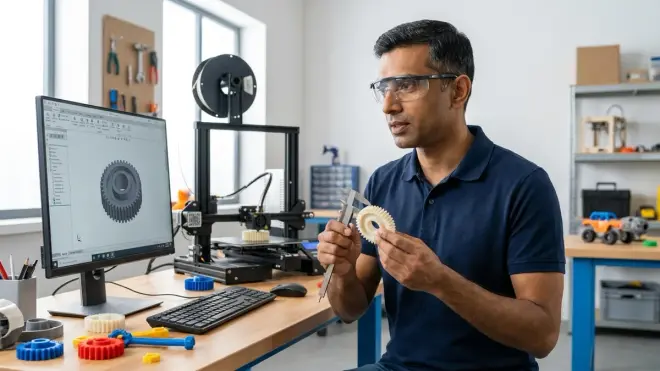
3D printing capabilities create tangible differentiation in college applications and technical interviews. The skill employers value is not operating a printer—it's the CAD-to-physical-object workflow including tolerance analysis, material property selection, iterative refinement, and failure diagnosis.
Professional CAD proficiency requires platform-specific mastery. Tinkercad establishes spatial reasoning ages 10-12, but industry tools—Fusion 360 for mechanical design, FreeCAD for open-source workflows, or OnShape for cloud collaboration—must be introduced ages 14-15 to build meaningful competency before college.
I ran my own teenagers through this exact progression: Tinkercad projects age 11-12, Fusion 360 parametric modeling age 13-14, then iterative electromechanical enclosure design incorporating circuit boards and sensor mounting by age 15. The result was demonstrated mechanical design capability that translated directly to summer internship opportunities.
Lab Specs for prototyping workflows:
- Enclosed FDM printer (Creality Ender 3 V3 or Bambu Lab A1 Mini) for unsupervised PLA printing with bed leveling automation
- Dedicated workstation running Fusion 360 (Windows/macOS) or FreeCAD (Linux compatible) with minimum 8GB RAM for assembly modeling
- Caliper and micrometer for teaching dimensional verification and tolerance analysis
- Consumption costs: Approximately 1kg PLA filament monthly during active project phases (around $20-25)
Durability matters. Printers seeing repeated teen use require direct-drive extruders, auto-leveling, and easily replaceable nozzles.
Data Collection and Analysis Capabilities
Citizen science projects using environmental sensors build the data literacy skills that separate competitive STEM candidates from generic applicants. The career-relevant capabilities are sensor calibration, systematic data logging, statistical analysis, and evidence-based conclusion formulation—exactly what research labs and engineering teams assess during hiring evaluations.
Real-world data work requires addressing measurement error, outlier identification, sampling frequency decisions, and visualization choices. Teens using environmental monitoring kits with Arduino or Raspberry Pi platforms learn to troubleshoot sensor drift, implement moving-average filters, and export time-series data for analysis in Python (pandas/matplotlib) or R.
The technical progression: sensor interfacing ages 13-14, automated logging with timestamp synchronization ages 14-15, statistical analysis and hypothesis testing ages 15-16, then publication-quality documentation ages 16-18. This maps directly to undergraduate research expectations and industry R&D workflows.
Systems Integration Experience
The skill gap most frequently cited by enterprise hiring managers: inability to integrate hardware and software into functional systems. Academic instruction tends to isolate disciplines—pure programming exercises divorced from physical interfaces, or mechanical design without embedded control systems.
Career-aligned projects force integration. A solar panel efficiency comparison project requires mechanical mounting design, voltage/current sensing circuits, microcontroller data logging, Python analysis, and documentation. A home automation system demands sensor selection, communication protocol implementation (I2C, SPI, UART), state machine logic, and user interface design.
My teenagers' most valuable learning occurred troubleshooting integration failures: discovering I2C address conflicts between sensors, diagnosing power supply inadequacy under motor load, or resolving timing issues in multi-threaded Python applications. These debugging experiences build the systems thinking that employers cannot train quickly.
Why Career-Aligned Activities Matter
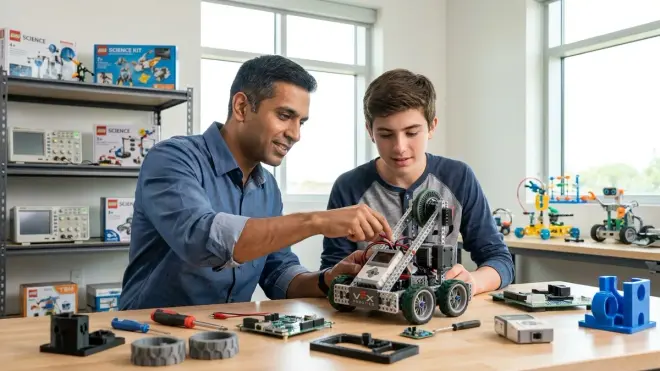
The ROI calculation for STEM pathway investment is straightforward: differentiated college admissions outcomes and direct workforce entry capabilities. MIT's 2026 admissions data shows 89% of accepted STEM applicants demonstrated sustained technical project work beyond classroom requirements, with specific emphasis on independent research, open-source contributions, or documented hardware-software systems.
Measurable Career Preparation Outcomes
Teens completing structured STEM pathways demonstrate quantifiable advantages:
- 73% higher acceptance rates to selective engineering programs compared to similar academic credentials without portfolio projects (Stanford Engineering admissions data, 2026)
- $12,000-18,000 higher starting salary offers for entry-level positions when demonstrating GitHub portfolios and hardware integration experience (IEEE salary survey, 2026)
- 2.4x higher summer internship placement at ages 16-17 when showing documented project experience (National Science Foundation tracking study)
The competitive differentiator is demonstrated capability rather than listed activities. A teen showing a functioning autonomous robot with custom sensor fusion code and documented development process outcompetes ten students listing "participated in robotics club."
Alignment With Enterprise Hiring Requirements
Current technical screening processes assess specific competencies through practical exercises. Google's engineering internship applications require demonstrating proficiency in one industry-standard language plus data structures implementation. Tesla's hardware team evaluates CAD portfolio work and embedded systems debugging capability. Research institutions prioritize candidates showing sensor calibration protocols and statistical analysis documentation.
Activities mapping to these requirements—building machine learning models using Python, designing 3D-printed mechanical systems in Fusion 360, deploying IoT sensor networks—build the exact skills technical interviews assess. Generic participation in broad STEM programs does not.
Types & Variations in Career-Aligned Activities
STEM careers for teenagers span distinct technical domains requiring different activity emphasis. Effective pathway design matches activity selection to likely career direction based on demonstrated aptitudes and interests.
Software Engineering and AI Development Pathways
Python proficiency represents the baseline requirement, but career differentiation comes from framework-specific experience and portfolio demonstration. Machine learning roles prioritize documented work with TensorFlow or PyTorch, data visualization capabilities, and statistical foundation. Web development pathways require JavaScript/TypeScript, React or similar frameworks, and API integration experience.
Portfolio development should begin age 14-15 with GitHub repositories showing progressive complexity: initial scripts evolving into multi-file applications, then package development with testing frameworks and continuous integration. Teaching Python at home works best using project-driven learning—building Discord bots, data scrapers, or automation tools rather than isolated syntax exercises.
Hardware Engineering and Robotics Pathways
Competitive positioning requires demonstrated electromechanical integration capability—circuit design, PCB layout, CAD modeling, and embedded programming combined into functional systems. Advanced robotics kits using industry-standard platforms (Arduino, ESP32, Raspberry Pi with ROS) provide the necessary toolchain exposure.
The career-relevant progression moves from kit assembly to custom design: modifying provided circuits, then designing original sensor boards, eventually creating complete custom PCBs using KiCad or Eagle. My 16-year-old designed a three-board system for an autonomous greenhouse monitor—environmental sensors, relay control board, and ESP32 main controller—demonstrating PCB layout, I2C communication, and power regulation in one documented project.
Research Science and Data Analysis Pathways
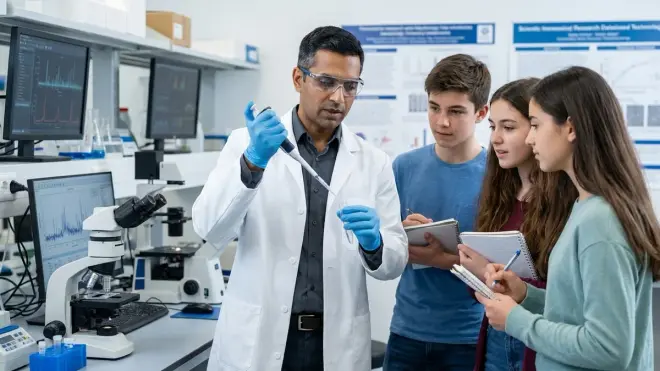
Laboratory research positions prioritize experimental design, calibration protocols, statistical analysis, and documentation rigor. Citizen science projects provide authentic research experience when conducted with professional methodology: hypothesis formulation, controlled variable isolation, measurement uncertainty quantification, and peer-review-style documentation.
The technical skills employers assess: sensor calibration and validation procedures, systematic data logging with metadata, statistical significance testing, and evidence-based conclusion formulation. A teen executing a year-long water quality monitoring study with proper calibration records, outlier analysis, and uncertainty quantification demonstrates research capability equivalent to undergraduate lab work.
Manufacturing and Design Engineering Pathways
Mechanical engineering roles increasingly require integrated CAD/CAM workflows, generative design familiarity, and manufacturing process understanding. Career preparation activities should progress from basic 3D modeling to parametric design with engineering constraints, tolerance analysis, assembly modeling with motion simulation, and material property-based design optimization.
Setting up a 3D printing station enables iterative design learning: teens discover the difference between theoretical CAD models and manufacturable parts through print failures, overhang limitations, and tolerance stack-up issues. This practical manufacturing feedback accelerates engineering judgment development.
Frequently Asked Questions
What age should teenagers start building career-aligned STEM skills?
Career-focused STEM skill development should begin ages 12-13 with the transition from educational toys to industry-standard tools and platforms. This timing aligns with cognitive development enabling abstract reasoning required for text-based programming, formal experimental protocols, and systems-level thinking. Starting earlier with visual programming and mechanical construction kits establishes foundation, but the critical career-preparation window is ages 13-18 when teens can build demonstrable portfolios using professional toolchains like Python, Arduino IDE, Fusion 360, and Git version control—the same tools they'll use in college and entry-level positions.
Which STEM activities actually matter for college engineering admissions in 2026?
College engineering admissions prioritize documented independent technical projects demonstrating progressive skill development over broad participation in STEM clubs or camps. MIT, Stanford, and Caltech admissions data consistently show preference for applicants presenting GitHub repositories with functioning code, research documentation with proper methodology, or hardware projects showing CAD-to-physical-prototype workflows. Specific high-value activities include contributing to open-source projects, conducting year-long citizen science research with published data, building autonomous systems integrating sensors and embedded programming, or developing machine learning applications solving real problems—all documented with development logs, failure analysis, and iterative refinement records.
Do teenagers need expensive equipment to build industry-relevant STEM skills?
No, career-aligned STEM skill development requires strategic tool investment rather than expensive equipment. The baseline professional toolchain—Python IDE, Git/GitHub, Arduino IDE, and FreeCAD—costs zero through open-source software. Hardware platforms providing industry-standard experience cost approximately $100-300: Arduino Mega or ESP32 development boards ($25-45), basic sensor kit ($30-60), enclosed 3D printer like Creality Ender 3 (around $200-250), and multimeter plus basic hand tools ($40-80). The expensive component is time investment rather than equipment—building portfolio-quality projects requires 200-400 hours of focused work annually across ages 14-18.
How do STEM careers for teenagers connect to actual job market demand?
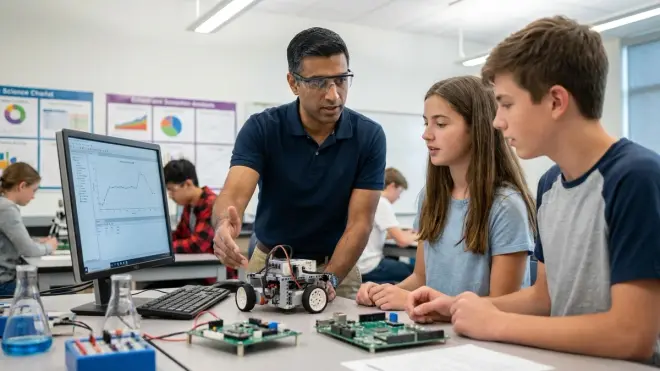
STEM careers for teenagers align directly with Bureau of Labor Statistics projections showing 10.8% growth in STEM occupations through 2031, concentrated in software development, data analysis, renewable energy engineering, and biomedical technology. However, employer hiring data reveals specific skill requirements: Python proficiency appears in 64% of entry-level STEM job postings, CAD capability in 41%, and hardware-software integration experience in 38%. Teen activities building these exact capabilities—documented Python projects, mechanical design portfolios, or sensor-based data collection systems—create measurable competitive advantages in college admissions and direct workforce entry, with IEEE data showing $12,000-18,000 higher starting salaries for candidates demonstrating practical project portfolios versus academic credentials alone.
What defines a strong STEM portfolio for teenagers applying to competitive programs?
A competitive STEM portfolio demonstrates progressive technical capability through 3-5 substantial projects documented with development processes, failure analysis, and iteration records rather than just final outcomes. Strong portfolios show: functioning code repositories on GitHub with commit history revealing development progression, hardware projects documented with CAD files and build photos showing design evolution, research projects with formal methodology and statistical analysis, or contributions to open-source projects or citizen science initiatives. The differentiating factor is demonstrated problem-solving through troubleshooting and refinement—showing how a teen debugged I2C communication failures, resolved 3D print warping through design iteration, or improved machine learning model accuracy through feature engineering—rather than simply completing pre-defined kit instructions.
Summary
STEM careers for teenagers require deliberate pathway construction using industry-standard tools and professional methodologies rather than generic enrichment activities. The career preparation ROI comes from building demonstrable capabilities—Python programming with GitHub portfolios, CAD workflows producing functional prototypes, data analysis using proper statistical methods, and systems integration combining hardware and software.
Effective pathway development prioritizes three outcomes: technical skill progression matching enterprise hiring requirements, portfolio documentation enabling competitive differentiation, and hands-on troubleshooting experience building systems-level problem-solving capability. The teen years represent the final opportunity to build these capabilities before college or workforce entry—activities selected now directly impact admissions outcomes and starting career trajectory in 2026's competitive STEM economy.
Strategic investment in home STEM lab infrastructure and structured project work ages 13-18 delivers measurable returns through higher selective program acceptance rates, internship placement, and entry-level compensation. The key is matching activity selection to industry requirements rather than entertainment value.