
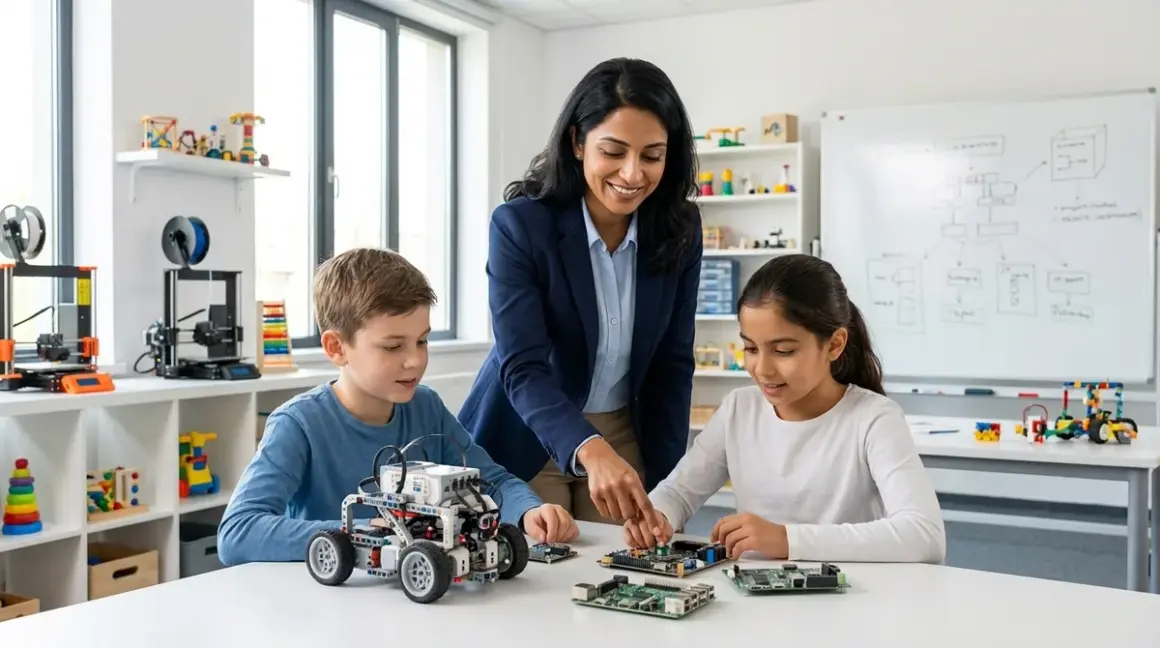

If you're wondering what skills do 10 year olds learn from STEM toys, you're asking exactly the right question. Age ten marks a developmental sweet spot—abstract thinking is emerging, fine motor skills are refined, and your child can sustain focus for complex multi-step projects. The right STEM tools don't just entertain; they build measurable capabilities that translate directly into middle school coursework, competitive robotics, and eventually, career-ready technical literacy. This isn't about keeping busy. It's about scaffolding genuine expertise during a window when children naturally crave mastery.
What Is [X]?
When we talk about what skills do 10 year olds learn from STEM toys, we're really asking: which cognitive, manual, and analytical abilities does a fifth-grader need to transition from exploratory play to intentional problem-solving? At this age, children move beyond trial-and-error tinkering toward systematic debugging, logical sequencing, and quantitative reasoning. They can grasp cause-and-effect across multiple variables, document their process, and iterate based on observed outcomes.
True STEM learning at age ten involves industry-aligned competencies: reading circuit diagrams, writing conditional logic in block-based or text-based languages, measuring voltage with a multimeter, troubleshooting syntax errors, and designing functional prototypes using CAD software. These aren't aspirational goals—they're entirely achievable milestones when you choose tools that match cognitive readiness.
The distinction between a "STEM toy" and a skill-building platform matters here. A battery-powered gadget that performs a preset trick teaches novelty. A modular robotics kit compatible with Arduino IDE, expandable with third-party sensors, and programmable in both Scratch and Python teaches transferable technical fluency. Your ten-year-old doesn't need more toys. They need tools that prepare them for the equipment they'll encounter in high school engineering labs and undergraduate research.
How It Works
Understanding what skills do 10 year olds learn from STEM toys requires mapping developmental capacity to concrete learning outcomes. At age ten, the prefrontal cortex supports sustained attention for 30–45 minutes, working memory can juggle four to five variables simultaneously, and metacognition—thinking about thinking—becomes accessible. This neurological foundation lets children move from intuitive guessing to hypothesis-driven experimentation.
Computational Thinking Without Screen Dependency
Screen-free coding platforms teach algorithmic logic through physical manipulation. The Turing Tumble Marble-Powered Computer uses gravity and mechanical gates to demonstrate binary logic, conditional branching, and pattern recognition—all concepts central to computer science. Your child builds circuits with ramps, bits, and interceptors, then watches computation happen in real time as marbles cascade through their design.
This tactile approach addresses what I see repeatedly in my practice: children who can recite code syntax but can't explain why a loop iterates or how a conditional statement controls program flow. When you physically flip a bit to change the marble's path, you're not memorizing—you're internalizing computational structure. That understanding transfers seamlessly when your child later transitions from screen-free coding to Scratch and Python.
Multi-Domain Integration: Electronics, Mechanics, and Programming
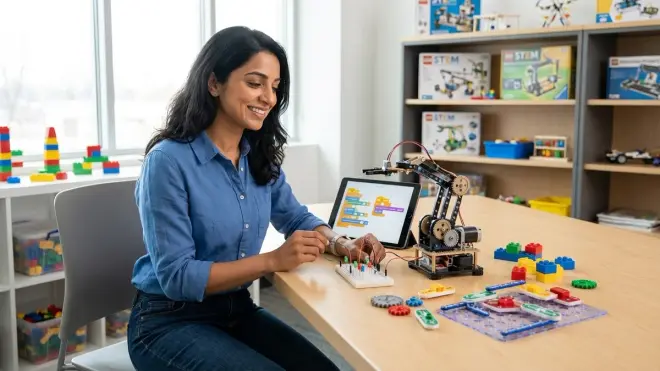
What skills do 10 year olds learn from STEM toys that integrate hardware and software? Systems thinking—the ability to trace how a change in one subsystem propagates throughout a design. Arduino-compatible robotics kits exemplify this beautifully. Your child writes code to read a photoresistor's voltage, converts that analog signal to a digital value, evaluates it against a threshold, and triggers a motor response. That's signal processing, conditional logic, and electromechanical control in a single project.
The LEGO Mindstorms vs VEX Robotics debate ultimately centers on expandability and industry alignment. VEX IQ uses metal structural components and industry-standard sensors (gyroscopes, accelerometers, ultrasonic rangefinders) that mirror equipment in professional automation. Children learn to calibrate sensors, account for measurement drift, and implement PID control loops—concepts that appear in AP Physics and college-level mechatronics.
Documentation and Iterative Design
By fifth grade, children can maintain engineering notebooks, photograph failed prototypes, and articulate what changed between iterations. This isn't busywork—it's the scientific method applied to personal projects. When building a wind turbine science project, your child documents blade pitch angles, measures rotational velocity with a tachometer, calculates power output, and redesigns based on quantitative data. That's materials science, experimental design, and data literacy bundled into one afternoon.
I've watched children rediscover the value of "mistakes" when they have a notebook documenting three failed circuit designs alongside the fourth that finally worked. It reframes frustration as information. That emotional resilience—persisting through multiple failures because you're systematically eliminating variables—is arguably more valuable than any specific technical skill.
Why It Matters
You're not just preparing your child for standardized tests or science fair ribbons (though both improve). The skills ten-year-olds learn from STEM toys create optionality in adolescence and early adulthood. A fifth-grader comfortable with multimeters and breadboards can troubleshoot home electrical issues, join high school robotics teams without remedial catch-up, and enter college STEM programs with hands-on experience most freshmen lack.
Career Pathway Alignment
The most effective STEM tools for this age group mirror industry-standard platforms. Arduino boards run embedded systems in medical devices, automotive controls, and industrial automation. Transitioning from block-based to text-based robot programming using languages like C++ and Python means your child isn't just playing—they're building a portfolio of projects using tools employed by professional firmware engineers and roboticists.
3D printing literacy opens similar doors. Learning to design parts in Tinkercad and Fusion 360, understanding FDM printing constraints, and troubleshooting layer adhesion or warping issues teaches CAD/CAM fundamentals. These aren't speculative future skills—they're current requirements for manufacturing technicians, prosthetics designers, and aerospace prototyping teams. A ten-year-old who can design functional objects and print them learns spatial reasoning, tolerance analysis, and material properties through direct observation.
Confidence Through Competence
I've seen the shift in body language when a child successfully debugs their first malfunctioning robot. Shoulders straighten. Eye contact steadies. That's not just pride—it's self-efficacy, the belief that effort produces results. This age is critical for establishing technical confidence, especially for girls and children from communities underrepresented in STEM careers. When your daughter solders her first circuit or writes code that successfully controls a servo motor, she's not just learning electronics. She's learning that technical spaces belong to her.
Types & Variations
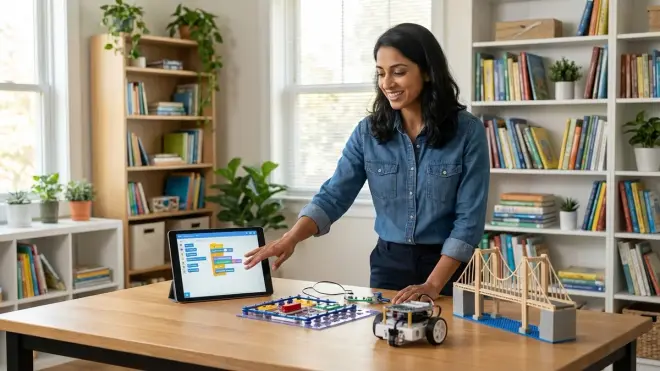
What skills do 10 year olds learn from STEM toys depends significantly on which domains you prioritize. Here's how different categories map to specific competencies:
Robotics platforms teach mechanical advantage, gear ratios, sensor fusion, and autonomous navigation. Arduino robotics kits add microcontroller programming and serial communication. Children learn to read datasheets, calculate current draw, and implement interrupt-driven code—skills that appear in embedded systems courses and competition robotics.
Renewable energy kits build quantitative literacy through measurable experimentation. Solar panel efficiency projects teach voltage regulation, energy conversion efficiency, and load matching. Your child learns to use voltmeters and ammeters, plot voltage-current curves, and calculate watt-hours. These aren't abstract formulas—they're numbers your child measures and interprets.
AI and machine learning platforms introduce supervised versus unsupervised learning through age-appropriate classification tasks. Your child trains image recognition models, observes how training data influences accuracy, and confronts bias in datasets. This cognitive leap—understanding that algorithms reflect the data used to train them—is media literacy for the algorithmic age.
3D printing and CAD teach parametric design, dimensional constraints, and manufacturing limitations. A child who designs and prints custom drone parts learns why wall thickness matters, how infill percentage affects strength, and when to orient models for optimal layer adhesion. That's manufacturing engineering distilled into weekend projects.
Frequently Asked Questions
What specific programming skills should a 10 year old learn from STEM toys?
Your ten-year-old should master block-based conditional logic and loops in platforms like Scratch or Blockly, then begin transitioning to text-based syntax in Python or Arduino's simplified C++. Specific capabilities include writing functions with parameters, using variables to store sensor data, implementing if-else decision trees, and debugging syntax errors through systematic testing. These skills translate directly into middle school computer science curricula and prepare children for AP Computer Science Principles in high school.
Can STEM toys at this age actually teach industry-relevant technical skills?
Absolutely—when you choose platforms that mirror professional tools rather than proprietary closed systems. Arduino microcontrollers run the same code architecture used in industrial automation; educational robotics kits teach C++ syntax identical to professional firmware development; and CAD programs like Fusion 360 offer free educational licenses for the same software used in automotive and aerospace design. The hardware may be scaled down, but the conceptual framework and technical language remain consistent with what your child will encounter in engineering undergraduate programs.
How do I know if a STEM toy teaches measurable skills versus superficial engagement?
Look for documentation requirements, expandability, and compatibility with industry-standard software. Products that require engineering notebooks, allow third-party sensor integration, support multiple programming languages, and publish detailed lab specifications (voltage requirements, communication protocols, API documentation) are designed for genuine skill-building. If marketing emphasizes "fun" and "easy" without mentioning specific technical outcomes—such as "programs in Python," "compatible with Arduino IDE," or "teaches circuit analysis"—you're looking at entertainment, not education. Check our STEM toy evaluation checklist for concrete assessment criteria.
Should I prioritize screen-free STEM activities for my 10 year old?
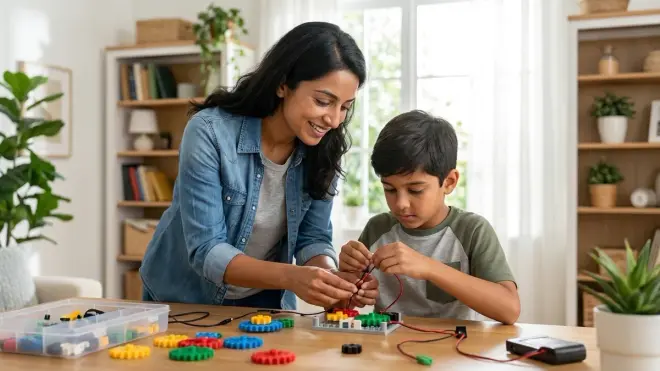
Balance matters more than rigid rules. Screen-free coding platforms build foundational logic without device dependency, which helps children develop sustained attention and spatial reasoning. But ten-year-olds also need exposure to actual programming environments, circuit simulation software, and CAD platforms—all screen-based. A balanced approach might involve 60% tactile, manipulative projects (breadboard circuits, mechanical builds, soldering) and 40% screen-based design and programming. This ratio maintains the cognitive benefits of physical manipulation while building the digital literacy your child needs for advanced coursework.
What ongoing costs should I expect beyond the initial STEM toy purchase?
Plan for consumables, expandability, and subscription software. 3D printing requires filament ($15-25 per kilogram; elementary projects use roughly 1 kg per month). Robotics kits need batteries (rechargeable NiMH batteries cost around $30 for a starter set). Advanced projects may require additional sensors ($10-40 each), breadboard components ($15 for assorted resistors/capacitors/LEDs), or soldering supplies ($40 starter kit). CAD software like Fusion 360 offers free educational licenses through high school; cloud-based platforms may charge $5-15 monthly. Our home STEM lab setup checklist breaks down recurring costs by age and skill progression.
Summary
What skills do 10 year olds learn from STEM toys? Systematic debugging, multi-variable reasoning, documentation habits, and industry-aligned technical fluency. At this developmental stage, children can master circuit analysis, text-based programming fundamentals, parametric CAD design, and quantitative experimentation—all concrete capabilities that appear on high school transcripts and college applications. The key is choosing platforms that prioritize expandability, compatibility with professional software, and measurable learning outcomes over proprietary closed systems. Your fifth-grader doesn't need more entertainment. They need tools that respect their emerging capacity for genuine mastery and position them for the technical challenges ahead. The right STEM investment at age ten compounds throughout adolescence, creating options your child won't even recognize as valuable until they're submitting college applications or interviewing for their first internship. That's the real return: not just knowledge, but confidence earned through competence.