
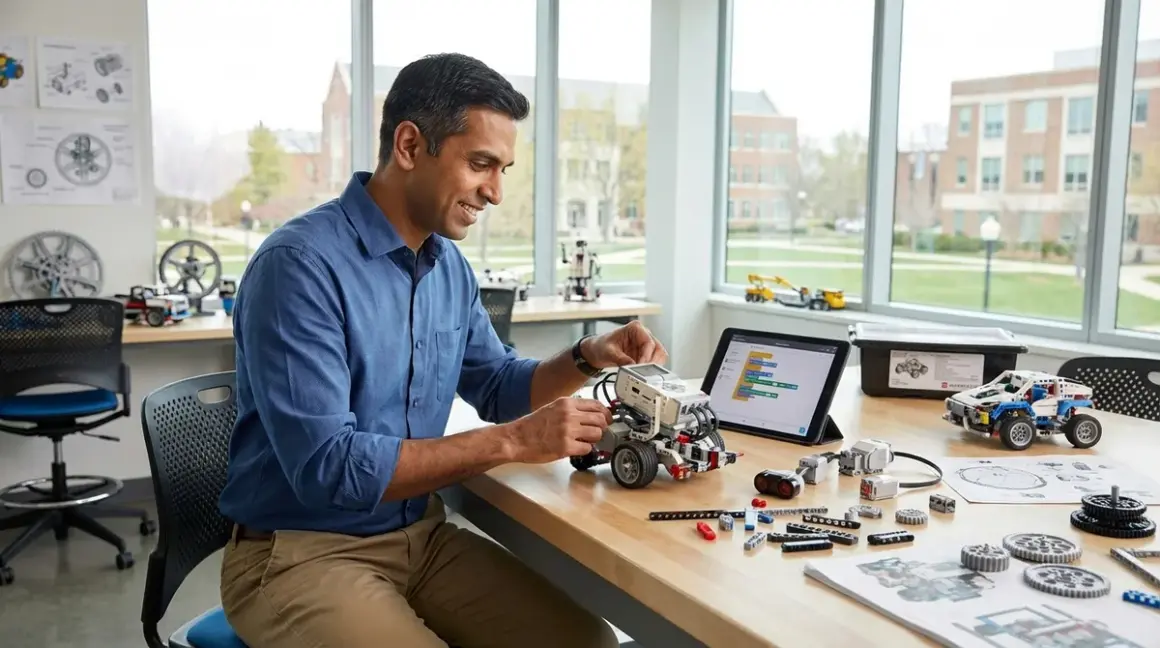

Your ten-year-old builds intricate LEGO structures in hours, but can they debug a motion sensor loop or calculate gear ratios? The gap between recreational building and actual engineering skill acquisition determines whether LEGO STEM kits represent a sound investment or expensive distraction. After running my own children through progressive LEGO robotics curricula and reviewing hiring requirements across robotics startups, I've identified which platforms deliver measurable capability milestones aligned with industry-standard tools.
The verdict: LEGO STEM kits justify their premium pricing only when matched to specific learning paths—SPIKE Prime for block-to-Python progression, Technic sets for mechanical engineering fundamentals, BOOST for entry-level sensor integration. The wrong platform creates expensive shelf clutter; the right one builds testable skills that transfer directly to Arduino, ROS, and CAD workflows.
What to Look For in LEGO STEM Kits
Programming Language Migration Path
Most LEGO STEM kits start with visual block coding, but few clarify the transition timeline to text-based languages. SPIKE Prime and Mindstorms support dual-mode programming—Scratch-style blocks that display Python equivalents side-by-side. This transparency matters: students who understand that a "move forward" block compiles to motor.run_for_rotations(1, 360) grasp abstraction layers faster.
Verify whether the platform locks you into proprietary block languages or supports open-source alternatives. SPIKE Prime runs Python 3.x with standard libraries, enabling direct skill transfer to Raspberry Pi projects and industry-standard automation workflows. WeDo 2.0 uses closed-block architecture with no text-based migration—acceptable for ages 6-8, limiting for older learners seeking progression to real programming languages used in professional robotics.
Check IDE compatibility: does the software require constant cloud connectivity or support offline development? SPIKE Prime's app works offline after initial download. Mindstorms EV3's third-party Python environments (ev3dev) run entirely local, critical for schools with restricted networks.
Sensor Ecosystem and Expandability
Entry-level kits typically include 1-2 basic sensors (distance, color). Professional robotics relies on sensor fusion—combining multiple input streams to inform decisions. Count the available sensor types and their precision specs. SPIKE Prime's ultrasonic sensor measures 4-250cm with ±1cm accuracy; sufficient for navigation algorithms. The color sensor distinguishes eight hues plus ambient light intensity—adequate for line-following but crude compared to computer vision systems students will encounter later.
Evaluate expansion costs separately from base kit pricing. Adding a third motor to SPIKE Prime runs roughly $25. A full competition-ready configuration with extra sensors approaches $500 total investment. LEGO sells individual components, but aftermarket sensors from third parties often don't maintain firmware compatibility across software updates.
Pay attention to connection protocols. SPIKE uses LPF2 digital connectors (six-wire); older EV3 platforms use analog and I2C. Mixing generations creates compatibility headaches. If you're building a progressive learning path, standardize on one connection standard to enable module reuse.
Mechanical System Complexity
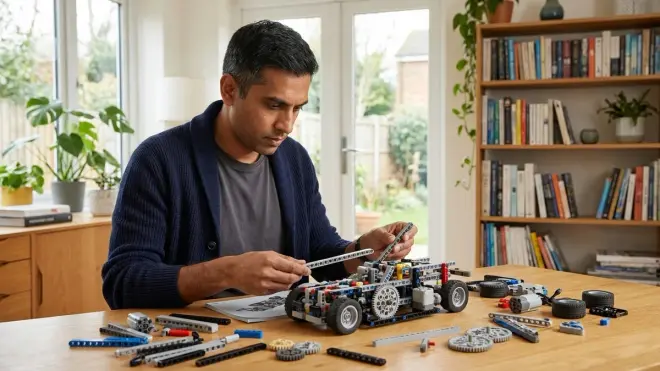
The engineering value in LEGO STEM kits comes from understanding mechanical advantage through gear trains, linkages, and structural load distribution. Technic sets emphasize this; Education sets sometimes oversimplify it.
Count the gear types included: spur, bevel, worm, differential. SPIKE Prime's base kit includes 12 gear varieties enabling 1:1, 3:1, 5:1, and 25:1 ratios. Students who manually calculate torque multiplication and verify predictions through load testing develop intuition for power transmission that translates to CAD-based mechanism design.
Examine structural elements for engineering realism. Studless Technic beams with pin connections more closely mirror steel framework and T-slot aluminum extrusion (common in industrial automation) than traditional studded bricks. If your goal extends beyond programming to mechanical engineering competency, prioritize kits using professional-style structural systems.
Durability under repeated assembly matters. LEGO's ABS plastic withstands hundreds of connect-disconnect cycles, but tight tolerances degrade. Budget for 5-10% replacement parts annually in high-use environments—worn pins create loose joints that throw off precision assemblies.
Software Environment and Library Support
The programming environment determines how quickly students hit capability ceilings. LEGO's proprietary Scratch-based IDEs simplify onboarding but restrict access to advanced functions. Third-party development environments unlock professional workflows.
For SPIKE Prime: the official SPIKE app (Scratch-blocks or Python) covers 80% of use cases. For advanced sensor data logging or computer vision integration, students migrate to Python on a connected PC using the hub library. This two-tier approach mirrors real development—rapid prototyping in high-level environments, optimization in lower-level code.
For Mindstorms EV3: ev3dev converts the brick into a Debian Linux computer programmable in Python, JavaScript, or C++. This pathway bridges toy robotics to ROS (Robot Operating System), the framework used in autonomous vehicle development and industrial robotics. Students who master EV3 in Python transition seamlessly to non-LEGO platforms.
Check library maturity for data science integration. Can students export sensor data to CSV for analysis in Excel or Jupyter notebooks? SPIKE Prime's Python environment supports file I/O; WeDo 2.0 does not. Data literacy increasingly matters in engineering roles—the ability to instrument systems, collect telemetry, and derive insights separates technicians from engineers.
Curriculum Alignment and Skill Certification
LEGO Education publishes scope-and-sequence documents mapping kits to NGSS (Next Generation Science Standards) and CSTA (Computer Science Teachers Association) frameworks. These documents provide measurable milestones: "students will implement closed-loop control systems using proportional feedback" versus vague "learn robotics."
Verify whether the platform supports formal skill certification. FIRST LEGO League competitions provide structured challenges with documented rubrics—objective proof of capability development. Students who compete at regional/national levels demonstrate teamwork, project management, and technical communication skills that directly correlate with hiring criteria in engineering firms.
Consider subscription vs. one-time costs. SPIKE Prime requires no ongoing subscriptions; the software updates free indefinitely. Some competitive programming platforms charge $10-20/month for advanced challenges. Calculate three-year total cost of ownership, not just initial kit price.
Our Top Picks
LEGO Education SPIKE Prime Set
The LEGO Education SPIKE Prime Set🛒 Amazon represents the current apex of LEGO's educational robotics platform, balancing mechanical complexity with dual-mode programming (Scratch blocks and Python). This 528-piece kit includes a six-port intelligent hub, four motors (three medium, one large), and seven sensors (distance, color, force). The studless Technic construction system enables complex gear trains and structural frames mirroring professional prototyping workflows.
Pros:
- Python 3.x support with standard library access, enabling direct progression to Raspberry Pi and Arduino ecosystems
- Dual-display programming interface shows block code alongside Python syntax—students visualize abstraction layers in real-time
- LPF2 digital protocol supports daisy-chaining sensors and motors with automatic device detection
- Rechargeable hub battery eliminates consumable costs (holds charge through 4-6 hour sessions)
- Extensive expansion options: individual sensors, motors, and 600+ piece add-on sets available separately
- FIRST LEGO League competition support with documented build instructions and challenge sets
Cons:
- App requires 2GB storage and recent iOS/Android/Windows 10+ hardware—older tablets incompatible
- Color sensor struggles with ambient light interference; requires calibration in varied lighting conditions
- Wire management becomes chaotic in complex builds with 6+ connected components—no integrated cable routing
- Premium pricing (typically around $400 base kit) creates high initial barrier compared to non-LEGO robotics platforms
Lab Specs: Hub draws 7.4V via rechargeable lithium-ion battery (2100mAh capacity); 45-minute charge time. Bluetooth 4.2 connectivity enables wireless programming up to 10m range. Storage capacity: 32MB for programs and data logging. Compatible with Windows 10+, macOS 10.14+, iOS 11+, Android 5.0+, Chrome OS. Expandable to six motors or sensors simultaneously via powered hub. Dimensions: hub measures 11 x 11 x 13 cm; complete kit stores in included 44 x 37 x 17 cm tray.
This platform suits ages 10-14 transitioning from block-based to text-based programming. Students achieve measurable milestones: closed-loop motor control (week 4-6), multi-threaded programming (week 8-10), sensor fusion for autonomous navigation (week 12-16). The Python pathway prepares learners for LEGO's role in progressive STEM curricula and eventual migration to Arduino-based systems.
LEGO Mindstorms Robot Inventor
The LEGO Mindstorms Robot Inventor🛒 Amazon targets advanced builders ages 12+ seeking maximum mechanical flexibility and programming depth. This 949-piece set includes five complete robot designs with detailed build instructions (including a robotic dog, tracked vehicle, and multi-axis manipulator arm). The intelligent hub features gyroscope and accelerometer integration—enabling self-balancing robots and gesture-controlled interfaces absent in lower-tier platforms.
Pros:
- Five pre-designed builds teach distinct engineering concepts: differential steering, proportional feedback control, end-effector design, bipedal locomotion
- Powered Up app supports Scratch and Python with 50+ hours of structured lessons progressing from basic movement to AI-assisted navigation
- IMU (inertial measurement unit) enables advanced control schemes: PID loops for self-balancing, dead reckoning for position tracking
- Backward-compatible with EV3 sensors and motors via adapter cables (sold separately around $15)
- Active hobbyist community publishes custom Python libraries for computer vision via USB webcam integration
- Robust aftermarket support: third-party sellers offer 3D-printed structural components, custom sensors, NXT/EV3 crossover adapters
Cons:
- Build complexity requires 2-4 hours per robot model—intimidating for students expecting instant gratification
- App stores models in cloud only; offline access requires manual export workaround (documented in community forums)
- Studless construction demands precision—0.5mm alignment errors in long gear trains cause binding and motor stalls
- No official curriculum documentation—teachers must develop lesson plans independently or purchase third-party resources
Lab Specs: Hub powered by rechargeable 2100mAh lithium battery providing 6+ hours runtime. Six I/O ports support motors and sensors (LPF2 protocol). Bluetooth Low Energy 5.0 extends range to 15m; USB-C port enables wired programming and firmware updates. Gyroscope precision: ±250 degrees/second; accelerometer range: ±8g. Software compatibility: Windows 10+, macOS 10.15+, iOS 12+, Android 7+. Brick dimensions: 10 x 13 x 13 cm; total storage requires 50 x 40 x 30 cm workspace.
Students who master this platform can articulate gear ratio calculations, debug multi-sensor logic gates, and implement state machine architectures—skills directly transferable to VEX Robotics and FIRST Tech Challenge competitions. The learning curve steepens significantly past SPIKE Prime, but the capability ceiling rises commensurately.
LEGO Boost Creative Toolbox
The LEGO Boost Creative Toolbox🛒 Amazon serves as the entry point for ages 7-10 transitioning from free-play building to programmable systems. This 847-piece set constructs five models: a humanoid robot (Vernie), a cat, a guitar, a rover, and an auto-builder. The Move Hub contains tilt sensor and distance sensor, plus two integrated motors—sufficient for basic mobility and interaction challenges.
Pros:
- Icon-based drag-and-drop interface requires no reading comprehension—accessible to early elementary students
- Pre-programmed activities guide students through 60+ challenges with immediate visual feedback (robot dances, cat purrs, guitar plays notes)
- Compatible with standard LEGO System bricks—students incorporate existing collections into programmable builds
- Lower price point (usually around $160) reduces financial barrier for households testing STEM platform fit
- Offline mode enables programming without constant internet connectivity after initial app download
Cons:
- No migration path to text-based programming—students outgrow the platform within 12-18 months
- Integrated motors in Move Hub create single-purpose component (can't repurpose motors independently like SPIKE Prime)
- Distance sensor maximum range of 15cm limits navigation applications to close-quarters obstacle avoidance
- Tablet-only programming (no desktop IDE) restricts serious debugging and multi-file projects
Lab Specs: Move Hub operates on six AAA batteries (30-hour typical lifespan under normal use). Bluetooth 4.0 Low Energy requires iOS 10.3+, Android 5.0+, or Amazon Fire OS 5+. Distance sensor effective 2-15cm range. Tilt sensor detects six orientations. Storage recommendation: 35 x 30 x 20 cm container for complete kit. No expansion ports—system functions as closed ecosystem.
This platform delivers clear value for households uncertain whether LEGO robotics justifies the investment before committing to SPIKE Prime's $400 price tag. Students develop conditional logic, loop structures, and event-driven programming concepts that transfer cleanly when upgrading to more advanced LEGO robotics platforms. The consumable battery requirement adds roughly $20-30 annually to operating costs.
LEGO Technic Liebherr R 9800 Excavator
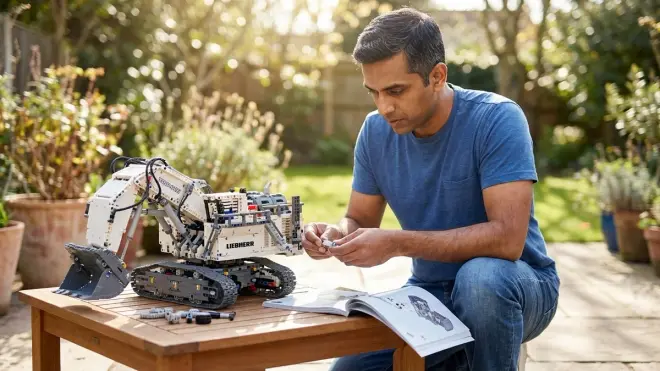
The LEGO Technic Liebherr R 9800 Excavator🛒 Amazon represents pure mechanical engineering education—4,108 pieces replicating functional systems from industrial equipment. This model includes seven motors controlling independent functions: boom lift, bucket curl, cabin rotation, conveyor belt, and track propulsion. The LEGO Powered Up app enables programmable motor sequences, but the core learning comes from assembling complex gear trains, pneumatic cylinders, and load-bearing structures.
Pros:
- Demonstrates real-world mechanical systems: differential steering, hydraulic simulation via pneumatics, multi-stage boom kinematics
- Assembly process requires interpreting 600+ step instructions—develops spatial reasoning and technical documentation literacy
- V6 piston engine model with moving components teaches internal combustion concepts (static display, non-functional)
- Powered Up motors enable proportional control (variable speed) versus binary on/off—introduces analog thinking
- Build durability supports repeated operation; gear trains withstand 100+ hours continuous use before wear becomes measurable
Cons:
- Programming interface remains basic icon-based control—no block coding or text language progression
- Four-month typical build time (2-3 hours weekly sessions) tests attention span for students seeking rapid results
- Premium pricing around $450 reflects piece count, but per-learning-objective cost exceeds dedicated robotics kits
- Limited sensor integration (no distance, color, or environmental feedback)—purely actuator-focused platform
Lab Specs: Seven Powered Up motors draw power from rechargeable battery box (requires ~2 hours charge time for 4-6 hours operation). Bluetooth connectivity via smartphone/tablet app (iOS 10.3+, Android 5.0+). Completed model dimensions: 80 x 44 x 40 cm—requires permanent display space or large storage container. Weight: 8.5 kg with batteries installed. No consumable components beyond rechargeable battery degradation (500+ charge cycles typical lifespan).
This kit targets students with demonstrated commitment to engineering-focused STEM learning rather than programming. Completers can articulate compound gear ratios, calculate mechanical advantage in multi-stage levers, and recognize load distribution principles in structural frameworks—foundations for CAD-based mechanical design and progression to professional engineering tools.
LEGO Education WeDo 2.0
The LEGO Education WeDo 2.0🛒 Amazon fills the elementary school niche (ages 6-9) with 280 pieces focused on introducing sensor-based programming through simplified builds. The SmartHub includes tilt sensor and distance sensor, plus connection points for medium motor. Lesson plans align to NGSS standards for K-2 physical science and engineering practices.
Pros:
- Guided projects with explicit learning objectives: "students will use engineering design process to solve a problem" versus open-ended exploration
- Block-based programming uses picture icons requiring minimal text literacy—suitable for emerging readers
- Built-in curriculum covers 40 hours of structured activities (eight core projects, 24 expansion challenges)
- Cross-platform software supports Windows, macOS, iOS, Android, and Chromebook—matches school district device ecosystems
- Ruggedized components withstand classroom abuse; snap connectors tolerate misalignment from developing fine motor skills
Cons:
- Single motor limits mechanical complexity to linear or rotational motion—no multi-actuator coordination projects
- Distance sensor's 15cm maximum range restricts applications compared to SPIKE Prime's 250cm ultrasonic sensor
- No path to Python or text-based languages—students must eventually platform-switch rather than skill-migrate
- Cloud-dependent software stores projects server-side; network outages block access to student work
Lab Specs: SmartHub powered by two AA batteries (20-hour typical runtime). Bluetooth 4.0 Low Energy requires Windows 7+, macOS 10.12+, iOS 8+, Android 4.4+, Chrome OS. Medium motor stall torque: 8-10 N·cm. Tilt sensor detects six orientations with ~10-degree precision. Distance sensor range: 2-15cm with ±0.5cm accuracy. Storage tray dimensions: 33 x 19 x 11 cm. Replacement battery cost adds roughly $15 annually.
Deploy WeDo 2.0 as the first step in screen-free to block-coded programming progression, anticipating migration to SPIKE Prime around age 9-10. The platform successfully introduces cause-effect logic, variable manipulation, and data collection concepts that form prerequisites for genuine programming skill development. Budget for platform replacement rather than expansion—WeDo functions as a time-limited stepping stone, not a long-term robotics solution.
LEGO Technic Control+ Volvo Concept Wheel Loader
The LEGO Technic Control+ Volvo Concept Wheel Loader ZEUX🛒 Amazon delivers intermediate mechanical complexity (764 pieces) with app-enabled control at a mid-tier price point around $100. Four motors drive independent functions: articulated steering, boom lift, bucket tilt, and forward/reverse propulsion. The Control+ app provides three interface modes: manual remote control, pre-programmed sequences, and challenge-based games.
Pros:
- Articulated steering mechanism demonstrates real-world heavy equipment design—teaches Ackermann geometry and center-pivot turning radius calculations
- Proportional motor control via app slider enables variable speed experimentation (relates voltage to angular velocity)
- Challenge modes introduce constraint-based problem solving: "move three loads in 90 seconds using minimum battery"
- Price-to-complexity ratio outperforms larger Technic sets for students focused on specific mechanical systems
- No subscription or consumable costs beyond rechargeable battery replacement (every 18-24 months)
Cons:
- Control+ app lacks programming interface—students pilot the machine but don't code autonomous behaviors
- Bluetooth connection occasionally drops mid-operation, requiring hub power cycle to restore (firmware update improves stability)
- Battery box placement creates weight distribution requiring structural reinforcement—builders must problem-solve torque-induced frame flexing
- Limited expandability—hub supports only four motors with no sensor input ports
Lab Specs: Four Powered Up motors (two medium, two large) powered by rechargeable battery box (2100mAh capacity, ~4-hour runtime, 2-hour charge cycle). Bluetooth 4.2 requires iOS 10.3+, Android 5.0+. Completed model dimensions: 39 x 23 x 21 cm. Weight: 2.2 kg. No sensor integration capability. Hub firmware updates via app maintain compatibility with OS changes.
This set bridges pure building (unpowered Technic) and full robotics platforms (SPIKE Prime). Students gain hands-on mechanical design experience and basic motor control concepts without committing to comprehensive programming curricula. Effective as supplementary equipment in multi-platform STEM labs where mechanical engineering receives equal emphasis to software development.
Frequently Asked Questions
What age should kids start with LEGO STEM kits?
Children demonstrate readiness for LEGO STEM kits when they can follow multi-step build instructions independently and maintain focus through 30-minute sessions—typically emerging around age 6-7. WeDo 2.0 serves this entry demographic with icon-based programming and 30-45 minute build projects. Students ages 8-9 transition to BOOST Creative Toolbox as reading comprehension improves and abstract reasoning develops. SPIKE Prime becomes appropriate around age 10-11 when students can debug logical errors independently and persist through multi-day projects. Mindstorms Robot Inventor requires age 12+ maturity to navigate complex 600+ piece assemblies and troubleshoot Python syntax errors. The critical factor isn't chronological age but demonstrated frustration tolerance and iterative problem-solving ability—some advanced 9-year-olds thrive in SPIKE Prime while certain 13-year-olds still benefit from BOOST's scaffolded challenges. Assess current capability through observation: can your child complete a 200-piece LEGO set independently without adult intervention? That independence threshold predicts STEM kit success better than age ranges.
Do LEGO STEM kits work with regular LEGO bricks?
All LEGO Education and Technic platforms maintain physical compatibility with standard LEGO System bricks through universal stud-and-tube connections, but functional integration varies significantly by platform. BOOST Creative Toolbox explicitly incorporates System bricks into official build designs—students can add house facades, character minifigures, or custom decorations to programmed robots. SPIKE Prime and Mindstorms use studless Technic beams as primary structure, but students frequently attach System bricks as decorative elements or simple housings for sensors. The reverse integration—adding motors and sensors to traditional LEGO City or Creator sets—works mechanically but requires understanding motor mounting points and wire routing that aren't documented in standard build instructions. Powered Up motors and SPIKE motors use different mounting systems; verify connector compatibility before purchasing expansion components. From a learning perspective, mixing collections demonstrates engineering constraint management: students must adapt mechanical designs to available parts, mirroring real-world resource limitations. This integration makes LEGO STEM kits particularly valuable for households with existing collections—you're expanding capability rather than purchasing isolated ecosystems.
Can you teach real coding with LEGO robotics platforms?
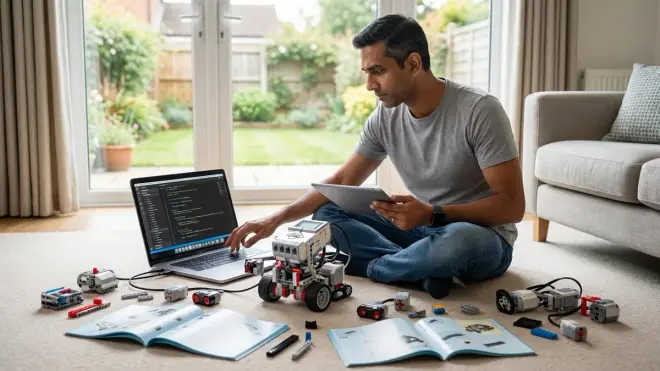
LEGO robotics platforms successfully teach foundational programming concepts—variables, conditionals, loops, functions—that transfer directly to professional development environments, but the depth achieved depends entirely on which platform and how far instructors push beyond default curricula. SPIKE Prime and Mindstorms support Python 3.x with access to standard libraries (math, random, time) enabling students to write code structurally identical to Raspberry Pi automation scripts or Arduino firmware—these represent genuine coding experiences, not simplified simulations. A student who implements PID control for line-following in SPIKE Python has written production-quality embedded code; that same algorithm appears in industrial automation and autonomous vehicles. The limitation emerges in scale and toolchain sophistication: professional developers use version control (Git), integrated debugging, and continuous integration pipelines absent from LEGO's educational IDEs. Students who master LEGO Python at age 12-14 can transition to Arduino programming or general-purpose Python development with minimal friction—the syntax knowledge and logical structures transfer completely. Block-based environments (BOOST, WeDo) teach computational thinking but don't qualify as "real coding" in the employable-skill sense; they're prerequisites for later text-based work.
How long do LEGO STEM kits last before kids outgrow them?
LEGO STEM kit longevity correlates inversely with student progression rate and directly with platform capability ceiling. WeDo 2.0 provides 12-18 months of productive learning for typical students before programming limitations force platform migration. BOOST Creative Toolbox extends to 18-24 months by incorporating creative building challenges beyond structured lessons. SPIKE Prime offers 2-3 years of progressive skill development for motivated students: year one covers block programming and basic sensor integration, year two introduces Python syntax and multi-threaded programs, year three explores advanced algorithms (PID control, sensor fusion, computer vision via webcam). Mindstorms Robot Inventor supports indefinite advancement for students who migrate to third-party development environments (ev3dev, custom Python libraries)—the hardware remains relevant through high school robotics competitions and serves as prototyping platform for independent projects. Physical durability exceeds pedagogical lifespan in all platforms; components withstand 5+ years of regular use barring loss or damage. The critical question isn't component lifespan but curriculum depth: does the platform documentation provide 100+ hours of structured progression, or will students exhaust official content in 40 hours and require adult-designed extensions? Evaluate total available curriculum (official lessons plus community resources) against your student's weekly engagement hours to estimate useful lifespan. For reference, my own children logged 200+ hours in SPIKE Prime across 30 months before transitioning to Arduino-based platforms.
Are LEGO STEM kits worth the money compared to other robotics platforms?
LEGO STEM kits command premium pricing (SPIKE Prime around $400, Mindstorms $450) versus alternative robotics platforms like Arduino kits ($50-80) or non-LEGO educational robots ($100-150), but value assessment must account for three factors: learning curve accessibility, expandability costs, and skill transfer to professional tools. LEGO's intuitive building system reduces cognitive load during mechanical assembly—students allocate more mental capacity to programming challenges rather than wrestling with screws, soldering, or irreversible construction errors. This accessibility matters for ages 7-12 when frustration leads to permanent disengagement; a $400 SPIKE Prime kit that sustains 300 hours of productive learning outperforms a $60 Arduino kit abandoned after 10 frustrating hours. However, expandability costs swing the equation for advanced students: adding sensors and motors to LEGO platforms costs $25-40 per component versus $5-10 for Arduino equivalents. Break-even occurs around the 18-24 month mark when students require capabilities exceeding base kit configurations. For progressive learning paths, the optimal strategy combines platforms: LEGO for ages 7-13 establishing programming fundamentals and mechanical intuition, then migration to Arduino/Raspberry Pi systems where component costs matter less than soldering competency and electrical knowledge. LEGO STEM kits justify their cost as skill development accelerators during capability-building phases; they fail value propositions when used as permanent robotics solutions for students ready for open-architecture platforms. Compare your student's current skill level against progressive STEM learning path milestones to determine whether LEGO's premium accessibility serves your specific situation.
The Verdict
LEGO STEM kits deliver ROI only when platform capabilities match student progression rates and household commitment to structured learning paths. SPIKE Prime remains the strongest general-purpose recommendation for ages 10-14, providing 24-36 months of Python-driven skill development before students require migration to Arduino ecosystems. BOOST serves as appropriate entry point for ages 7-9 with the explicit understanding you'll platform-switch within 18 months. Mindstorms targets self-directed learners ready to navigate 600+ piece assemblies and troubleshoot complex code independently.
The mechanical engineering emphasis in Technic sets—particularly the Liebherr Excavator—complements rather than replaces programming-focused platforms. Optimal home labs combine both: SPIKE Prime for software/sensor development, large Technic sets for mechanism design and structural engineering.
Budget three-year total cost of ownership: base kit plus anticipated expansions, battery replacements, and competition fees if pursuing FIRST LEGO League. Compare that investment against measurable outcomes: can your student debug multi-file Python programs, calculate compound gear ratios, and explain closed-loop control systems? Those testable capabilities translate directly to engineering internship eligibility and AP Computer Science preparation—outcomes worth documenting as your learner progresses through defined skill milestones.