
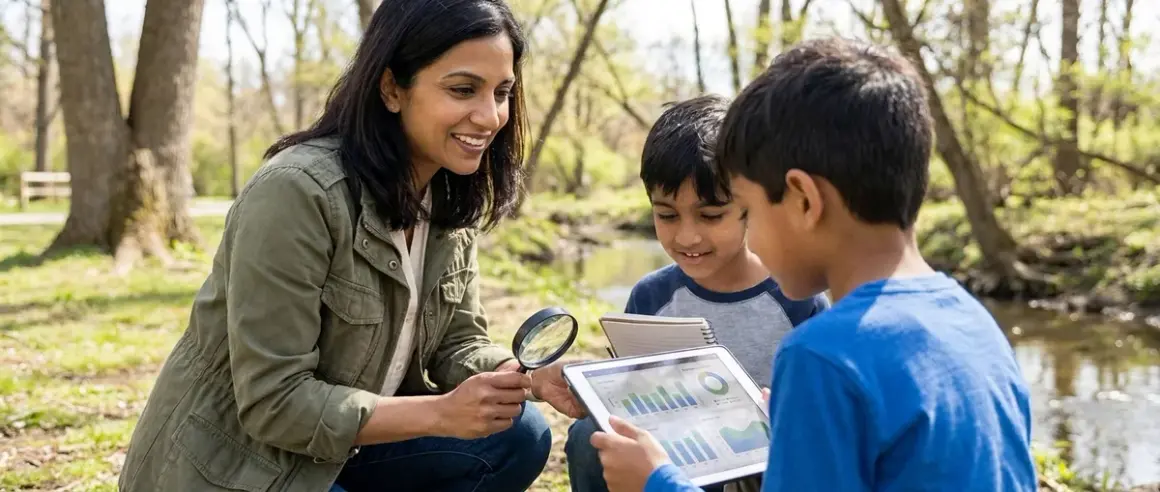

When your child participates in data literacy citizen science kids programs, they're not just collecting environmental samples or logging observations—they're developing the same analytical skills that professional researchers use in climate labs, epidemiology centers, and conservation biology field stations. I've watched hundreds of students transform from passive science consumers into confident data analysts through authentic citizen science participation, and the skill progression is remarkably predictable once you understand what to look for.
What Is Data Literacy in Citizen Science?
Data literacy is the ability to collect, interpret, analyze, and communicate information from datasets—skills that sit at the intersection of scientific inquiry, mathematical reasoning, and critical thinking. When we talk about data literacy citizen science kids develop, we're describing a specific competency stack that goes far beyond just "doing a project."
In citizen science contexts, data literacy means your child learns to:
- Design data collection protocols that minimize bias and maximize reproducibility
- Use standardized measurement tools and recording formats that allow their observations to merge with global datasets
- Identify patterns, outliers, and trends within their own data and larger community-contributed datasets
- Evaluate data quality and recognize when measurements need recalibration or repeat trials
- Communicate findings using appropriate visualizations, statistical summaries, and evidence-based claims
Unlike traditional science fair projects where data often gets manufactured to fit expected outcomes, authentic citizen science demands real-world data integrity. Your child's observations about bird migration timing through eBird or water quality measurements submitted to regional environmental databases actually matter—they contribute to peer-reviewed research, conservation policy decisions, and climate monitoring systems. This authenticity changes everything about how kids approach data collection.
The technical infrastructure matters significantly here. Most modern citizen science platforms require internet connectivity for data submission (though collection happens offline), operate through mobile apps (iOS 15+ / Android 12+) or web portals, and increasingly integrate with hardware sensors that require USB or Bluetooth connectivity. Understanding these technical requirements helps you scaffold appropriate projects for your child's skill level.
How Data Literacy Develops Through Citizen Science Participation
The progression from simple observation to sophisticated data analysis follows a predictable learning path, and I've seen this arc play out consistently across different age groups and project types.
Stage 1: Structured Data Collection (Ages 7-9)
At this entry level, children learn data hygiene fundamentals—the disciplined habits that make scientific data usable. They're working with pre-designed data sheets, standardized observation protocols, and tools that constrain variables to manageable ranges.
Concrete skills emerging at this stage:
- Recording observations at specified intervals (daily temperature readings, weekly bird counts)
- Using measurement tools correctly and consistently (thermometers, pH strips, rulers)
- Following sequential protocols without skipping steps
- Distinguishing observation from inference ("I see three robins" vs "robins prefer our yard")
The National Geographic Bird Watching Kit exemplifies this level well—it provides structured observation logs, binoculars with appropriate magnification for young users, and connection to the eBird citizen science platform where kids submit sightings following standardized taxonomy. The kit requires no subscriptions but does depend on adult-facilitated internet access for data submission.
Stage 2: Data Quality Awareness (Ages 10-12)
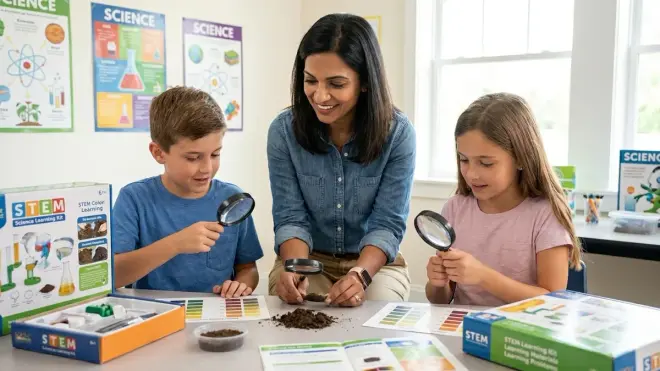
Middle elementary students develop critical evaluation skills—they start recognizing when data looks suspicious, understanding why calibration matters, and grasping how measurement error propagates through analysis.
Capability milestones include:
- Identifying outliers and deciding whether to investigate or exclude them
- Recognizing when sensor calibration has drifted (comparing readings against known standards)
- Understanding why sample size affects confidence in conclusions
- Documenting environmental conditions that might influence measurements
This stage benefits enormously from sensor-based citizen science using platforms like micro:bit or Arduino. When your child builds an air quality monitoring station and discovers that their particulate sensor reads differently near the ground versus at table height, they're encountering real measurement challenges that professional environmental scientists navigate daily. Our best micro:bit citizen science kits for young researchers article details age-appropriate sensor projects with specific capability outcomes.
The technical requirements shift here—you need USB connectivity for programming, stable WiFi for cloud data upload (most citizen science platforms don't support fully offline operation), and often external power supplies for continuous monitoring. Many families discover that Arduino vs micro:bit for citizen science becomes a critical platform decision based on their child's programming readiness and the specific environmental parameters they want to measure.
Stage 3: Pattern Recognition and Analysis (Ages 13-15)
Early adolescents develop analytical sophistication—they can work with spreadsheet software, generate meaningful visualizations, perform basic statistical calculations, and formulate evidence-based hypotheses from their datasets.
Skills crystallizing at this level:
- Creating graphs that highlight relevant trends (line graphs for time-series, scatter plots for correlations)
- Calculating central tendency measures (mean, median, mode) and understanding when each is appropriate
- Recognizing correlation versus causation in their data
- Comparing their local dataset against regional or global citizen science aggregations
- Formulating testable questions based on patterns they've discovered
This is where data literacy citizen science kids programming truly mirrors professional research workflows. Students might analyze three months of water quality data from a local stream, graph dissolved oxygen against temperature, recognize an inverse relationship, then investigate whether the pattern holds across other citizen scientists' submissions in their watershed. They're using Excel, Google Sheets, or increasingly Python with Pandas libraries—the same tools environmental consultants and research technicians use.
Many sensor kits at this level require subscription access to advanced analytics dashboards or cloud storage beyond basic data submission. The environmental monitoring kits we review in best environmental monitoring kits for citizen science projects specify whether platforms charge for historical data access, API integration, or advanced visualization features.
Stage 4: Experimental Design and Communication (Ages 16+)
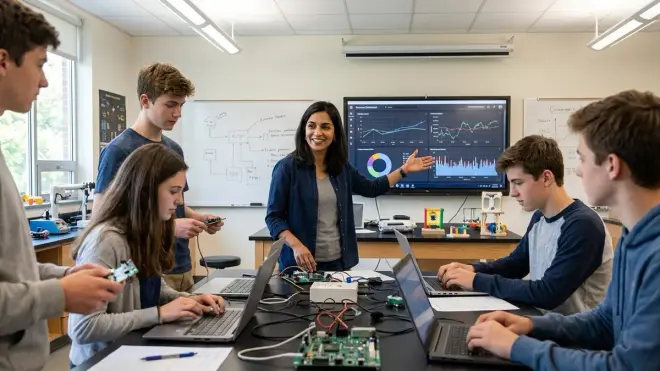
Advanced high school students achieve research independence—they design original investigations, control for confounding variables, and communicate findings using scientific convention.
They're now capable of:
- Writing data collection protocols that others can replicate
- Designing A/B comparisons to isolate specific variables
- Performing significance testing to determine if observed differences are meaningful
- Creating research posters or presentations formatted for science symposia
- Contributing to collaborative analysis projects with adult researchers
Students operating at this level often participate in programs like Zooniverse research collaborations where they're not just collecting data but helping professional scientists classify images, transcribe historical records, or identify astronomical phenomena within massive datasets. This scaffolds beautifully into undergraduate research preparation—the workflow of "receive training → analyze assigned dataset → submit classifications → see how your work contributes to published research" exactly mirrors what research assistants do in university labs.
Why Data Literacy Through Citizen Science Matters
The transferability of these skills extends far beyond science contexts. Every competency I've described above directly prepares students for career-critical capabilities across STEM and non-STEM fields alike.
Industry-standard tool exposure happens organically through citizen science. When your 14-year-old learns to clean messy data in a spreadsheet—removing duplicate entries, standardizing date formats, filtering out incomplete records—they're developing the same data hygiene skills that business analysts, marketing researchers, and public health epidemiologists use daily. The environmental sensor calibration checklist for student scientists we've developed mirrors the protocols that water treatment technicians and agricultural extension agents follow in professional practice.
Authentic stakes transform motivation in ways that simulated projects never achieve. I've watched students who showed minimal engagement with traditional lab assignments become meticulous about data collection when they understood that their observations would help track monarch butterfly migration or document urban heat island effects. The psychological shift from "doing schoolwork" to "contributing to real research" cannot be overstated.
Progressive skill building through citizen science creates natural on-ramps to advanced coursework. Students who've spent two years collecting and analyzing environmental data arrive in high school AP Statistics or AP Environmental Science already comfortable with concepts their peers find abstract and intimidating. They've built schema around sampling bias, measurement error, and data visualization through lived experience rather than textbook definitions.
The connection to what is citizen science: how kids contribute to real research provides deeper context about how these projects fit into the broader research ecosystem and why the data quality skills matter so much.
Types & Variations of Data Literacy Development in Citizen Science
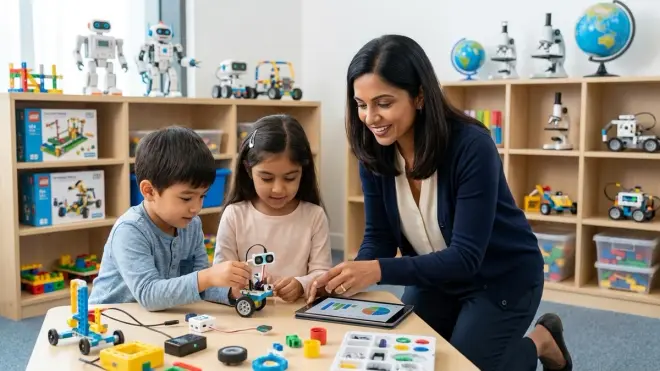
Different citizen science domains develop overlapping but distinct data literacy competencies. Understanding these variations helps you select projects that align with your child's interests while still building the core analytical skills.
Environmental monitoring projects (air quality, water quality, weather) emphasize sensor calibration, continuous data collection, and time-series analysis. Students work with numerical datasets, learn to identify sensor drift, and develop troubleshooting skills when equipment behaves unexpectedly. These projects typically require the most technical infrastructure—power supplies, weatherproof enclosures if sensors sit outdoors, and reliable internet connectivity for data upload. Our guides on how to collect and analyze environmental data with sensor kits and air quality sensors explained: what student citizen scientists should know detail the specific lab specs and skill progressions.
Biodiversity observation projects (bird counts, pollinator surveys, phenology tracking) develop classification skills, taxonomic precision, and spatial analysis. Students learn to use dichotomous keys, distinguish similar species, and understand how observer bias affects population estimates. These projects work well for younger students (ages 7+) because they require minimal equipment—often just binoculars, field guides, and observation logs—while still producing scientifically valuable data.
Astronomy and space science projects (meteor shower counts, light pollution mapping, aurora observations) build pattern recognition across large datasets and statistical thinking about rare events. Students confront questions like "Is this meteor shower more active than last year, or did we just have clearer weather?" that naturally introduce concepts of variance and confidence intervals. These projects often require specialized software for data submission and may involve late-night observation sessions that need planning around family schedules.
Crowdsourced analysis projects (image classification, audio analysis, historical document transcription) develop attention to detail, classification consistency, and quality control awareness. Platforms like Zooniverse provide training sets where students receive immediate feedback on their classifications, building calibration between different observers. These are excellent for developing data literacy citizen science kids skills entirely screen-based—useful for families without access to outdoor spaces or specialized sensors, though you'll want to balance screen time appropriately.
Each variation connects to different career pathways. Environmental monitoring prepares students for work as environmental technicians, water quality specialists, or agricultural scientists. Biodiversity work scaffolds toward wildlife biology, conservation ecology, or environmental consulting. Space science projects build foundation for astronomy, remote sensing analysis, or data science more broadly.
Frequently Asked Questions
What age should children start participating in citizen science projects to develop data literacy?
Children can begin meaningful citizen science participation as young as age 7, starting with structured observation projects like bird counting or weather recording that teach data collection hygiene and measurement consistency. The key developmental marker is the ability to follow multi-step protocols consistently and record observations without adult prompting for each entry. More sophisticated data analysis skills—graphing trends, calculating statistics, identifying outliers—typically emerge between ages 10-13 as abstract reasoning develops, though you can scaffold these capabilities earlier through guided questioning about patterns in their data.
Do citizen science projects require expensive equipment or ongoing subscription costs?
Entry-level citizen science requires minimal investment—many biodiversity observation projects need only field guides, basic recording materials, and internet access for data submission, with no ongoing costs beyond your existing connectivity. Sensor-based environmental monitoring projects do require initial equipment investment (typically $50-$300 for quality sensors depending on parameters measured) and some platforms charge subscription fees for advanced data analytics or historical data access beyond basic submission, though many educational-focused platforms offer free tiers for student scientists. The most important cost consideration is consumables—some water quality testing kits require replacement reagents or test strips, while air quality sensors need periodic calibration against known standards.
How does citizen science data literacy transfer to school science classes and standardized testing?
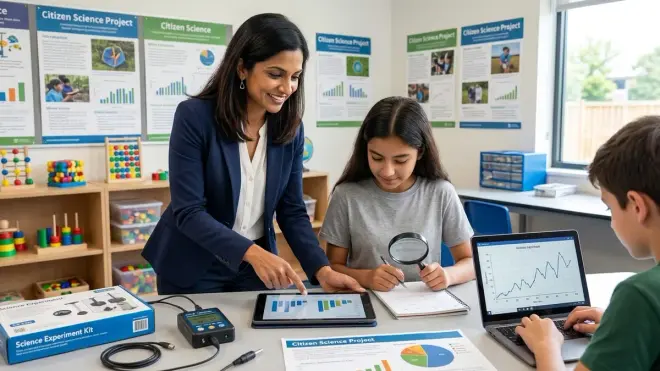
The analytical skills students develop through citizen science—designing fair tests, identifying variables, interpreting graphs, evaluating data quality, drawing evidence-based conclusions—directly align with Next Generation Science Standards performance expectations and appear extensively in state science assessments and AP science exams. Students who've collected and analyzed real environmental data consistently outperform peers on questions requiring data interpretation, graph analysis, and experimental design because they've encountered these concepts through authentic problem-solving rather than just textbook examples. The gap becomes particularly visible in constructed-response questions where students must explain their reasoning about data quality or experimental controls.
Can citizen science projects work in apartment settings without access to outdoor spaces?
Absolutely—many high-value citizen science projects operate entirely indoors or from windows and balconies, making data literacy citizen science kids programming accessible regardless of housing situation. Indoor projects include classifying astronomical images through Zooniverse, transcribing historical weather records, analyzing audio recordings for wildlife calls, monitoring indoor air quality (particularly relevant in urban environments), tracking sunrise/sunset times and day length from a window, or participating in Great Backyard Bird Count observations from a balcony or window feeder. The analytical skills developed through these projects—pattern recognition, data quality evaluation, statistical thinking—are identical to those built through outdoor environmental monitoring, and the datasets often contribute to equally important research questions.
What's the progression from beginner citizen science to research-level data analysis?
The learning path typically follows: structured data collection with pre-designed protocols (ages 7-9) → recognizing data quality issues and understanding calibration (ages 10-12) → creating graphs, calculating statistics, and identifying patterns independently (ages 13-15) → designing original investigations and contributing to collaborative analysis (ages 16+). This progression mirrors how professional scientists develop expertise, starting as field technicians following established protocols and advancing toward independent research design. Students who maintain consistent citizen science participation across this arc often arrive at undergraduate research opportunities already comfortable with literature review, data management, statistical software, and scientific writing conventions that their peers encounter for the first time in college. The pathway from citizen science through how to build your first machine learning model with kids represents one particularly relevant progression as environmental monitoring datasets increasingly feed machine learning applications for pattern detection and prediction modeling.
Summary
Data literacy citizen science kids develop through authentic research participation represents one of the most efficient pathways to building career-critical analytical skills. Unlike isolated classroom exercises, citizen science embeds data collection, quality evaluation, pattern recognition, and evidence-based reasoning into meaningful contexts where your child's work contributes to real scientific understanding. The progression from simple structured observation through independent data analysis follows predictable developmental stages, with each level building concrete capabilities that transfer directly to advanced coursework, standardized assessments, and professional STEM workflows.
The infrastructure requirements vary significantly by project type—simple biodiversity observation needs minimal equipment while sensor-based environmental monitoring demands careful attention to power requirements, connectivity specifications, calibration protocols, and potential subscription costs. Starting with how to choose a citizen science kit for your child's skill level helps you match technical complexity to your child's current capabilities while keeping an eye toward starting your first citizen science project: complete setup checklist for the practical logistics.
What makes this approach particularly powerful is how it builds genuine research habits—the disciplined attention to measurement consistency, the intellectual honesty to recognize when data doesn't support your hypothesis, the systematic thinking to isolate confounding variables—that transfer seamlessly from backyard weather stations to professional laboratories. Your ten-year-old logging daily temperature readings is developing the same data hygiene that climate scientists rely on for multi-decade trend analysis. That's not aspirational thinking—that's the documented reality of how data literacy develops through authentic practice.