
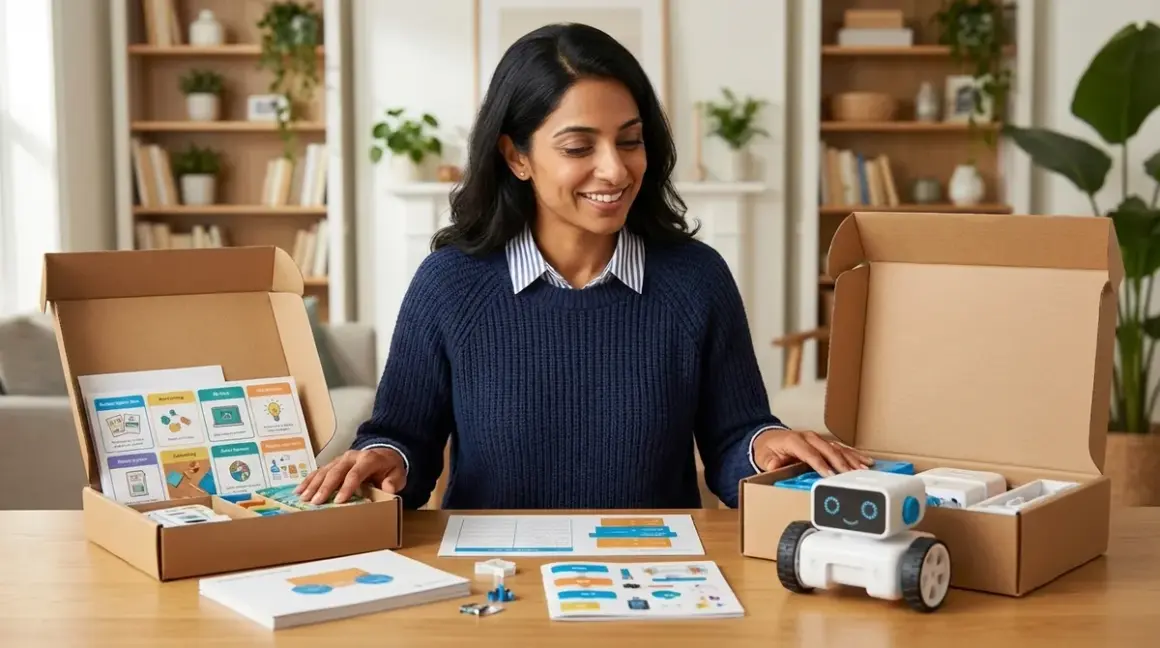

Subscription boxes offer continuous progression but require ongoing financial commitment, while one-time purchase kits deliver immediate ownership and reusability at lower long-term cost—your choice depends on whether your child needs curated skill scaffolding or independent exploration at their own pace. This article compares both approaches across cost structure, learning progression, expandability, and developmental fit, helping you decide which model supports your family's goals without wasting money or momentum.
Quick Comparison
| Criterion | Subscription Boxes | One-Time Purchase Kits |
|---|---|---|
| Total Cost (12 months) | $180-$480 depending on frequency and provider | $40-$180 upfront, no recurring fees |
| Skill Progression Model | Curated sequential challenges with guided scaffolding | Self-directed exploration, parent-led pacing |
| Physical Ownership | Materials often consumable or rental-based; limited long-term library | Permanent ownership, unlimited reuse, sibling hand-me-down value |
| Expandability & Compatibility | Typically closed ecosystem, limited cross-compatibility | Open-ended components integrate with other kits and learning paths |
| Best Developmental Fit | Children who thrive on novelty, external structure, and regular milestones | Independent learners who revisit concepts and prefer mastery over novelty |
Cost Structure and Long-Term Value
The coding subscription box vs one time kit debate starts with money, but the real question is value per developmental outcome.
Subscription boxes typically run $15-$40 per month, depending on whether you choose weekly, biweekly, or monthly delivery. Over a year, you'll invest anywhere from $180 to $480. That buys you curated progression—someone else maps the learning path, matches activities to developmental stages, and introduces new concepts at regular intervals. You're paying for convenience and expertise. The challenge? Once you stop paying, the learning materials stop arriving. Many subscription models use consumable components—cardboard sequencing cards, single-use sticker-based challenges, or proprietary game boards that don't integrate with other systems. Your child can't revisit favorite activities a year later without digging through old boxes.
One-time purchase kits like the Cubetto Playset🛒 Amazon or similar screen-free coding platforms range from $40 for basic sequencing puzzles to $180 for comprehensive robotic systems with multiple expansion sets. You pay once. Your child can use the materials daily, weekly, or sporadically over multiple years. Siblings inherit them. You can sell them secondhand when your child outgrows them, recouping 30-50% of the original investment.
The cost-per-use calculation matters here. If your child engages with a $120 one-time kit for 18 months—revisiting challenges, teaching younger siblings, integrating pieces into imaginative play—you're looking at pennies per session. A subscription delivering 12 boxes at $25 each costs $300 total, and once the boxes stop, so does the engagement unless your child independently creates new challenges with old materials.
I'm not suggesting subscription boxes lack value. For families who struggle to design progressive learning paths or who need the motivation of regular deliveries, that structure is worth the premium. But you need to recognize what you're buying: scaffolding and momentum, not long-term reusable assets.
Learning Progression and Skill Scaffolding
Subscription services excel at guided progression. Each box arrives with age-calibrated challenges that introduce one or two new computational thinking concepts—sequencing, debugging, conditional logic, loops, functions. You don't need to research what comes next. The curriculum designers have mapped it out. For parents who feel uncertain about how to teach computational thinking through hands-on tools, this removes friction.
But here's the developmental catch: external pacing doesn't always match internal readiness. Your child might need three weeks to fully internalize conditionals, but the next box arrives in two. Or they master loops in four days and then wait restlessly for the next challenge. Subscriptions impose rhythm, which helps some children and frustrates others.
One-time kits offer flexible pacing. Your child can spend a month on basic sequencing, return to it after a break, or accelerate through concepts in a weekend if they're ready. The Osmo Coding Starter Kit🛒 Amazon supports this self-directed exploration well—children can revisit early lessons, skip ahead, or integrate the physical coding blocks into unrelated play. That's developmentally valuable. Repetition and self-directed challenge adjustment build metacognitive skills—awareness of one's own learning pace and strategy preferences.
Here's where it gets nuanced. If your child is between ages 4-6 and still building executive function skills (task initiation, sustained attention, working memory), they may benefit from the external structure of subscription boxes. The novelty of a new box arrival creates motivation. The pre-set challenges reduce decision fatigue. For children 7 and older who demonstrate independent project initiation, one-time kits better support autonomy and progressive learning paths.
Neither model is developmentally superior—they fit different temperaments and developmental stages. You know your child. Do they thrive on routine and anticipation, or do they resist being told what to do next?
Expandability and Integration with Future Learning
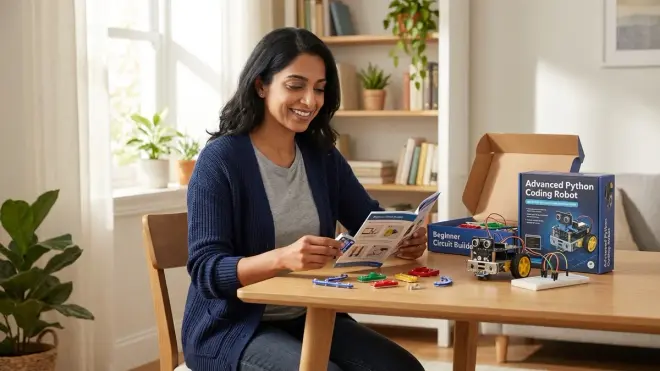
One-time purchase kits generally offer superior expandability and integration with industry-standard learning paths. The Thames & Kosmos Kids First Coding & Robotics🛒 Amazon uses modular components that children can later combine with Arduino-compatible robotics kits. The sequencing logic learned through physical tiles translates directly to block-based programming in Scratch and eventually text-based Python.
Subscription boxes often use proprietary components—custom game boards, branded sequencing cards, or activity books designed exclusively for that month's challenge. These materials don't integrate with other systems. Your child can't extend a subscription box project with Lego Technic gears or connect it to a robotics kit. The learning concepts transfer, but the physical materials become siloed.
From a home STEM lab perspective, one-time kits contribute to a reusable infrastructure. Wooden coding blocks, modular robots, and open-ended sequencing boards become permanent lab equipment. Children combine them across projects, integrate them with other STEM activities, and use them as teaching tools when explaining concepts to peers or younger siblings.
Subscription boxes, by contrast, create clutter without compounding value. After 12 months, you have 12 sets of materials that don't talk to each other. Some families keep everything, which overwhelms storage. Others purge periodically, which wastes the initial investment. A few subscription services now offer "keeper" components and "return" components, but that model is still rare.
If you're building toward Arduino programming, robotics competitions, or other advanced STEM capabilities, one-time kits offer clearer on-ramps. Subscription boxes work better as supplemental enrichment rather than foundational infrastructure.
Lab Specs: Durability, Storage, and Physical Requirements
Durability varies dramatically within both categories, but one-time kits are generally engineered for repeated use. High-quality screen-free coding robots like the Learning Resources Botley 2.0🛒 Amazon use impact-resistant ABS plastic, replaceable batteries (3 AAA cells, approximately 20-30 hours of active use per set), and robust mechanical components designed for 200+ coding sequences without degradation. Wooden tile-based systems resist wear better than cardboard alternatives.
Subscription boxes often prioritize cost efficiency over longevity—materials need to survive one month of use, not three years. Cardboard game boards warp. Sticker-based challenges lose adhesion. Paper instruction booklets tear. Some premium subscription services (typically $35+ per month) use higher-quality materials, but most budget-tier options ($15-$25 monthly) show wear quickly.
Storage footprint matters. One-time kits designed for long-term use often include compact storage solutions—boxes with compartments, stackable trays, or labeled baggies. Subscription boxes accumulate. Unless you're rigorous about consolidating materials monthly, you'll end up with a closet full of individual boxes, each containing partial sets of components.
Power requirements are straightforward for screen-free kits—most run on AA or AAA batteries (budget $10-$15 annually for high-use scenarios). Some premium robotics kits include rechargeable battery packs with USB-C charging (5V/1A standard). Subscription boxes typically use similar power specs but may introduce compatibility issues if different months use different battery types.
Offline functionality is universal across screen-free options—no WiFi, no app dependencies, no account creation. However, some subscription services now include companion apps for parent tracking or optional digital extensions. Verify whether these apps are truly optional or whether they gate core learning content. True screen-free learning should function completely without digital devices, as described in our comprehensive guide to unplugged programming.
Who Should Choose Subscription Boxes
Choose a coding subscription box if your child responds strongly to novelty and anticipation. Children who lose interest in toys within weeks but re-engage when something new arrives benefit from the built-in refresh cycle. The regular delivery creates event-driven motivation.
You should also consider subscriptions if you lack confidence in designing learning progressions. If terms like "conditional logic" or "algorithmic thinking" feel intimidating, a subscription provides expert-designed scaffolding. You facilitate the activities, but you don't need to sequence them.
Subscription boxes also suit families who want minimal long-term storage commitment. If your home lacks space for a permanent STEM lab setup, the rotating nature of subscription materials keeps clutter manageable—assuming you're willing to discard or donate materials after completion.
Finally, consider subscriptions if you're using screen-free coding as supplemental enrichment rather than core curriculum. They work beautifully as a monthly "special activity" alongside other learning methods, but they're less effective as the sole foundation for computational thinking development.
Who Should Choose One-Time Purchase Kits
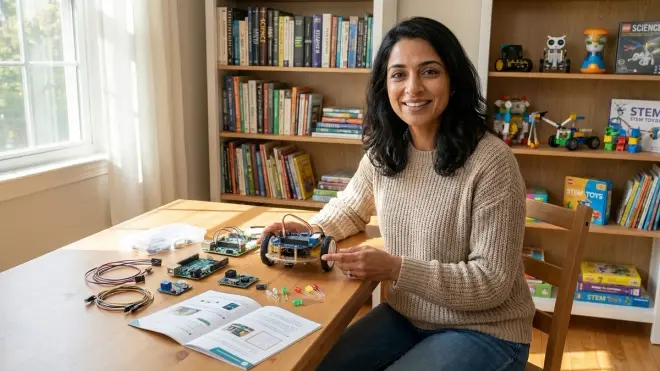
One-time kits serve children who demonstrate deep focus and prefer mastery over variety. If your child returns to favorite activities repeatedly, inventing new challenges and variations, a reusable kit offers more developmental value than monthly novelty.
You should prioritize one-time purchases if you're building a progressive learning path toward advanced STEM skills. If your goal is to prepare your child for Arduino programming, robotics competitions, or text-based coding languages, one-time kits with expandable ecosystems provide clearer bridges to those capabilities.
One-time kits also make sense for multi-child households. Siblings can share materials, and older children can mentor younger ones using the same physical components. The per-child cost advantage is substantial.
Finally, if you value environmental sustainability and dislike planned obsolescence, one-time purchases align better with those principles. High-quality kits last years and maintain resale value through platforms like local STEM equipment exchanges.
Frequently Asked Questions {.faq-section}
Do subscription boxes teach the same computational thinking skills as one-time purchase kits?
Yes, both subscription boxes and one-time purchase kits teach core computational thinking skills like sequencing, debugging, loops, conditionals, and functions, but they differ in pacing flexibility, depth of mastery opportunities, and integration with advanced learning paths. Subscription boxes excel at introducing diverse concepts through novel contexts, while one-time kits support deeper mastery through repeated practice and self-directed challenge creation. For comprehensive skill development, consider starting with a one-time kit that offers progressive learning path compatibility and using subscriptions as supplemental enrichment after your child demonstrates sustained interest.
Can I transition from subscription boxes to one-time kits or vice versa without confusing my child?
Yes, children adapt easily between subscription boxes and one-time kits because both teach the same underlying computational thinking principles through tactile manipulation—the transition is a change in delivery format, not fundamental approach. If you start with subscriptions and later switch to one-time kits, frame it as "graduating" to tools they can use independently rather than waiting for new boxes. If moving from one-time kits to subscriptions, present the boxes as "expert challenges" that introduce new ideas using familiar concepts. The key is maintaining consistency in your facilitation style and developmental stage alignment rather than worrying about the delivery model.
Are screen-free coding subscription boxes worth the cost compared to screen-based coding apps?
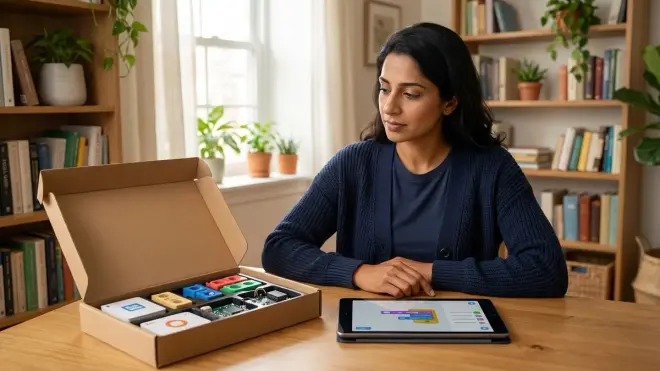
Screen-free coding subscriptions cost more per month than most apps ($15-$40 versus $3-$12), but they offer developmental advantages for children under age 7 by prioritizing tactile learning, eliminating screen exposure concerns, and building fine motor skills alongside computational thinking—benefits that research on screen-time impacts suggests matter for early cognitive development. For children 8 and older with established executive function skills, screen-based apps offer better value and more direct pathways to industry-standard programming languages. The optimal approach for many families is using screen-free tools for ages 4-7, then transitioning to Scratch and Python as screen-time concerns diminish and abstract thinking capabilities mature.
Bottom Line
The coding subscription box vs one time kit decision isn't about finding the objectively superior option—it's about matching the delivery model to your child's learning style, your family's budget constraints, and your long-term skill-building goals.
Subscription boxes work best as novelty-driven enrichment for younger children (ages 4-7) who need external structure and benefit from expert-curated progression. They reduce your planning burden but create ongoing financial commitment and limited reusability. The materials often serve their purpose well for a season, then lose relevance.
One-time purchase kits offer superior long-term value, expandability, and integration with progressive STEM learning paths. They require more parental facilitation and intentional progression design, but they become permanent lab infrastructure that supports mastery, sibling sharing, and bridges to advanced capabilities like Arduino programming and robotics.
For most families building serious STEM learning foundations, I recommend investing in two or three high-quality one-time kits that span ages 4-10, then supplementing with subscription boxes during periods when you need fresh motivation or want to explore niche concepts without committing to full kit purchases. That hybrid approach balances novelty with sustainability, external structure with learner autonomy, and immediate engagement with long-term capability building. Your child deserves tools that grow with them, not materials designed for disposability.