
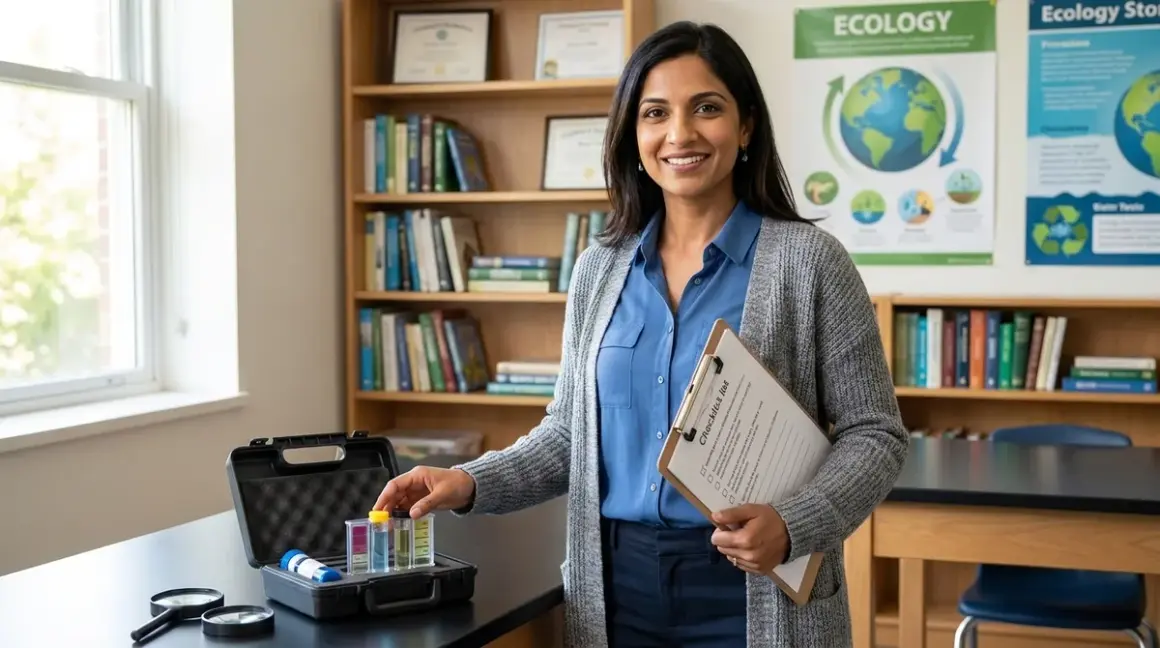

You've watched your child's eyes light up when they spot a monarch butterfly or check the rain gauge—and now you're wondering how to channel that natural curiosity into genuine scientific contribution. A citizen science project checklist helps you prepare young learners to collect real data that professional scientists actually use. This guide walks you through the essential equipment, skills, protocols, and documentation your student researcher needs to participate meaningfully in authentic field studies, from water quality monitoring to biodiversity surveys. Whether you're supporting a middle-schooler's first environmental sensor deployment or preparing a high school student for university-level data collection, this checklist scaffolds the transition from casual observation to rigorous scientific methodology.
Essential Equipment and Tools for Data Collection
Your citizen science project checklist begins with the right measurement tools—not toys that approximate science, but instruments that produce data scientists can trust. I've watched hundreds of sixth-graders struggle with this exact misconception: they assume any thermometer or pH strip will work, then wonder why their submissions get flagged during quality control.
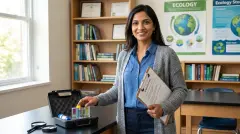
Calibrated environmental sensors that produce standardized data formats (CSV, JSON) compatible with project databases. Look for platforms like Vernier Go Direct Sensor Station or Arduino-based systems that support protocol-specific sampling rates—most projects require readings every 15 minutes to 1 hour, which demands battery life of 8+ hours for field deployment. Arduino vs micro:bit for citizen science platforms differ significantly in expandability and community support.
Digital data loggers with timestamping rather than manual recording sheets, which introduce transcription errors that compromise dataset integrity. Your child needs to understand that data without accurate timestamps can't be integrated into longitudinal studies. Choose loggers that sync with UTC (Coordinated Universal Time) for projects spanning multiple time zones.
Field notebook with weatherproof paper (Rite in the Rain or equivalent) for protocol checklists, site observations, and equipment troubleshooting notes that don't appear in sensor logs. This builds the habit of documenting methodology alongside measurements—a critical distinction for reproducible science.
GPS-enabled device (smartphone with offline mapping capability or dedicated GPS unit) that records coordinates to within 3-5 meters accuracy. Projects like eBird and iNaturalist require precise location data; teaching your child to verify coordinates before submission prevents rejected observations.
Standardized collection containers specified by your project protocol—not random household items. Water quality studies often require sterilized bottles with specific preservatives; soil microbiome projects need sealed bags that prevent contamination. Read project documentation carefully; using incorrect containers invalidates your samples.
Backup power solutions including portable battery banks (10,000+ mAh capacity), spare alkaline batteries in waterproof cases, and solar panel chargers for extended field sessions. Dead batteries during a scheduled sampling window means missing an entire data point in a time-series study—a gap that reduces your contribution's value.
Photography equipment with macro capability for specimen documentation. Most citizen science apps now use AI-assisted species identification, but that requires sharp, well-lit images showing diagnostic features. A smartphone with a clip-on macro lens often outperforms a low-quality dedicated camera.
Personal protective equipment appropriate to your sampling environment: nitrile gloves for water collection, UV-protective clothing for prolonged sun exposure, insect repellent without DEET near aquatic sampling sites (it contaminates water samples), and closed-toe shoes with ankle support for uneven terrain. Model proper safety protocols—this is career preparation, not just data collection.
Data Management and Technology Requirements
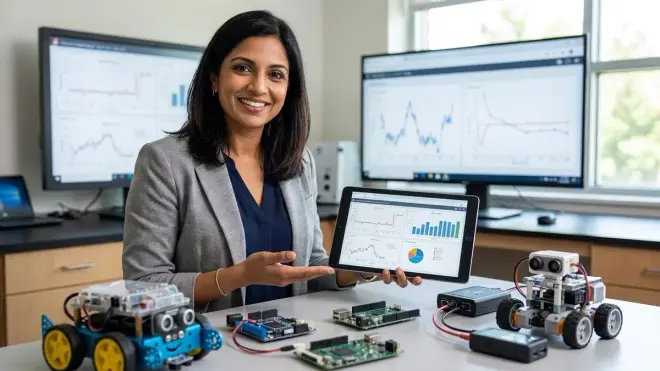
Raw observations become scientifically useful only when they're formatted, validated, and submitted according to project specifications. This section of your citizen science project checklist addresses the behind-the-scenes infrastructure that separates meaningful contribution from recreational nature watching.
Dedicated data device (laptop, tablet, or smartphone) running the project's required platform—iOS 16+, Android 13+, Windows 10+, or browser-based interfaces. Some projects like Zooniverse work entirely browser-based; others like eBird Mobile require native apps. Verify compatibility before you collect your first data point, because retroactively formatting data wastes hours.
Reliable internet connectivity for cloud-dependent platforms, or offline-first apps that cache data locally and sync when connection returns. Environmental monitoring kits increasingly integrate cellular connectivity for real-time uploads, but many field sites lack coverage—plan your workflow accordingly.
Spreadsheet literacy in Excel, Google Sheets, or LibreOffice Calc. Your child should understand data types (text vs. numeric), basic formulas for unit conversion (Celsius to Fahrenheit, meters to feet), and how to spot obviously erroneous values before submission. This scaffolds the concept of data cleaning beautifully.
Data validation checklist specific to your project's quality control standards. eBird flags observations that fall outside species' expected ranges; iNaturalist requests additional photos for rare sightings; SciStarter water quality projects reject pH readings outside physically possible ranges (0-14). Teach your child to review flags and provide explanatory notes rather than defensively dismissing them.
Backup storage protocol—automated daily backups to cloud storage (Google Drive, Dropbox, iCloud) and external hard drive or USB stick. A single corrupted file can lose weeks of fieldwork. I've seen students devastated when they realized their entire summer's observations were on a phone that fell in a creek.
Project-specific software training completed before field deployment. Many projects offer webinars, tutorial videos, or practice datasets. The best citizen science kits for kids often include structured onboarding that builds competency progressively—collect practice observations, receive feedback, then advance to independent contribution.
Data privacy understanding for projects photographing people, private property, or sensitive species locations. Your child needs to recognize when blanking GPS coordinates protects endangered species from poachers, or when photographing schoolyards requires permission. This introduces research ethics naturally.
Scientific Protocols and Methodology Documentation

The heart of your citizen science project checklist lies in following established research protocols with enough precision that your data integrates seamlessly into professional datasets. This is where we differentiate between "doing an experiment" and "conducting research."
Protocol manual (printed or downloaded for offline reference) containing sampling procedures, equipment calibration schedules, and troubleshooting flowcharts. Bookmarking the online version isn't sufficient—field sites rarely have internet access when you discover your pH meter is behaving oddly.
Standardized observation windows adhered to religiously. If your bird count protocol specifies 15-minute observation periods starting at dawn ±30 minutes, you can't substitute "whenever we got there" and expect comparable data. This teaches experimental controls through lived experience rather than textbook abstraction.
Equipment calibration logs tracking when sensors were last calibrated against reference standards, what adjustments were made, and when recalibration is due. Environmental sensor calibration separates amateur enthusiasm from research-grade contribution—uncalibrated sensors produce numbers that look scientific but lack validity.
Weather condition documentation even when it seems unrelated to your measurement target. Temperature affects pH readings, wind speed influences bird behavior, recent rainfall changes water chemistry. Professional scientists will cross-reference your data against meteorological records; missing weather notes raise quality concerns.
Site description standardization using the terminology your project specifies. Is your sampling location "forested wetland" or "riparian woodland"? The distinction matters when researchers aggregate data by habitat type. Understanding data literacy through citizen science includes learning domain-specific vocabulary.
Photographic documentation standards showing sampling site context (wide shot), equipment setup (medium shot), and any unusual conditions (close-ups). These images don't get submitted with routine data, but they're invaluable when researchers flag outlier values and need to understand what happened.
Chain of custody procedures for physical samples being mailed to labs—labels with participant ID, collection date/time, location coordinates, storage conditions, and any preservatives added. Samples arriving without complete documentation get discarded; they're scientifically useless.
Replicate measurements when project protocols require them—typically 3-5 readings at each site, with median or mean calculated. Single measurements can't distinguish equipment error from actual conditions. This introduces the concept of measurement uncertainty organically.
Skill Prerequisites and Training Milestones
Before you deploy into the field, this section of your citizen science project checklist ensures your young researcher has built the foundational competencies that authentic data collection demands. I've watched students get discouraged when they jump into advanced protocols without prerequisite skills—it's like asking someone to transition from block-based to text-based robot programming without mastering loops first.
Species identification proficiency for biodiversity projects, typically demonstrated through practice quizzes achieving 80%+ accuracy on your region's common species. Apps like Merlin Bird ID or iNaturalist's Seek provide scaffolded learning, but your child needs independent accuracy before submitting observations that researchers rely on.
Measurement unit fluency including comfortable conversion between metric and imperial systems, understanding significant figures (a bathroom scale reading to 0.1 pounds doesn't justify reporting to 0.001 kilograms), and recognizing when precision exceeds accuracy (your handheld GPS showing coordinates to six decimal places claims centimeter precision it doesn't actually possess).
Map reading and spatial reasoning skills—interpreting topographic maps, understanding latitude/longitude vs. UTM coordinates, recognizing when a GPS unit has drifted or lost satellite lock. Many projects require sampling at predetermined grid points; arriving at the wrong location because you couldn't read a bearing undermines the spatial design.
Scientific notation literacy for projects dealing with very large numbers (atmospheric particle counts) or very small ones (parts-per-billion pollutant concentrations). Your middle schooler should comfortably read 3.7×10⁶ as "3.7 million" and understand why it matters for data entry.
Graph interpretation skills to recognize when your measurements fall outside expected ranges by reviewing project data visualizations. If every other participant's pH readings cluster between 6.5-7.5 and yours show 4.2, either you've discovered genuine contamination or your probe needs recalibration—you need graph literacy to spot the discrepancy.
Technical troubleshooting methodology following systematic elimination rather than random equipment poking. Sensor giving weird readings? Check battery charge, verify calibration hasn't expired, confirm you're within operating temperature range, inspect probe for physical damage—in that sequence. This mirrors the diagnostic thinking used in how to collect and analyze environmental data with sensor kits.
Ethical observation practices including minimizing disturbance to wildlife (staying on trails, maintaining distance, avoiding breeding season disturbance), obtaining property owner permission before sampling on private land, and recognizing when conditions are too dangerous for data collection—no dataset justifies injury.
Lab Specs: Infrastructure and Expandability
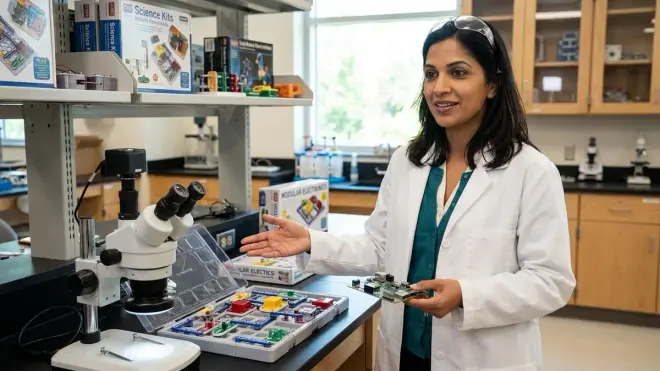
Your citizen science project checklist must account for the home infrastructure that supports ongoing participation—this isn't a one-weekend activity but a sustained research contribution that may span months or years.
Power requirements: Most sensor platforms draw 0.5-2W during active measurement, necessitating USB power banks rated for 20+ charge cycles, or AC adapter access near your data upload station. Solar panel charging (similar to renewable energy project infrastructure) works well for stationary installations like backyard weather stations but adds complexity to mobile sampling kits.
Connectivity needs: Cloud-dependent platforms require upload bandwidth of 5-10 Mbps for high-resolution photos; browser-based classification projects like Zooniverse function adequately at 3 Mbps but frustrate users at lower speeds. Offline-first apps need 50-500 MB storage space for cached observations between sync sessions.
Expandability pathways: Entry-level projects using smartphone apps and simple observation (eBird, iNaturalist) naturally progress to sensor-based monitoring (water quality, air quality) requiring micro:bit citizen science kits or Arduino platforms. Advanced students transition to automated monitoring stations with Raspberry Pi integration running continuous sampling scripts—this is the pathway to undergraduate research capability.
Durability for repeated use: Field equipment endures temperature swings, humidity, physical impacts, and UV exposure. IP67-rated enclosures (waterproof when submerged to 1 meter for 30 minutes) protect sensors during stream sampling; ruggedized cases with corner bumpers prevent smartphone screen cracks during outdoor use. Budget for replacement probes—pH and dissolved oxygen sensors typically need annual replacement with regular use.
Data archival infrastructure: Long-term projects accumulate gigabytes of timestamped observations, photos, and field notes. Establish organized folder structures by date and location before you start collecting; retroactively organizing chaotic file dumps wastes hours and increases the risk of accidentally deleting irreplaceable data.
Software sustainability: Verify that your chosen project maintains active development—unmaintained apps lose compatibility with updated operating systems, stranding your data in deprecated formats. Established platforms like iNaturalist (California Academy of Sciences partnership) and eBird (Cornell Lab of Ornithology) demonstrate institutional commitment; one-person passion projects may disappear when the developer loses interest.
Project Selection and Commitment Planning
This final section of your citizen science project checklist addresses the strategic questions that determine whether participation builds genuine capability or becomes another abandoned interest.
Skill-appropriate project matching using resources like how to choose a citizen science kit for your child's skill level. Elementary students (ages 6-10) succeed with observation-based projects requiring species identification (ladybug counts, bird watching); middle schoolers (11-14) handle sensor deployment and data validation; high schoolers (15-18) can manage multi-parameter studies requiring statistical analysis.
Time commitment estimation accounting for training (typically 2-5 hours upfront), equipment setup and calibration (1-2 hours per session initially, 15-30 minutes once proficient), data collection (varies by protocol—bird counts might be 15 minutes weekly; water quality sampling could be 90 minutes monthly), and data upload/validation (30-60 minutes per session). Underestimating time requirements leads to rushed, lower-quality submissions.
Subscription and consumable requirements: Most citizen science participation is free, but associated equipment often isn't. Water quality testing kits require replacement reagents (budget around $30-50 annually); air quality sensors need filter replacements; some projects charge nominal fees for physical sample processing. Factor ongoing costs into your commitment decision.
Progressive learning path integration: Map how your chosen project connects to broader STEM development. Bird identification builds observational skills and taxonomy understanding useful in biology; water quality monitoring introduces chemistry concepts and statistical thinking; astronomy projects develop spatial reasoning and data visualization. The what is citizen science framework explains how different project types scaffold distinct competencies.
Career pathway relevance: Sensor deployment experience with Arduino or micro:bit platforms prepares students for IoT (Internet of Things) development—a rapidly growing field. Species identification and biodiversity monitoring align with ecology and conservation biology careers. Air quality sensor studies introduce environmental science and public health connections. Frame participation as building a portfolio of research skills, not just collecting nature facts.
Social learning opportunities: Projects with local chapters (Audubon Society bird counts, watershed associations, native plant societies) provide mentorship and peer learning that isolated home participation can't match. Adults with professional research experience often lead these groups—invaluable exposure to career scientists.
Data impact transparency: Choose projects that show participants how their contributions are used—published research papers acknowledging citizen scientists, conservation decisions informed by crowdsourced data, tracking dashboards showing your observations in context. This transforms data collection from busywork into meaningful contribution, sustaining motivation through the inevitable frustrations.
Final Check Before You Go
Before heading to your first field site, verify these essentials from your citizen science project checklist:
Equipment ready: Sensors calibrated within specification windows, batteries fully charged with spares packed, weatherproof notebook with pencil (pens freeze or run in rain), collection containers clean and properly labeled, GPS device showing current location accurately, camera lens cleaned and storage space available.
Protocols reviewed: Sampling procedure steps memorized or quick-reference checklist printed, observation window timing confirmed, weather conditions acceptable per project guidelines, site access permission secured if on private/restricted land.
Technology functional: App updated to current version, offline maps downloaded for your sampling area, data backup system tested within past week, account login credentials verified, quality control checklist accessible.
Skills confident: Can identify target species at 80%+ accuracy, comfortable reading measurement instruments, understand how to spot obviously erroneous values, know emergency contacts if something goes wrong in the field.
Safety prepared: Appropriate clothing for weather and terrain, sun protection for extended outdoor work, first aid kit with any necessary medications, someone knows your location and expected return time, emergency contact information saved offline.
Frequently Asked Questions
What age should my child be before starting citizen science projects?
Your child can begin meaningful citizen science participation around age 6-7 with observation-based projects like bird counting or phenology (seasonal change) monitoring that build identification skills and careful attention to detail. These projects require minimal equipment—often just binoculars and a smartphone—and develop the habit of systematic observation before introducing measurement complexity. Around ages 10-12, students gain the fine motor control and numerical literacy for sensor-based monitoring (water quality, weather stations), which introduces data validation and equipment troubleshooting. By high school (ages 14+), students can manage multi-parameter studies requiring statistical analysis, understanding of experimental controls, and independent project management that mirrors undergraduate research experiences.
Do citizen science projects require expensive equipment to produce useful data?
Most established citizen science projects deliberately design protocols around accessible equipment to maximize participation—you don't need research-grade instrumentation to contribute meaningfully. Observation-based projects like eBird, iNaturalist, or Project BudBurst require only a smartphone and field guide, yet produce datasets cited in peer-reviewed publications. Water quality monitoring through programs like World Water Monitoring Challenge uses test kits costing around $30-50 that measure parameters (pH, dissolved oxygen, turbidity, temperature) sufficient for identifying pollution trends. The key isn't equipment expense but rather calibration accuracy, protocol adherence, and consistent methodology—a carefully used consumer-grade pH meter following proper calibration procedures produces more valuable data than an expensive laboratory instrument used carelessly.
How do citizen science projects prepare my child for actual STEM careers?
Citizen science participation builds a portfolio of research competencies that directly transfer to professional science, engineering, and technology work—not theoretical knowledge but actual practiced skills. Your child develops systematic observation methodology used by field ecologists, learns equipment calibration and troubleshooting protocols identical to environmental consulting workflows, practices data quality control procedures that mirror pharmaceutical and manufacturing standards, and experiences the iterative nature of real research where unexpected results require protocol adjustment rather than grade penalties. Students who contribute to multi-year projects gain experience with longitudinal data analysis, seasonal pattern recognition, and the patience required when meaningful findings emerge slowly—invaluable preparation for graduate research. Many university admissions officers specifically value citizen science contributions because they demonstrate sustained intellectual curiosity and research capability beyond classroom requirements.
Final Thoughts
Building your citizen science project checklist transforms scattered enthusiasm into systematic capability development. The transition from casual nature observation to research-grade data collection might feel overwhelming initially—you're essentially teaching your child to think like a scientist before they've taken formal research methods courses. But that's precisely the power of citizen science: it scaffolds professional methodology through authentic practice rather than simulated classroom exercises.
Start with one well-chosen project that matches your child's current skills and genuine interests, master its protocols thoroughly, then expand to complementary projects that broaden their methodological toolkit. A student who begins with bird identification at age 8, adds water quality monitoring at 11, and tackles automated sensor deployment at 14 has built a coherent progression from observation through measurement to automated data systems—the exact pathway that leads to environmental monitoring career competency.
The datasets your family contributes genuinely matter—conservation decisions happen because of crowdsourced observations, climate models improve with distributed weather data, and invasive species get detected early through volunteer monitoring networks. You're not approximating science; you're doing it.