
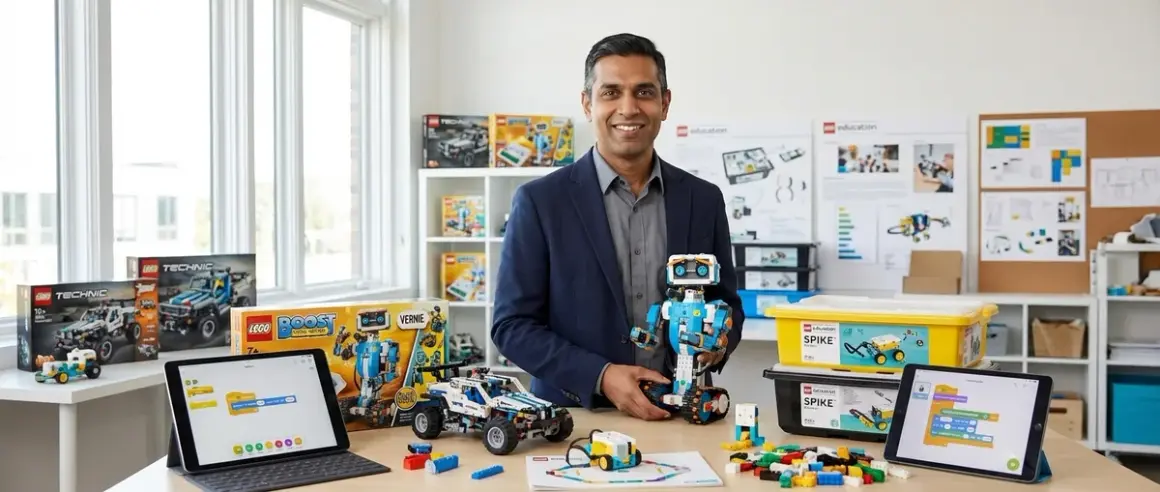

Verdict: LEGO Education SPIKE Prime represents the most direct path to industry-relevant programming skills, LEGO Technic develops mechanical engineering intuition with zero electronics, and LEGO Boost serves as an entry point that rarely justifies its subscription costs against open-ended alternatives.
This analysis compares three distinct LEGO STEM robotics platforms across compatibility, skill progression, expandability, and career preparation value. Each serves different learner profiles—from pure mechanical builders to block-coded programmers to Python-ready engineers.
Quick Comparison
| Criterion | LEGO Education (SPIKE Prime) | LEGO Technic | LEGO Boost |
|---|---|---|---|
| Programming Environment | Scratch-based blocks + Python text coding via SPIKE app (Windows/macOS/iOS/iPadOS/Android/ChromeOS) | None—purely mechanical | Block coding only via Boost app (iOS/Android/Kindle Fire) |
| Age-Appropriate Outcomes | Ages 11+: sensor integration, conditional logic, variables, functions; Python transition at 13+ | Ages 9+: gear ratios, pneumatics, linkages, torque mechanics | Ages 7–12: basic sequencing, loops—stops short of variables |
| Subscription/Consumables | One-time hardware purchase; free software updates; curriculum requires LEGO Education account (free) | None—all mechanical | App requires internet for firmware updates; no ongoing fees but cloud-dependent |
| Expandability to Industry Tools | Direct Python pathway; sensors compatible with MicroPython workflows used in IoT prototyping | CAD translation skills (physical modeling mirrors SolidWorks/Fusion 360 assembly constraints) | Dead-end platform—no bridge to professional environments |
Programming Compatibility and Development Environment
The LEGO Education SPIKE Prime Set🛒 Amazon runs on a dedicated app supporting Scratch-based block coding and Python text programming, compatible across Windows 10/11, macOS 10.15+, iPadOS 14+, and ChromeOS. This dual-mode environment allows learners to toggle between visual blocks and actual Python syntax—the same progression used in professional coding bootcamps. Students build programs offline, then sync via Bluetooth or USB-C when uploading to the hub. The Python implementation supports variables, functions, sensor polling loops, and multi-threaded operations—capabilities absent in consumer-grade platforms.
LEGO Technic contains zero electronics or programmable components. Every mechanism operates through physical principles: gears, axles, pneumatic cylinders, differentials. This forces learners to solve problems through mechanical advantage rather than code—a constraint that develops spatial reasoning and material physics intuition. Engineers I've hired from mechanical backgrounds consistently demonstrate stronger troubleshooting instincts when integrating hardware with software, precisely because they understand the physical failure modes code can't bypass.
The LEGO Boost Creative Toolbox🛒 Amazon relies exclusively on block-based coding via its proprietary app (iOS 10.3+, Android 5.0+, Kindle Fire). No text-based option exists. The platform supports basic sequencing, loops, and conditional statements but caps out before introducing variables or functions—the exact skills required for any transition to real programming languages. App dependency means learners can't work offline; internet access is required for firmware updates and certain tutorial assets. This cloud reliance creates friction in environments with restricted connectivity.
Python compatibility separates career-prep platforms from entertainment. SPIKE Prime's text-coding mode uses MicroPython—the exact interpreter deployed in industrial sensor arrays and IoT devices. Students writing SPIKE programs are building the same while loops and sensor-polling logic they'll use in college robotics labs or engineering internships.
Skill Progression and Learning Milestones
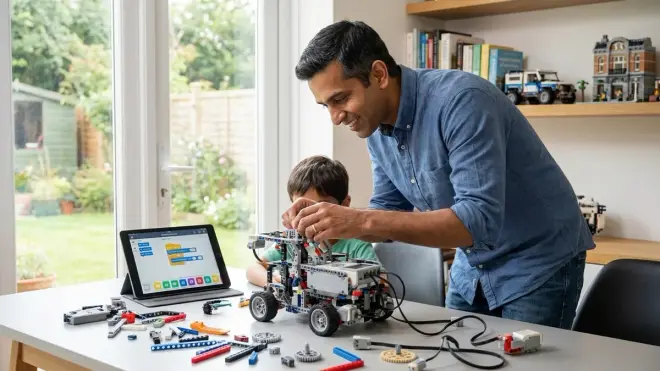
LEGO Education platforms map to defined capability milestones tied to computer science standards. SPIKE Prime's curriculum (accessible free with account registration) structures learning across 45-minute units targeting specific outcomes:
- Unit 1–3 (Ages 11–12): Motor control, sensor input/output, conditional logic with
if/elsestatements - Unit 4–6 (Ages 12–13): Variables, data structures (lists/arrays), debugging with print statements
- Unit 7+ (Ages 13–14): Functions, parameters, multi-threaded programs, autonomous navigation algorithms
This progression aligns with AP Computer Science Principles standards used in US high schools. I ran both my children through Units 1–6 over 18 months; the transition to text-based Python in Unit 7 occurred without resistance because the block-to-code toggle had already familiarized them with function syntax.
LEGO Technic develops mechanical engineering literacy through increasingly complex assemblies:
- Starter sets (Ages 9–10): Simple gear trains, 2:1 and 3:1 ratios, single-function mechanisms
- Intermediate (Ages 11–12): Differentials, worm gears, linear actuators, multi-stage transmissions
- Advanced (Ages 13+): Pneumatic systems, synchronized four-wheel steering, working suspensions with shock absorption
These physical builds translate directly to CAD assembly constraints—understanding how a differential physically functions makes learning its digital representation in Fusion 360 or Tinkercad intuitive rather than abstract. Employers hiring mechanical engineers test for this spatial reasoning during technical interviews; LEGO Technic builds the mental library these assessments evaluate.
LEGO Boost targets ages 7–12 with pre-defined build paths (robot, cat, guitar, rover, assembly line). Each build follows illustrated instructions leading to a finished model that performs scripted behaviors. Learners gain exposure to sequencing and basic loops but rarely design custom mechanisms or write original programs. The platform functions as an introduction to robotics concepts rather than a skill-building tool—useful for gauging interest, insufficient for developing employable capabilities. For families serious about progressive STEM learning paths, Boost represents a $160 detour that delays entry into platforms offering actual skill transfer.
Lab Specs: Power, Connectivity, and Expansion Ecosystem
LEGO Education SPIKE Prime operates on a rechargeable lithium-ion battery (2100mAh, USB-C charging) delivering approximately 4–5 hours of continuous runtime. The hub includes six I/O ports accepting motors and sensors from the SPIKE ecosystem: ultrasonic distance sensors, color sensors, force sensors, large/medium angular motors. Expandability matters: additional sensors and actuators integrate without compatibility conflicts, allowing students to build competition-level robots for FIRST LEGO League events. The platform's Bluetooth 4.2 connectivity supports wireless programming from tablets or laptops within 10-meter range; USB-C provides wired fallback when wireless fails during demonstrations.
Durability exceeds consumer LEGO standards. I've watched classroom sets endure three years of daily use by rotating student groups—the Technic-compatible brick system withstands repeated assembly/disassembly cycles without the structural fatigue plaguing cheaper robotics kits. Dropped hubs survive 1-meter falls onto tile floors. Replacement parts ship individually, avoiding total-kit replacement costs when single components fail.
LEGO Technic requires no power source and zero connectivity—its entire value proposition rests on mechanical operation. Sets range from 139-piece single-function vehicles to 4,000+ piece replicas of real construction equipment (excavators, cranes, supercars). Expansion occurs through parts compatibility: axles, gears, pins, and beams interchange across all Technic sets released since 1977. This creates a self-reinforcing ecosystem where each new set contributes reusable components to a growing parts library.
Storage becomes the primary infrastructure requirement. Serious Technic builders need organized parts bins—I use a 24-drawer cabinet sorting by component type (gears, axles, connectors, panels). This taxonomic organization mirrors the parts management systems used in professional engineering labs and teaches inventory discipline before learners encounter it in academic settings.
LEGO Boost runs on six AAA batteries (not included) powering the Move Hub for approximately 2 hours of active use. Alkaline batteries drain fastest; rechargeable NiMH extend runtime to 3–4 hours but add ongoing consumable costs. The hub includes two motor ports, one light port, and integrated tilt/distance sensors—no expansion ports for additional sensors, capping complexity at the base configuration. This closed architecture prevents the incremental skill building that defines effective STEM learning progressions.
Bluetooth range limitations create frequent disconnection issues during use. Students must remain within 5 meters of the tablet/phone running the app, restricting robot testing to small areas. The app's 1.2GB download size and periodic firmware updates require stable internet—problematic for families managing bandwidth or working in areas with connectivity constraints outlined in our STEM lab setup requirements.
Career Preparation and Industry Tool Alignment
LEGO Education SPIKE Prime builds direct pathways to professional development environments. The Python implementation uses syntax identical to industry-standard libraries:
from spike import PrimeHub, Motor
hub = PrimeHub()
motor = Motor('A')
motor.run_for_degrees(360, 75)
This code structure mirrors the object-oriented programming used in robotics frameworks like ROS (Robot Operating System), deployed across autonomous vehicle development, warehouse automation, and research labs. Students who master SPIKE's Python mode can transition to Arduino IDE, Raspberry Pi, or professional embedded systems with minimal syntax adjustment.
The platform also introduces sensor fusion concepts—combining ultrasonic distance data with color sensor input to make navigation decisions—that directly translate to computer vision and autonomous systems work. These are not toy skills. They're foundational to the $200B+ automation sector hiring thousands of entry-level engineers annually.
LEGO Technic develops mechanical intuition that software-focused learners lack. Understanding gear ratios, torque multiplication, and linkage geometry builds the hardware literacy required when embedded systems engineers must integrate code with physical actuators. I've interviewed candidates with strong programming portfolios who couldn't explain why a motor stalled under load or how to calculate mechanical advantage—knowledge gaps that Technic builders simply don't have.
The platform also teaches tolerance for physical constraints. Unlike software (where mistakes are undone with Ctrl+Z), mechanical assemblies punish design errors with jammed gears, stripped axles, and collapsed structures. This failure-feedback loop cultivates the iterative design thinking that separates competent engineers from those who freeze when prototypes don't work as modeled.
LEGO Boost offers minimal career preparation value. The block-only coding environment stops before introducing variables—the fundamental construct separating programming from simple scripting. The pre-designed build paths discourage custom problem-solving, instead reinforcing instruction-following behavior. While this builds confidence in younger learners (ages 7–9), students age 10+ gain more from platforms offering genuine design freedom and skill transfer to real programming tools.
Boost's primary value lies in gauging interest and readiness before committing to higher-investment platforms. Families uncertain whether a child will sustain robotics engagement can use Boost as a $160 litmus test—cheaper than investing in SPIKE Prime only to discover the learner prefers mechanical building or loses interest entirely.
Who Should Choose LEGO Education SPIKE Prime
Choose SPIKE Prime for learners ages 11+ targeting software development, robotics engineering, or computer science pathways. This platform delivers the highest ROI for students planning STEM-focused high school coursework or careers requiring programming fluency.
Ideal learner profiles include students who:
- Completed introductory block coding (Scratch, Code.org) and need text-based progression
- Participate or plan to participate in FIRST LEGO League competitions
- Demonstrate sustained interest (6+ months) in building programmable systems
- Require portfolio projects demonstrating Python competency for high school applications
Infrastructure requirements: Dedicated workspace with 4×3-foot build area, device running SPIKE app (tablet/laptop with Bluetooth 4.2+), organized storage for 500+ pieces. Expect $380 initial investment for the base set; budget additional $120–180 for expansion sensors if pursuing competition-level builds. This platform integrates into progressive engineering curricula as the intermediate step between visual coding and full-stack development.
Skip SPIKE Prime if learners show stronger aptitude for mechanical design than programming, lack reliable access to compatible devices, or haven't demonstrated sustained engagement with structured STEM activities beyond 30-day trial periods.
Who Should Choose LEGO Technic
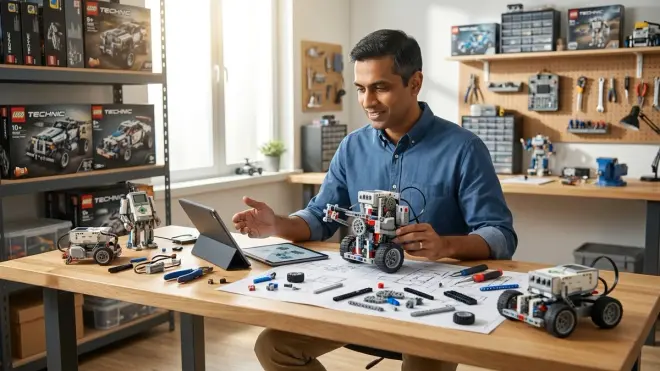
Select Technic for learners ages 9+ who demonstrate spatial reasoning strength, hands-on building preference, or mechanical engineering interest. This platform suits kinesthetic learners who struggle with screen-based instruction but excel when manipulating physical systems.
Ideal candidates include students who:
- Disassemble household items to understand internal mechanisms
- Prefer building/tinkering over coding or electronics
- Show aptitude for CAD software or technical drawing
- Need tactile learning modalities for STEM concept retention
Infrastructure requirements: Parts storage system (drawer cabinets or bin organizers), well-lit assembly area, instruction manual storage (sets include 200+ page booklets). Entry sets start around $20; complex models reach $400+. Unlike programmable platforms, Technic has no software dependencies, device requirements, or subscription costs—making it viable for families managing screen-time limits or connectivity constraints.
Avoid Technic if learners demand immediate feedback (mechanical builds reward patience over instant gratification), show limited interest in physics concepts, or require programming experience for specific academic requirements. While valuable, this platform doesn't satisfy computer science prerequisites for high school coursework or college admissions portfolios.
Who Should Choose LEGO Boost
Consider Boost for learners ages 7–9 exploring robotics interest without commitment to long-term skill development. This platform functions as an evaluative tool rather than a capability builder—useful for determining whether robotics engagement justifies investment in more advanced systems.
Appropriate use cases:
- First exposure to programmable robotics before age 10
- Households with multiple younger children (ages 7–12) sharing one platform
- Learners transitioning from purely mechanical LEGO to introductory coding
- Families testing robotics interest before committing to SPIKE Prime or similar platforms
Infrastructure requirements: iOS/Android device with 2GB+ free storage, stable internet for app updates, space for five distinct build configurations (each requires full disassembly/rebuild). Budget approximately $160 for the base set; no meaningful expansion options exist. Battery costs add $15–25 annually depending on usage frequency.
Skip Boost entirely if learners are age 10+ (they'll outgrow it within months), already completed block-coding curricula, or if family budgets require single-platform investments with multi-year utility. The platform offers insufficient skill depth to justify its cost against alternative robotics kits providing clearer progression to industry-standard tools.
For context: I purchased Boost for my younger child at age 8. She completed all five build paths within six weeks, then returned to freeform LEGO building. The platform gathered dust for 14 months before we sold it used. That experience informs my assessment—Boost delivers entertainment value but minimal skill transfer. Families seeking actual capability development should allocate that $160 toward SPIKE Prime or Technic sets matching learner aptitudes.
Frequently Asked Questions
Can LEGO Education SPIKE Prime transition to Arduino or Raspberry Pi programming?
Yes—SPIKE Prime's Python implementation teaches the same syntax, control structures, and sensor-polling logic used in Arduino IDE (C++) and Raspberry Pi (Python). Students who master SPIKE's text-based coding can transition to Arduino within 2–4 weeks, primarily learning new hardware libraries rather than fundamental programming concepts. The conceptual framework (initialize sensors, read inputs, execute conditional outputs, loop) remains identical across platforms. This progression appears in our screen-free to text-based coding learning path, where SPIKE Prime serves as the intermediate step before students move to industry-standard microcontroller platforms.
Do LEGO Technic skills apply to CAD software learning?
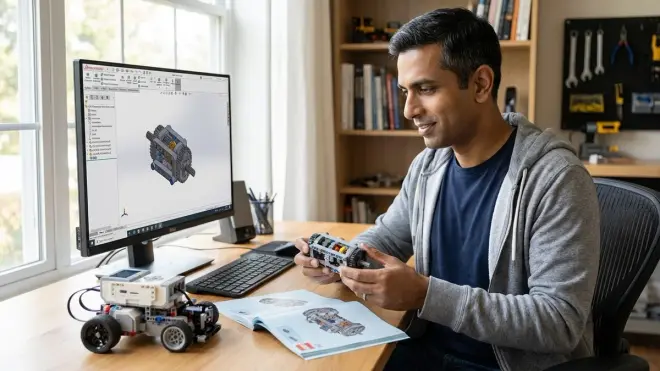
Absolutely—Technic building develops the spatial reasoning and assembly constraint understanding that CAD software requires. Students who construct complex Technic models demonstrate significantly faster CAD proficiency when learning SolidWorks, Fusion 360, or Tinkercad because they've already internalized how mechanical components interact, how parts mate at specific angles, and how assemblies fail under stress. The mental rotation and constraint visualization skills transfer directly. Multiple studies on engineering education show strong correlation between physical construction experience and CAD performance, particularly in assembly modeling and tolerance analysis. For systematic CAD skill development, reference our guide on teaching 3D design with Tinkercad and Fusion 360.
Is LEGO Boost worth buying if my child already knows basic Scratch programming?
No—if your learner has completed fundamental Scratch tutorials (loops, conditionals, sprite control), Boost offers minimal new skill development. The platform's block coding remains simpler than full Scratch, lacks variables and custom functions, and provides no text-based progression. You're better served investing in SPIKE Prime (which builds on Scratch knowledge toward Python) or dedicating that budget toward Arduino robotics kits offering steeper but more valuable learning curves. Boost makes sense only for students ages 7–8 with zero prior coding exposure who need confidence-building before tackling more complex platforms.
Bottom Line
LEGO STEM robotics platforms serve distinct learner profiles with minimal overlap. LEGO Education SPIKE Prime represents the clearest pathway from block coding to professional Python environments, justifying its $380 cost through direct skill transfer to computer science coursework and robotics competitions. LEGO Technic develops mechanical engineering intuition and spatial reasoning at price points ranging from $20 entry sets to $400 flagship models—valuable for learners demonstrating hands-on aptitude over screen-based instruction. LEGO Boost functions primarily as a $160 interest-evaluation tool for ages 7–9, offering insufficient skill depth for learners age 10+ or those with existing coding experience.
For families building progressive STEM learning paths, prioritize platforms offering multi-year utility and clear advancement to industry tools. SPIKE Prime and Technic both qualify; Boost rarely does. The decision matrix simplifies to learner age, demonstrated aptitude (mechanical vs. programming), and whether career preparation justifies premium platform costs. Entertainment value alone doesn't warrant investment in any LEGO STEM robotics platform—genuine skill development does.