
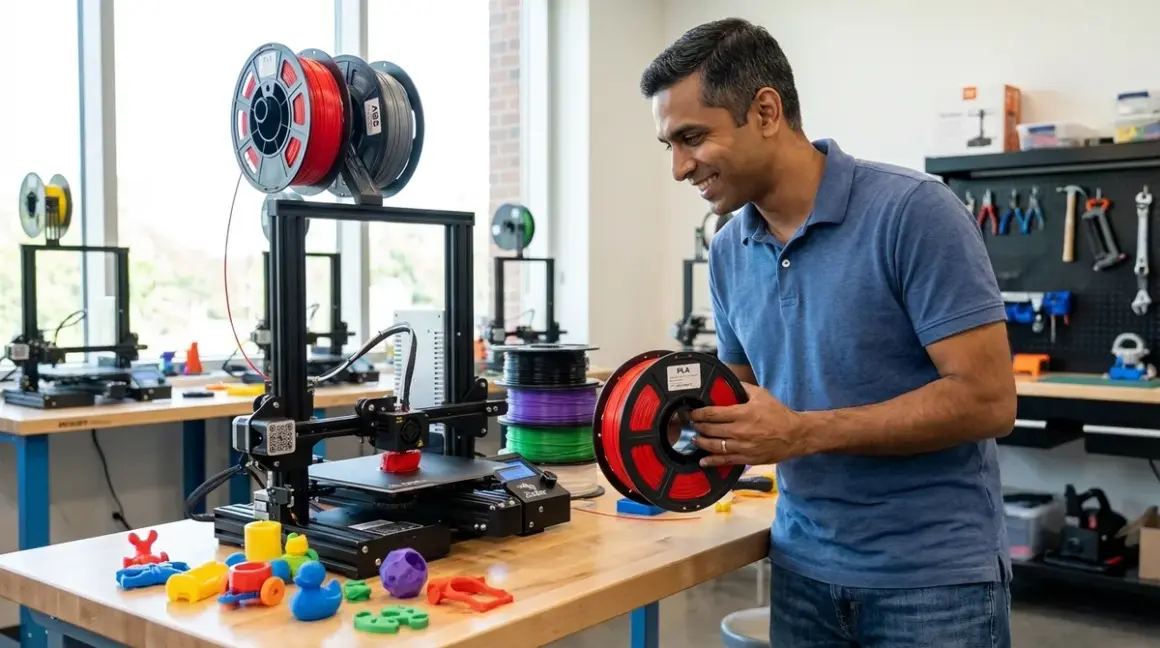

Selecting appropriate 3d printer filament types for kids determines whether a project completes successfully or warps into failure. The material choice impacts print temperature safety thresholds, ventilation requirements, mechanical strength for functional prototypes, and whether young makers develop troubleshooting skills or frustration. This analysis examines PLA, ABS, and PETG through the lens of skill progression, lab safety requirements, and alignment with engineering workflows used in product development and industrial design careers.
What Are 3D Printer Filament Types?
3D printer filament types for kids represent thermoplastic polymers engineered to melt at specific temperatures, extrude through a heated nozzle, and solidify into durable three-dimensional objects. Each material exhibits distinct thermal properties, mechanical characteristics, and chemical behavior that dictate print success rates and safety considerations for educational environments.

PLA (Polylactic Acid) derives from renewable resources like corn starch or sugarcane. Print temperature ranges from 190-220°C with minimal odor emission and no toxic fume generation. The material biodegrades under industrial composting conditions but maintains structural integrity in typical home environments for years.
ABS (Acrylonitrile Butadiene Styrene) represents the same engineering-grade thermoplastic used in automotive dashboards and LEGO bricks. Extrusion requires 220-250°C temperatures and produces styrene vapors that necessitate active ventilation. The material delivers superior impact resistance and temperature tolerance compared to PLA.
PETG (Polyethylene Terephthalate Glycol) bridges PLA's ease-of-use with ABS's mechanical performance. Print temperatures span 220-250°C with negligible odor and chemical-resistant properties that withstand oils, weak acids, and outdoor UV exposure. The glycol modification prevents brittleness while maintaining the recyclability profile of standard PET bottles.
Understanding these 3d printer filament types for kids enables intentional material selection based on project requirements rather than trial-and-error consumption of supplies. As detailed in What Is FDM 3D Printing: Technology Explained for Young Learners, filament choice directly impacts layer adhesion, dimensional accuracy, and the learning curve young makers navigate.
How 3D Printer Filaments Work
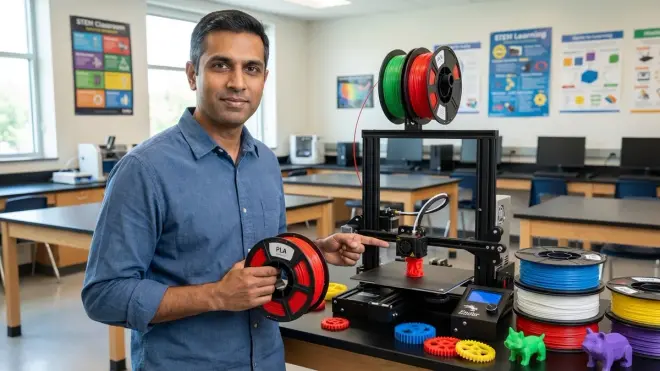
All FDM (Fused Deposition Modeling) filaments follow identical physical principles with material-specific variations. The printer's extruder motor pushes filament through a heated aluminum block containing a thermistor for temperature regulation. The molten polymer exits a brass or hardened steel nozzle at controlled flow rates, depositing 0.1-0.4mm layer heights onto a build platform.
PLA solidification mechanics rely on rapid cooling. The material transitions from 200°C molten state to solid in 2-3 seconds, requiring minimal heated bed temperatures (50-60°C) or none at all on printers with textured build surfaces. This quick phase change reduces warping but creates brittleness under sustained loads or elevated temperatures above 60°C.
ABS cooling behavior presents opposite challenges. The polymer contracts 0.8-1.0% during solidification—approximately double PLA's contraction rate. This dimensional change generates internal stresses that pull corners upward from the build plate unless the heated bed maintains 90-110°C throughout the print. Draft-free environments prevent uneven cooling that causes layer separation. The temperature tolerance extends to 98°C continuous exposure, enabling functional parts for automotive or outdoor applications.
PETG combines desirable traits from both materials. Contraction rates fall between PLA and ABS at 0.5-0.7%, requiring 70-80°C bed temperatures. The material exhibits hygroscopic properties—moisture absorption from ambient air that causes extrusion bubbles and stringing. Filament storage in sealed containers with silica gel desiccants becomes mandatory rather than optional.
The extrusion process itself teaches systems thinking. Young makers observe cause-and-effect relationships between nozzle temperature, print speed, layer cooling, and final part quality. A nozzle temperature 10°C too low produces under-extruded weak layers; 15°C too high creates stringing and dimensional inaccuracy. These variables mirror process control parameters in injection molding and manufacturing engineering—skills that transfer directly to technical careers. The Complete 3D Printer Safety Checklist for Kids and Teens addresses ventilation requirements and thermal hazard mitigation for each filament category.
Layer adhesion chemistry varies by polymer type. PLA relies on mechanical interlocking as adjacent layers melt into microscopic surface irregularities. ABS achieves superior inter-layer bonding through solvent-like welding where hot material partially dissolves the previous layer. PETG balances these mechanisms with moderate chemical bonding and excellent mechanical grip. These bonding differences explain why PLA parts split along layer lines under impact while ABS bends before breaking.
Why 3D Printer Filament Selection Matters
Material choice determines which engineering principles young makers internalize versus which they never encounter. PLA creates immediate success with 95%+ first-print success rates on properly calibrated equipment. This builds confidence but masks fundamental challenges in thermal management and material science that professional engineers navigate daily.
I observed this firsthand when my daughter completed twenty successful PLA prints before attempting ABS. The ABS print warped within fifteen minutes. Her troubleshooting process—adjusting bed temperature, enclosure draft prevention, first-layer calibration—taught more engineering thinking than her previous twenty successes combined. She now understands why automotive engineers specify ABS for impact-resistant components and why design-for-manufacturing principles require material property consideration during the CAD phase.
Career pathway alignment matters more than most educational marketing suggests. According to 2025 Bureau of Labor Statistics data, mechanical engineering positions specify CAD proficiency and material selection knowledge as baseline requirements. Product designers who understand polymer behavior, thermal expansion coefficients, and post-processing requirements command 18-22% salary premiums over those limited to visual design skills. The filament troubleshooting process builds exactly this material-properties knowledge base.
Cost efficiency scales with skill development. PLA costs $18-22 per kilogram; ABS runs $20-25; PETG spans $22-28. A single failed large print consumes $3-5 in material and 6-12 hours in machine time. Young makers who understand material-specific requirements reduce failure rates from 40% to under 10%, converting material investment from consumable waste into finished prototypes. The Everything You Need to Set Up a Kids 3D Printing Station: Complete Checklist includes filament storage specifications and humidity control requirements.
Environmental considerations differ substantially. PLA biodegrades in industrial composting facilities but persists in landfills without proper temperature and microbial conditions. ABS requires petroleum feedstocks and releases VOCs during printing. PETG shares PET's recyclability profile but most municipal systems lack the sorting infrastructure. Young makers evaluating these trade-offs engage with lifecycle analysis and sustainability engineering concepts relevant to every manufacturing discipline.
Lab Specs for Filament Management
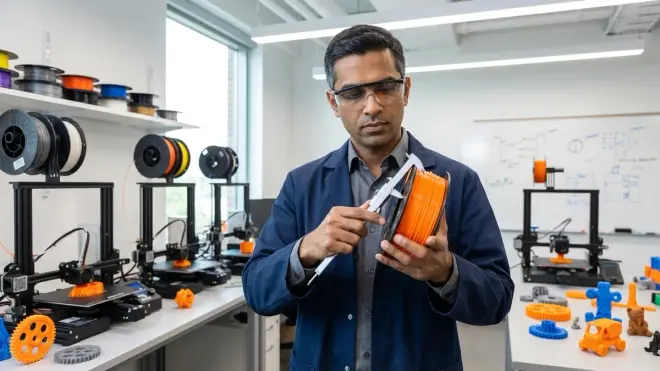
Storage Requirements
All three materials require distinct storage protocols:
- PLA: Sealed storage optional for short-term use (under 3 months); mandatory in humidity above 60% to prevent brittleness
- ABS: Airtight containers prevent solvent volatilization that causes diameter inconsistencies; desiccant packs maintain relative humidity below 20%
- PETG: Most hygroscopic of the three; absorbs measurable moisture in 48 hours of open-air exposure at 50% humidity; requires vacuum-sealed bags or dry boxes with active desiccant
Ventilation Standards
The chemical emissions profile drives different lab setup requirements:
PLA produces minimal ultrafine particles (UFPs) and virtually zero volatile organic compounds. Standard room ventilation suffices for home lab environments. No specialized extraction required for print volumes under 20 hours per week.
ABS releases styrene vapors at concentrations of 25-200 μg/m³ depending on print temperature and enclosed chamber design. OSHA permissible exposure limits stand at 50 ppm (213 mg/m³) for 8-hour time-weighted averages. Home labs require either: 1) enclosure-mounted activated carbon filters with 100+ CFM extraction rates, or 2) printer placement within 18 inches of exhaust fans venting outdoors. This represents the primary reason I recommend ABS only for learners aged 14+ with dedicated maker spaces.
PETG emits negligible VOCs but generates moderate UFP concentrations. Standard ventilation meets safety requirements; no specialized extraction necessary.
Printer Compatibility Matrix
Not all printers handle all materials effectively:
- PLA: Universal compatibility; runs on any FDM printer with 0.4mm nozzle and basic heated bed
- ABS: Requires enclosed build chamber or draft-shielding; heated bed mandatory; direct-drive extruders preferred for consistent flow
- PETG: Standard open-frame printers adequate; all-metal hotends prevent PTFE liner degradation at sustained 245°C temperatures; textured build surfaces (PEI sheets) prevent permanent adhesion to smooth glass
The How to Choose Your First 3D Printer for Teen STEM Projects article examines which printer architectures support progressive material exploration versus those limited to PLA-only capabilities.
Temperature Profiles and Power Draw
Material-specific energy consumption affects lab infrastructure:
- PLA: 50W average during printing; 200-220°C nozzle, 50-60°C bed
- ABS: 120-150W average; 230-250°C nozzle, 95-110°C bed; enclosed chamber adds 40-60W for active heating
- PETG: 80-100W average; 230-245°C nozzle, 70-80°C bed
Standard 15-amp household circuits handle all three materials without dedicated electrical upgrades. Print completion times remain identical across materials for equivalent geometries—the power difference stems from sustained bed and chamber heating requirements.
Types & Variations Within Filament Categories
PLA Derivatives
Standard PLA serves 90% of educational applications. Manufacturers including Hatchbox offer dimensional tolerances within ±0.03mm for consistent extrusion.
PLA+ formulations add impact modifiers that increase toughness by 30-40% versus standard PLA while maintaining identical print settings. The material bridges standard PLA's ease with improved mechanical performance for functional prototypes.
Silk/Metallic PLA variants incorporate mica or metallic powders for aesthetic finishes. These require 0.5mm or larger nozzles to prevent abrasive clogging and teach nozzle selection principles relevant to industrial additive manufacturing.
ABS Variations

Standard ABS from suppliers like Prusament maintains diameter consistency within ±0.02mm—critical for reliable extrusion flow calculations.
ABS+ or ASA (Acrylonitrile Styrene Acrylate) substitutes acrylate for butadiene, improving UV resistance and reducing styrene emissions by approximately 40%. ASA enables outdoor applications without degradation but requires identical printing parameters to standard ABS.
PETG Formulations
Standard PETG balances clarity, strength, and printability for general mechanical parts.
Carbon Fiber PETG incorporates 10-15% chopped carbon fiber strands that increase stiffness by 200-300% and reduce layer line visibility. The abrasive fillers mandate hardened steel nozzles—brass nozzles wear through in 2-3 kilograms of use. This material choice teaches composite material engineering and design trade-offs between cost, performance, and tool wear.
High-Temperature PETG formulations withstand continuous 90-100°C exposure for automotive or appliance applications. Print temperatures reach 250-265°C, requiring all-metal hotends with no PTFE components.
Progressive skill paths move from PLA to PETG to ABS as young makers demonstrate mastery of printer calibration, environmental control, and safety protocols. This sequence builds troubleshooting capabilities incrementally rather than overwhelming beginners with ABS warping challenges. The How to Teach Kids 3D Design Skills with Tinkercad and Fusion 360 article addresses how CAD design principles evolve alongside material complexity.
Frequently Asked Questions
Which 3d printer filament types for kids work best for complete beginners?
PLA delivers 95% first-print success rates on properly calibrated printers with minimal safety supervision requirements, making it the optimal starting material for makers aged 8-13 before introducing thermal management challenges and ventilation protocols required for ABS or advanced PETG formulations.
Can kids safely print with ABS filament at home?
Young makers aged 14+ can safely print ABS in home labs equipped with either enclosed printers featuring activated carbon filtration or printer placement within 18 inches of exhaust fans venting outdoors to maintain styrene concentrations below OSHA permissible exposure limits of 50 ppm during sustained print operations.
How long does each filament type last in storage?
PLA maintains print quality for 12-18 months in sealed storage with desiccant or 3-6 months in open air depending on ambient humidity; ABS lasts indefinitely in airtight containers but degrades in direct sunlight; PETG requires vacuum-sealed storage or dry boxes for shelf life beyond 6 months due to hygroscopic moisture absorption.
What temperature differences matter most between filament types?
PLA prints at 190-220°C with minimal bed heating requirements enabling use on basic printers; ABS demands 230-250°C nozzle temperatures and mandatory 95-110°C heated beds to prevent warping; PETG occupies the middle range at 230-245°C with 70-80°C bed temperatures and all-metal hotend requirements for sustained use.
Which filament builds the strongest functional parts?
ABS delivers superior impact resistance and temperature tolerance to 98°C for automotive and outdoor applications; PETG offers better chemical resistance to oils and weak acids with comparable tensile strength; PLA provides adequate strength for non-load-bearing prototypes but becomes brittle under sustained mechanical stress or temperatures above 60°C.
Summary
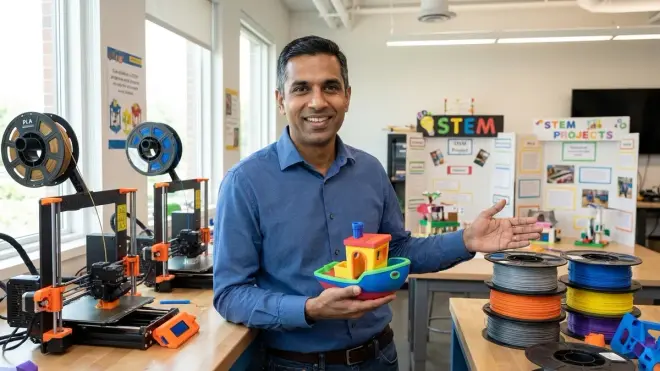
Material selection represents the first engineering decision in every 3D printing workflow. PLA offers immediate success for learners aged 8-13 building design confidence and CAD-to-physical-object comprehension. PETG introduces chemical resistance and mechanical performance concepts for makers aged 12-16 progressing toward functional prototyping. ABS teaches advanced thermal management and ventilation engineering for dedicated learners aged 14+ operating in properly equipped maker spaces.
The progression from PLA to PETG to ABS mirrors exactly how product development teams specify materials based on performance requirements, cost constraints, and manufacturing capabilities. Young makers who internalize this decision framework develop the engineering judgment that differentiates system designers from tool operators—the distinction that determines career trajectory in technical fields. The Enclosed vs Open Frame 3D Printers for Kids: Safety and Performance Compared article examines how printer architecture choices support material progression pathways. Start with PLA, expand capabilities intentionally as troubleshooting skills develop, and prioritize material property understanding over print volume.