

Parents asking what are the best STEM toys for children aspiring to technical careers face a market saturated with products that deliver entertainment but little employable skill development. The filtering criteria matter: technical compatibility with industry-standard platforms, measurable capability milestones, and clear progression toward tools used in actual engineering and software development roles. This analysis applies hiring requirements from 2026 tech sector job postings to evaluate which products build marketable competencies versus those that dead-end after initial novelty wears off.
What Is a Career-Focused STEM Learning Tool?
The term "STEM toy" misrepresents what parents should target. Career-focused learning tools share three defining characteristics: compatibility with professional software environments, support for iterative skill building over multiple years, and alignment with current industry hiring standards.
Technical compatibility means the hardware or software platform uses languages, protocols, or workflows that scale into professional contexts. A robotics kit running proprietary block code fails this test. A kit programmable in Python passes it—the same language appears in 68% of data science job postings as of Q1 2026, according to Stack Overflow's developer survey.
Iterative skill building requires expandability. Quality platforms support add-on sensors, alternative programming languages, or integration with third-party components. A closed ecosystem forces replacement purchasing when the child's capabilities exceed the product's ceiling.
Hiring standard alignment matters most. Engineering firms now expect entry-level candidates to demonstrate Git version control, CAD proficiency, or embedded systems experience during technical screens. Products that introduce these concepts at age-appropriate levels deliver measurable ROI. Products that don't become expensive distractions.
The distinction between "toy" and "tool" maps directly to career preparation value. Tools introduce transferable competencies. Toys provide entertainment with limited skill carryover.
How Career-Ready STEM Products Work
Evaluating what are the best STEM toys for children aspiring to technical careers requires a systematic framework. The vetting process involves five sequential filters:
1. Platform longevity assessment. Products must support minimum three-year skill progression. Arduino-compatible microcontrollers demonstrate this—a child can start with LED blinkers at age 8, progress to sensor integration by age 10, and tackle PID control loops by age 12 using the same hardware platform. Proprietary systems rarely support this range.
2. Professional tool migration path. The learning platform should connect to industry-standard software within two capability jumps. Scratch provides appropriate entry logic for ages 6-8, but the Python vs Scratch for teaching AI decision point arrives by age 9 for children targeting data science or machine learning careers. Products locked into visual programming languages with no text-code migration waste critical developmental years.
3. Lab Specs verification. Power requirements determine usability. Battery-dependent products limit session length and increase consumable costs. AC-powered systems with optional battery backup provide flexibility. Connectivity options (USB, Bluetooth, WiFi) affect integration with other platforms—critical as skill levels advance. Expandability through standard interfaces (I2C, SPI, GPIO pins) enables component additions without replacing base hardware. Durability for repeated use separates education-grade equipment from consumer toys; look for metal gear servos instead of plastic, reinforced connectors, and modular component mounting that survives disassembly cycles.
4. Subscription and consumable cost modeling. Many products hide true costs behind monthly fees or proprietary components. Cloud-dependent platforms require ongoing subscriptions—acceptable only if they provide genuine collaborative features or computational resources unavailable locally. Consumable-dependent kits (chemistry sets, 3D printer filament) need per-session cost calculation. A product requiring $15 in consumables per experiment session costs $780 annually at weekly use frequency. That price point demands exceptional skill outcomes to justify investment.
5. Capability milestone mapping. Concrete outcomes matter more than age ranges. "Ages 8-12" provides no useful information. "Teaches finite state machine logic through sensor-triggered LED sequences" describes a specific, testable competency that transfers to embedded systems programming. Each product should map to explicit skills with verification criteria—can the child explain the logic? Can they modify the code to achieve a different outcome? Can they troubleshoot when behavior deviates from expectations?
I ran my own children through this exact framework when evaluating circuit design platforms. Products that failed the professional migration path test went back regardless of engagement level. The Arduino Starter Kit passed all five filters—it uses C++ (industry standard), costs zero per session after initial purchase, supports hundreds of expansion modules, and connects directly to professional PCB design workflows through Fritzing and KiCad. Three years later, both children still use the same boards for projects at significantly higher complexity levels.
Why This Framework Matters for Career Preparation
The 2026 entry-level engineering job market reveals specific skill gaps that inform product selection. LinkedIn's Workforce Report identifies Python proficiency, CAD literacy, and hardware-software integration experience as the three most frequently requested competencies lacking in recent graduates. Traditional education systems address these requirements poorly—most high schools offer programming courses but rarely connect them to physical systems. University programs assume baseline familiarity with development environments, version control, and documentation practices that many freshmen lack.
Home-based STEM learning fills this preparation gap when structured correctly. Children who reach university with 3-5 years of iterative project experience using professional tools demonstrate measurable advantages. They spend less cognitive load on tool mechanics and more on problem-solving. They recognize design patterns faster. They debug more efficiently.
The career preparation value compounds over time. A 12-year-old comfortable with Arduino, basic Python, and parametric CAD modeling can transition to ESP32 development, machine learning libraries, and advanced CAD assemblies by age 15. That skill stack makes them competitive for technical internships during high school—opportunities that become resume differentiators for university admissions and early-career positioning.
The alternative pathway—entertainment-focused products with no professional migration path—leaves children restarting their learning progression when they eventually encounter industry-standard tools. Every hour spent mastering a proprietary platform becomes technical debt that requires unlearning.
Understanding STEM skill milestones for 10-year-olds helps calibrate expectations at critical decision points in this progression.
Types and Learning Path Progressions
What are the best STEM toys for children aspiring to specific technical careers depends on the target domain. Four primary learning paths dominate 2026 hiring landscapes:
Software Development and AI Path
This path begins with visual programming environments (Scratch, Blockly) at ages 6-8 to establish logic fundamentals. Transitions to Python by age 9-10 for text-based syntax, data structures, and API interaction. The Raspberry Pi 4 Model B 8GB provides the migration platform—runs Scratch for beginners, supports full Python development environments, and handles TensorFlow Lite machine learning models for advanced learners. Requires USB-C power supply (15W minimum), supports Ethernet and dual WiFi, expandable through GPIO pins and USB peripherals. The RPi ecosystem lacks solid offline documentation compared to Arduino, creating internet dependency for troubleshooting—a genuine limitation for families without reliable connectivity.
Mechanical Engineering and Robotics Path
Construction systems that teach mechanical advantage, gear ratios, and structural stability form the foundation here. VEX IQ kits serve this segment—plastic construction but education-grade durability, compatible with C++ and Python through VEXcode software (free, runs offline on Windows/macOS/ChromeOS). Clear capability milestone: can the child calculate gear ratio changes needed to increase torque by 3x? Can they implement PID control to maintain straight-line robot movement? These questions separate genuine skill building from parts assembly. Requires 7.2V rechargeable battery (included), all metal gears in motor assemblies, expansion through 100+ official sensors and third-party adaptations.
Electronics and Embedded Systems Path
This track focuses on circuit theory, component behavior, and microcontroller programming. Arduino platform dominates for good reason—C++ codebase transfers directly to professional embedded development, breadboard approach teaches circuit fundamentals without permanent commitment, serial monitor debugging mirrors industry standard practices. Key expandability: supports I2C/SPI sensors, PWM motor control, interrupt-driven timing, and RTOS concepts through FreeRTOS libraries. Runs entirely offline, zero ongoing costs, USB-powered for prototyping. The breadboard connection method frustrates younger learners—jumper wires pull loose frequently. Consider PCB-mounted alternatives like the Arduino Uno WiFi Rev2 for children under 10.
Design and Fabrication Path
CAD modeling, parametric design, and digital fabrication define this trajectory. Tinkercad provides appropriate entry (ages 8-10, browser-based, zero cost, exports STL for 3D printing). Migration path leads to Fusion 360 (free educational license, industry-standard parametric modeling) by ages 12-13. Understanding what is FDM 3D printing for kids becomes relevant when pairing CAD skills with physical output. Creality Ender-3 V3 SE represents current entry-level printer meeting education requirements—auto bed leveling reduces failure rates, direct drive extruder handles wider material range, open-source firmware enables advanced modifications. Requires 350W AC power, produces ultrafine particulates requiring ventilation (consult the 3D printer safety checklist for kids), demands recurring filament costs averaging $20-25/kg. The touchscreen interface lacks responsiveness compared to manufacturer claims—expect frustration during file selection operations.
Cross-domain products exist but typically sacrifice depth for breadth. How to choose a robotics kit for your child's skill level provides detailed decision frameworks when evaluating combination platforms.
Lab Specs: Technical Requirements for Productive Learning
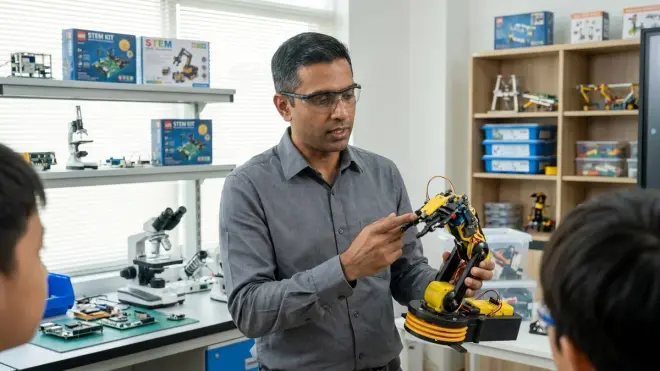
Parents underestimate environmental requirements. STEM learning tools need dedicated workspace, power infrastructure, and storage systems that respect component sensitivity.
Power and connectivity infrastructure: Most microcontroller projects draw 5V at 500mA-2A depending on peripherals—standard USB power banks work but introduce battery management overhead. Desktop AC power through powered USB hub eliminates session interruptions. WiFi-dependent platforms (Raspberry Pi, ESP32 projects, cloud IDEs) need reliable connectivity—packet loss during file uploads corrupts projects and wastes hours. Ethernet connections prove more stable than WiFi for stationary setups.
Component organization and durability: Resistor assortments containing 10+ values per type (around $15 for 1000-piece sets) eliminate "missing component" project failures. Storage solutions matter—fishing tackle boxes with adjustable dividers (around $12) prevent lead bending and simplify inventory management. Breadboards rated for 10,000+ insertion cycles cost around $8—three times the price of consumer versions but justify expense through multi-year reliability.
Safety and ventilation considerations: Soldering introduces lead fume and burn risks. Hakko FX-888D stations (around $100) provide temperature stability preventing tip oxidation and component damage—budget irons fail both safety and reliability tests. 3D printers require dedicated ventilation regardless of manufacturer claims about "safe" PLA printing. Activated carbon filters reduce VOC exposure but don't eliminate it.
Expandability and standards compliance: Products supporting Grove connectors, Qwiic/STEMMA interfaces, or standard dupont pin headers enable component mixing across manufacturers. Proprietary connection systems lock users into single-vendor ecosystems with inflated component pricing and limited selection.
Deciding between dedicated STEM room vs multi-purpose space affects whether families can maintain proper lab infrastructure or face constant setup/teardown cycles that kill project momentum.
Frequently Asked Questions
What age should children start with career-focused STEM products instead of basic toys?
Children demonstrate readiness for career-focused STEM products when they can follow multi-step instructions, tolerate delayed gratification through debugging cycles, and maintain focus through 20-minute work sessions. These markers typically emerge between ages 7-9, though individual variance matters more than chronological age. Starting earlier with visual programming platforms builds logic foundations without requiring text literacy, but products must still meet professional migration criteria—can the platform transition to text-based code within 18 months? If not, delay investment until the child can start directly with tools offering clearer career pathways.
Do subscription-based STEM learning platforms provide better outcomes than one-time purchase products?
Subscription platforms justify costs only when providing computational resources, collaborative features, or curated curriculum unavailable through one-time purchases. Cloud-based CAD platforms (Tinkercad, Fusion 360 educational) offer legitimate value through automatic version control and cross-device access. Monthly box subscriptions delivering project kits rarely demonstrate comparable value—they optimize for convenience over skill progression and typically lack expandability. Calculate per-hour skill-building costs: a $40 monthly subscription providing four hours of engaged learning costs $10/hour, while a $120 Arduino kit supporting 200+ project variations over three years costs $0.20/hour at weekly use frequency.
Can children actually learn industry-standard tools or do they need simplified educational versions?
Children can learn industry-standard tools directly when instruction matches developmental level. Fusion 360 represents actual professional CAD software used in product design firms—the interface complexity challenges beginners but the parametric modeling concepts transfer completely to career applications. Simplified educational versions (Tinkercad) serve legitimate purposes for ages 8-10 but create tool-switching overhead later. The optimal approach introduces industry tools through constrained projects that exercise specific features systematically rather than overwhelming learners with full capability sets immediately. A 10-year-old can master Fusion 360 sketching tools and extrusion operations within weeks, then progressively add assembly constraints, pattern features, and simulation over subsequent months.
How do I evaluate if a STEM product is actually building skills versus just keeping my child entertained?
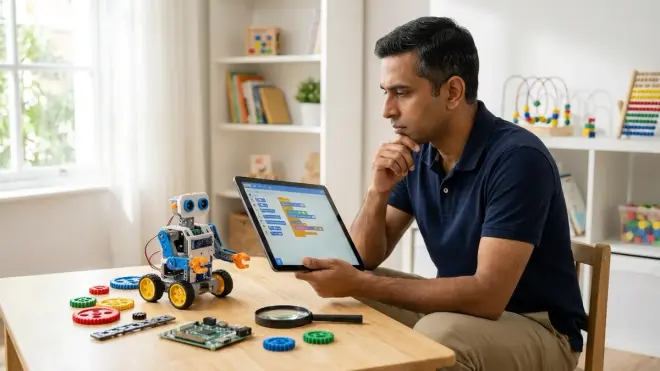
Measure skill retention and transfer capability directly. Three weeks after completing a project, ask the child to explain the underlying concepts without reference materials—can they describe why the circuit behaved as it did? Can they modify code to achieve different outcomes? Can they troubleshoot unexpected behavior systematically? Products building genuine skills enable these demonstrations. Entertainment-focused products produce "I followed the instructions and it worked" outcomes with no deeper understanding. Second test: introduce a novel problem using the same tools and concepts—does the child recognize applicable patterns or do they need complete re-instruction? Transfer capability separates skill building from guided entertainment.
What's the realistic timeline for a child to progress from beginner STEM products to professional-grade tools?
Children following structured learning paths typically require 2-3 years to transition from introductory platforms to entry-level professional tools. A child starting Arduino at age 9 can handle ESP32 development (WiFi-enabled microcontroller with more complex programming requirements) by age 11-12. The progression demands consistent engagement—weekly project sessions with incremental complexity increases. Timeline extends significantly with inconsistent practice or products lacking clear advancement pathways. Realistic capability milestone: after 18 months of consistent Arduino work, children should independently design circuits incorporating 3-4 sensors, implement conditional logic responding to sensor inputs, and debug code using serial monitor output. Reaching this milestone indicates readiness for more advanced platforms. Missing these markers after 18 months suggests either developmental timing issues or inadequate instruction quality.
Selecting Products That Survive the Three-Year Test
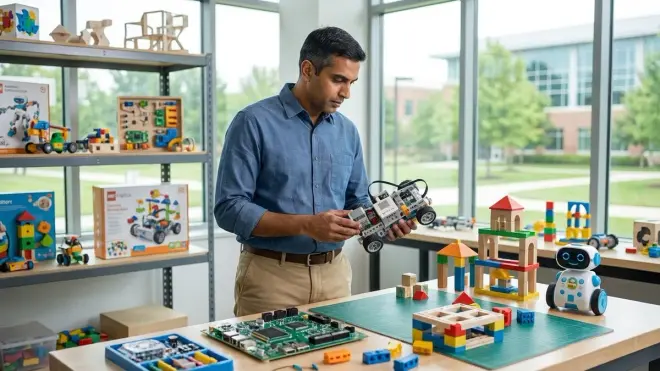
What are the best STEM toys for children aspiring to technical careers comes down to three-year viability. Products that remain useful as skill levels advance justify initial investment and avoid the expensive churn cycle of replacing inadequate tools.
Arduino and Raspberry Pi platforms demonstrate longest useful lifespans—children starting at age 8 continue using the same boards for projects at age 14, simply integrating more sophisticated components and code structures. VEX robotics systems show similar longevity through competition pathway progression from elementary through high school divisions. CAD software with educational licenses (Fusion 360, Onshape) scale from basic part modeling through complex assemblies and simulation without platform switching.
The measurement framework remains consistent: does this product teach concepts and use tools that appear in actual job descriptions? Does it support skill progression without requiring replacement? Can the child demonstrate concrete capabilities that transfer to professional contexts?
Parents optimizing for career preparation rather than entertainment value find answers cluster around open platforms with professional migration paths. The products cost more initially but eliminate repeated replacement cycles and deliver transferable competencies that compound over developmental years.
Children reaching university with five years of consistent Arduino experience, parametric CAD proficiency, and Python literacy for hardware integration don't just have stronger resumes—they've invested thousands of hours building technical intuition that competitors lack. That advantage persists throughout career trajectories in ways that entertainment-focused product engagement never replicates.